Why Do We Feel Pain?
It is important to know what kind of pain you have so you can treat it correctly.
Pain can occur due to injury or for absolutely no reason. Click here to see five reasons you feel pain.
First, the basic concept: we feel pain to avoid damaging ourselves. Pain tells us to stop or prevents us from doing something risky. To further this end, our brain tries to protect us from injury by ramping up pain or EVEN MAKING UP PAIN. Made up pain by your brain is still real pain to you; you still feel it. It still makes your life miserable.
Pain includes:
Emotional pain components: when your brain is fearful of potential damage (pain) to your body. Can cause chronic pain, anxiety, and depression.
Sensory pain components: actual tissue damage to your body or the lingering aftermath of tissue damage. The sensory component can be nociceptive, neuropathic, or nociplastic pain.
Gerrit Lundens (1622-1686) - A Surgeon Applying Medicine to a Wound in the Shoulder of a Man in Pain c1649.
 - A Surgeon Applying Medicine to a Wound in the Shoulder of a Man in Pain c1649_96_11zon.jpg)
How pain is felt:
★ Nociceptive pain - pain detected with nociceptors; these special receptors detect tissue damage from chemicals, temperature, etc. It includes radicular pain from pinched or irritated nerves; somatic pain from injured tissues (muscles, bones, skin); and visceral pain from injured internal organs.
★ Neuropathic pain - caused by damage to your neurological systems.
★ Nociplastic pain - pain without body damage. Nociplastic pain affects central or peripheral nervous systems. It can be an aftermath of a previously healed injury, a random occurrence, or caused by whole body or brain inflammation.
★ Discussion on pain in Yoo et al. 2024.
Nociplastic pain; chronic pain for absolutely no reason! What is going on?
Most people assume that chronic pain is due to a structural or tissue injury. However, pain can occur without any cause or continue to exist after the injury is healed. This is called nociplastic pain. Nociplastic pain is persistent chronic pain that exists without signs of tissue injury. It can include chronic regional pain; sensitivity to sound, light, or odor; pain hypersensitivity; and allodynia. Allodynia is when normally non-painful stimuli; like light touches, faint pressure or gentle vibrations; are painful.
Nociplastic pain is often responsible for migraines, chronic back pain, whole body pain, irritable bowel syndrome, restless leg syndrome, chronic fatigue syndrome, fibromyalgia, temporomandibular disorder, whiplash, and pelvic pain. Nociplastic pain can rise from emotional, nociceptive, neuropathic, or mixed pain components. It can be separate from or overlapped with previous organic injuries (discussion Yoo et al. 2024).
Why does this happen?
1) As pain transforms into chronic pain, it becomes more heavily associated with emotion-related brain circuitry. This includes the affective (fancy word for processing emotions) and motivational systems of the brain that are paired with avoidance.
Chronic pain becomes less associated with the systems encoding nociceptive (pain) input (discussion in Hashmi et al. 2013, Ashar et al. 2022). In other words, chronic pain can be driven by emotions NOT by actual injury or by nerves signalling pain.
2) Activated neurons and/or glial cells set up a chronic pain cycle. In this case, chronic pain is driven by neurons.
Physical fixes like surgery and drugs don't work well on nociplastic pain. You need to address the root cause of the chronic pain. This chronic pain is due to altered pain pathways in the central nervous system and sensory processing parts of the brain. There are steps to help heal from pain.
Just because it occurs for no physical reason doesn't mean it hurts any less or that is isn't real pain.
*Jan (37 years old): "I'm just so tired. I can't sleep. I cry all the time and my energy is gone. I have lived with chronic back pain constantly for 9 horrible agonizing months (and intermittently for 8 years). This feeling has permeated every bit of my life. When I ask for relief, doctors call me drug seeking."
Where pain is felt in the brain:
Pain has sensory, affective (emotional), and cognitive aspects. Different cortical areas of the brain process different pain aspects. There is no central brain area devoted to processing pain.
Sensory pain, including pain location and quality, is encoded by neurons in the primary somatosensory cortex (S1). S1 neurons contribute to increased sensitivity to pain (hyperalgesia) and anxiety (Ishikawa et al. 2023).
Emotional or affective pain experience is mainly processed by nerves in the anterior cingulate cortex (ACC). the ACC is heavily involved in pain avoidance (discussion Sun et al. 2023).
Your brain can help you heal as well. Spontaneous laughter can increase your pain tolerance.
Note: many pain studies are conducted on rodents not humans. I prefer to use human studies whenever possible for many reasons; differences in species biology, ethics of experimentation on animals, the fact I have cute pet guinea pigs, and so forth. However, some of this research information is valuable to those with chronic pain so I am including it. It is very likely that many basic facts of pain processing are conserved among mammals (meaning: we all feel pain the same way).
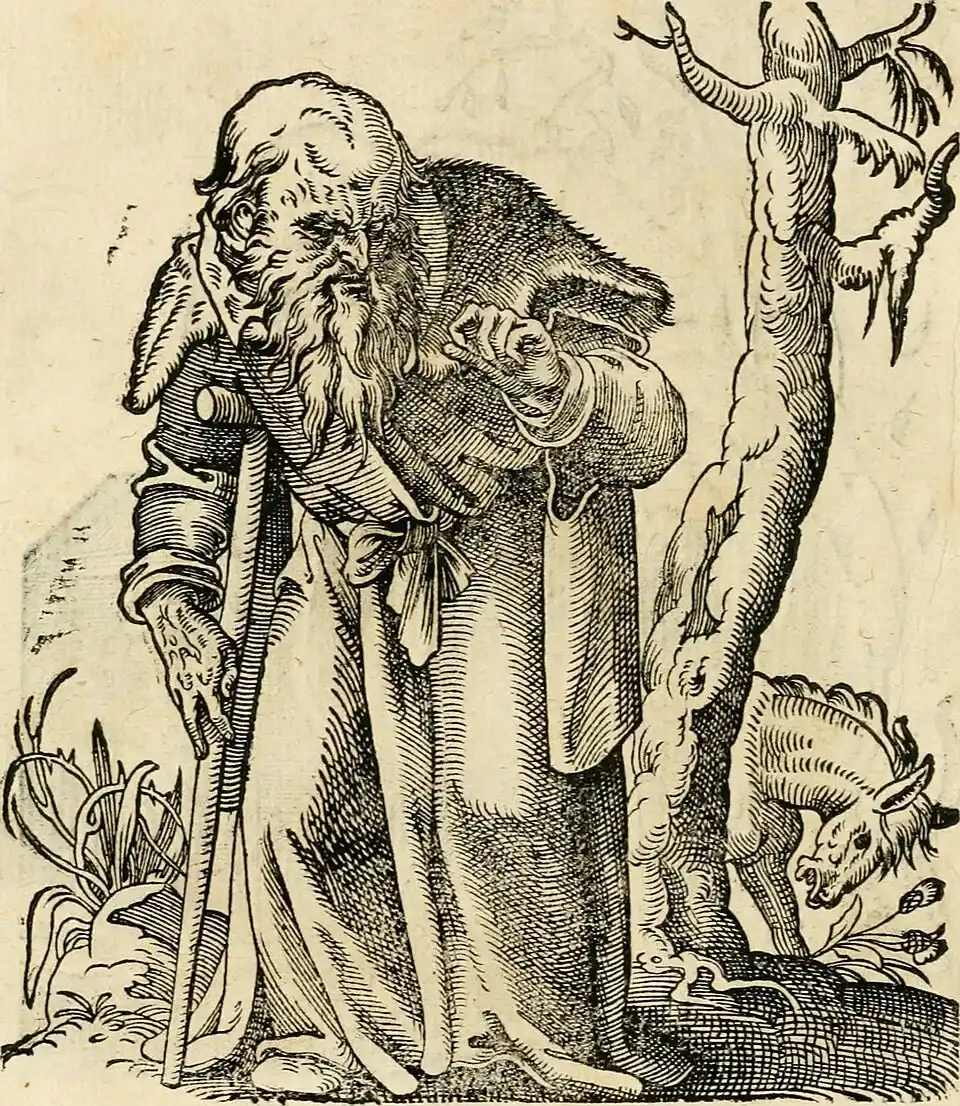
Jost Amman c1599.
Five possible reasons you feel pain:
1) Something is currently physically wrong with your body. This is the easiest type of pain to understand. Your bone is broken, your skin is scraped, your tendon is torn, your biceps are bruised, or you have some other injury. You may have a degenerative or chronic disorder. You may have cancer. Your nerves may be damaged. Most people assume their pain is from physical injury or degeneration.
Pain in this case is needed. It lets you know that you need to stop what you are doing, rest, and recover. Sometimes your support muscles are weak and need physical therapy.
2) Something used to be wrong with your body and your body is still feeling pain. You are healed but you still are in constant pain. Your body has developed a chronic pain loop for funsies. It is usually some combination of activated glial cells and reorganization of your brain's pain center. Yes, the body has a pain center, or rather several pain centers, in the brain.
3) Your nerves are on fire due to activated glial cells. Damaged and/or inflamed glial cells can contribute to or cause chronic pain even without injury (Hanani and Spray 2020, Du et al. 2023). Two types of glial cells, satellite glia and microglia, can initiate and maintain pain from opioid use, inflammation, neuropathy, cancer,migraine, peripheral neuropathy and other causes. Glial cells themselves can cause chronic pain loops.
4) The cortical region of the brain is messed up and decides to code for chronic pain. You shouldn't be in pain but your brain thinks you are in pain. Often there is an emotional component to this where depression and anxiety can trigger or intensify the pain. Your brain's pain control becomes increasingly tied into the processing of emotions rather than in pain signals.
One interesting trick your brain plays is called Freeze That Body Part. It decides not to move an area that may be painful or, more commonly, used to be painful, or even, the brain thought you would like it to be painful (???). To avoid moving the body part, your brain makes the whole general area hurt so you will not move it.
As you use it less and less, the frozen, painful area can expand. So first, your hand hurts so you avoid using it; then your wrist and tendons become stiff; then your arm and so on. Often this results in miscommunication between the nerves and the brain. This is common in complex regional pain syndrome (CRPS). You may be able to treat CRPS with pain management.
5) Whole body inflammation triggers pain. Inflammation causes dysfunctional mitochondria and activates glial cells which can trigger chronic pain. Some of this is nociplastic pain (pain for no reason) and some of this is physical pain caused by inflammation. To reduce this, you need to reduce inflammation. One way to reduce inflammation is to eat an anti-inflammatory diet. You can also reduce inflammation by cutting out foods that are inflammatory, getting active, hanging out in nature to feel better, healing your brain, reducing stress by cutting the social media cord and more.
6) You feel physical pain because you are in emotional pain or psychological distress. Psychological distress, insomnia, and fatigue can contribute to pain intensity (Landmark et al. 2024).
If you have post traumatic stress disorder (PTSD or cPTSD) it may be a factor. Learning about and treating your PTSD or cPTSD may help alleviate your pain.

By Susan Fluegel PHD Nutritional Biochemistry
*People and their stories are real, but their names and some identifying details are changed.
I'm not your doctor; I'm just a person who would like to see you happy and healthy. If you have any questions about your pain please consult a professional you trust.
References:
Ashar YK, Gordon A, Schubiner H, Uipi C, Knight K, Anderson Z, Carlisle J, Polisky L, Geuter S, Flood TF, Kragel PA, Dimidjian S, Lumley MA, Wager TD. Effect of Pain Reprocessing Therapy vs Placebo and Usual Care for Patients With Chronic Back Pain: A Randomized Clinical Trial. JAMA Psychiatry. 2022 Jan 1;79(1):13-23. doi: 10.1001/jamapsychiatry.2021.2669. Full article.
Du J, Yi M, Xi D, Wang S, Liu B, Shao X, Liang Y, He X, Fang J, Fang J. Satellite glial cells drive the transition from acute to chronic pain in a rat model of hyperalgesic priming. Front Mol Neurosci. 2023 Feb 2;16:1089162. doi: 10.3389/fnmol.2023.1089162. Full article.
Espí-López GV, Ruescas-Nicolau MA, Castellet-García M, Suso-Martí L, Cuenca-Martínez F, Marques-Sule E. Effectiveness of Foam Rolling vs. Manual Therapy in Postexercise Recovery Interventions for Athletes: A Randomized Controlled Trial. J Strength Cond Res. 2023 Jun 1;37(6):e361-e368. doi: 10.1519/JSC.0000000000004383. Abstract.
Hanani M, Spray DC. Emerging importance of satellite glia in nervous system function and dysfunction. Nat Rev Neurosci. 2020 Sep;21(9):485-498. doi: 10.1038/s41583-020-0333-z. Epub 2020 Jul 22. Erratum in: Nat Rev Neurosci. 2020 Dec;21(12):732. doi: 10.1038/s41583-020-00402-y. Full article.
Hashmi JA, Baliki MN, Huang L, Baria AT, Torbey S, Hermann KM, Schnitzer TJ, Apkarian AV. Shape shifting pain: chronification of back pain shifts brain representation from nociceptive to emotional circuits. Brain. 2013 Sep;136(Pt 9):2751-68. doi: 10.1093/brain/awt211. Full article.
Ishikawa T, Murata K, Okuda H, Potapenko I, Hori K, Furuyama T, Yamamoto R, Ono M, Kato N, Fukazawa Y, Ozaki N. Pain-related neuronal ensembles in the primary somatosensory cortex contribute to hyperalgesia and anxiety. iScience. 2023 Mar 4;26(4):106332. doi: 10.1016/j.isci.2023.106332. Full article.
Landmark L, Sunde HF, Fors, EA. et al. Associations between pain intensity, psychosocial factors, and pain-related disability in 4285 patients with chronic pain. Sci Rep 14, 13477 (2024). https://doi.org/10.1038/s41598-024-64059-8 Full article.
Mauck MC, Aylward AF, Barton CE, Birckhead B, Carey T, Dalton DM, Fields AJ, Fritz J, Hassett AL, Hoffmeyer A, Jones SB, McLean SA, Mehling WE, O'Neill CW, Schneider MJ, Williams DA, Zheng P, Wasan AD. Evidence-based interventions to treat chronic low back pain: treatment selection for a personalized medicine approach. Pain Rep. 2022 Sep 30;7(5):e1019. doi: 10.1097/PR9.0000000000001019. Full article.
Molina Galindo LS, Gonzalez-Escamilla G, Fleischer V, Grotegerd D, Meinert S, Ciolac D, Person M, Stein F, Brosch K, Nenadic I, Alexander N, Kircher T, Hahn T, Winter Y, Othman AE, Bittner S, Zipp F, Dannlowski U, Groppa S. Concurrent inflammation-related brain reorganization in multiple sclerosis and depression. Brain Behav Immun. 2024 Jul;119:978-988. doi: 10.1016/j.bbi.2024.05.015. Full article.
Sun G, McCartin M, Liu W, Zhang Q, Kenefati G, Chen ZS, Wang J. Temporal pain processing in the primary somatosensory cortex and anterior cingulate cortex. Mol Brain. 2023 Jan 5;16(1):3. doi: 10.1186/s13041-022-00991-y. Full article.
Yoo YM, Kim KH. Current understanding of nociplastic pain. Korean J Pain. 2024 Apr 1;37(2):107-118. doi: 10.3344/kjp.23326. Full article.