Feed Your Brain
Eat brain healthy foods
The ultimate goal of brain health is to reduce inflammation. To do this you need an anti-inflammatory diet and lifestyle.
The expanded diet and lifestyle for brain health is basically the same as our diets for metabolic disorders and long COVID. Body and brain inflammation respond well to decreasing inflammatory foods and habits.
Meanwhile, here's the condensed diet with pointers for fueling healthy brains. Remember, you do not have to change your diet all at once. You can gradually work towards a healthier diet.
How to eat for a healthy brain:
- Reduce processed junk food
- Chow down on natural foods
- Cut down on sugar
- Eat high quality fat
- Try fatty fish
- Colorful fruits, veggies and berries are great for brain health
- Eat enough protein
- Add antioxidants
• Avoid highly processed or ultra-processed foods.
Substitute ultra-processed foods with easy to use but healthier food alternatives.
Highly processed and ultra-processed foods (UPF) are ready-to-eat or ready-to-heat commercial formulations of food substances that are derived from whole foods. They usually contain added flavours, colors and other additives.
Ultra-processed foods are bad for the brain. Middle aged people who eat junk food are more likely to have cognitive decline and strokes.
People (14,175 in study) who ate just 10% more ultra processed foods had a higher risk of cognitive impairment. Those who ate unprocessed or minimally processed foods had a lower risk of cognitive impairment (Bhave et al. 2024). The same researchers found that UPF intake was associated with strokes while eating low processed food was associated with less risk of strokes (20,243 people in stroke study).
People (9 year study with 8,160 women and men) who ate more than 20% of their daily calories from ultra-processed foods had a 28% faster rate of decline in thinking skills and a 25% faster decrease in executive function than people who ate less than 20% of their daily calories from ultra-processed foods (Gomes Gonclves et al. 2023).
Ultra-processed foods are bad for your immune system. Long-term consumption of a highly processed food diet causes intestinal barrier permeability in rodents (Snelson et al. 2021). Basically, this means that nasty bacteria and microbial molecules produced in the gut can slip past your intestinal lining and trigger the immune system to cause whole body inflammation.
Ultra-processed food are bad for your waist line. It is easier to gain weight on processed foods. There is a global pattern showing that as sugar and highly processed food imports increase in a country, the percentage of overweight and obese people increase as well (Lin et al. 2018). Extra adipose tissue can contribute to whole body and brain inflammation.
Why? Many ultra-processed foods are made using a process called extrusion. Extrusion uses high pressure and temperatures on sheared grains, sugars and fats to form a semi-solid. This goo is squeezed through small openings to form all sorts of interesting shapes like stars and puffs. Extrusion makes all the calories from protein, fats and starch in the food easier for your body to digest. It converts most of the starch in the grain into a simple sugar, glucose. This means that less energy is spent on food digestion and it is easier to gain weight when you eat ultra-processed foods.
So how much ultra-processed food do people eat? In the USA, ultra-processed food consumption increased from 53.5% of calories in the beginning of 2001-2002 to 57% in 2017-2018 (Juul et al. 2022). At the same time, the consumption of minimally processed foods; such as vegetables, fruit, meat, grains and dairy; declined from 32.7% of calories to 27.4%.
Tip: Try to increase consumption of natural whole foods by gradually replacing ultra-processed foods in your diet.
Ultra processed foods are designed to make you eat more. In a small study, 10 women and 10 men were randomized to eat either an ultra-processed diet or an unprocessed diet for 2 weeks. Afterwards they switched immediately to the other diet for 2 weeks. Meals on each diet matched for calories, energy density, protein, carbohydrates, fat, sugar, sodium, and fiber. Due to the nature of UPF, the processed diet had more added sugar, less fiber, more saturated fat, and a worse omega-6 to omega-3 ratio. People could eat as much or as little as they liked of both diets.
People on the ultra-processed diet ate around 500 calories more per day than they did when on the unprocessed diet. On the UPF diet they consumed more carbohydrates and fat; ate faster; and gained an average of 2 pounds. The same people lost an average of 2 pounds on the unprocessed diet (Hall et al. 2019).
*Tim S. "Last weekend, I hosted a weekend graduation party and bought junk food snacks and breakfast food for my family that I usually don't buy. I had processed foods like chips, donuts, cookies, and candy. I thought it wouldn't hurt to eat poorly for one weekend.
Well it backfired, I had a lot of leftover food and I kept eating more and more of it. I felt tired, listless, nauseous, whiny, bloated, just overall a bit depressed. The food did not taste that good but I could not stop eating the stuff. It's addictive but it's not filling or even tasty! Finally I just donated the unopened packages to the food bank to get it out of my house."
If you are having problems resisting junk food, don't bring it home.
Choose fruit over donuts. Émile Vernet-Lecomt Portrait of a Black Woman (before 1900s).

Levi Wells Prentice, Landscape with Apple Tree c1890.

• Eat more nutrient rich unprocessed or minimally processed foods.
People who ate more unprocessed or minimally processed foods had a lower risk of cognitive impairment and strokes (Bhave et al. 2024).
Nutrient rich foods are foods that have lots of vitamins, minerals and other nutrients while being low in added sugars and man-made (industrial) fats.
Unprocessed foods are foods in their natural state, like a raspberry or apple. You can pick or harvest a natural food. It does not need an ingredient label.
Minimally processed foods are foods that have been slightly altered to help preserve the food like cleaning, pre-pepping, grinding, refrigeration, pasteurization, fermentation, freezing, and vacuum-packaging.
Minimally processed foods include milk; natural cheese; plain yogurt; eggs; fresh or frozen meats and seafoods; beans, lentils and peas; nuts; grains; fresh and frozen fruits, berries, and vegetables; and seeds.
Nutrient rich foods natural foods include berries, fruits, vegetables, starchy tubers, whole grains, dairy, fish, seafood, unprocessed meats and poultry, nuts and legumes.
Khalil Raad, Bread seller 1920.

• Cut down on simple and refined carbohydrates.
Simple and refined carbohydrates are foods that have been processed to remove most of their nutrients, fiber and bran. They include white bread, pasta, pizza crust and dough, pastries, donuts, white flour, white rice, sweet desserts, many candies and most breakfast cereals. Replace refined carbohydrates with better choices like whole grains and real fruits and vegetables.
Added sugar may be bad for your mental health - especially if you are male. In a large scale study (23,245 people) men who ate the most sugar were 23% more likely to be diagnosed with a mental disorder after 5 years when compared to men who consumed the least sugar (Knüppel et al. 2017).
High sugar diets also decrease brain-derived neurotrophic factors (BDNF) production. BDNF is like miracle grow for your brain cells. It promotes survival of nerve cells by playing a role in growth, development, maturation, and communication. In contrast, restricting carbohydrates and adding exercise increases BDNF (Gyorkos et al. 2019).
BDNF is vital for brain and body health. One way to increase BDNF is to exercise.
Consume no more than 35% of your diet as carbohydrates. Try to cut added sugars as much as possible. Choose good fiber rich carbs like vegetables, sweet potatoes, potatoes, whole grains, berries and fruits.
• Fill up on high quality fat to slow digestion and add flavor to meals.
Make 25% to 40% of your diet high quality fats. High quality fats are fats found in foods like eggs, avocados, fatty fish (tuna, sardines, anchovies, salmon), cod, whole fat dairy products (milk, yogurt, cheese, butter), nuts (walnuts, almonds, pecans, macadamia, cashews), nut butters, extra virgin olive oil, olives, flaxseed, seeds (sunflower, chia, sesame, pumpkin), duck, grass fed beef, crate free pork, peanuts, coconut and coconut oils.
Avoid industrial fats like soy and corn oil.
Do you want to know more about fats?
Surprise your friends and family with your knowledge of everyone's favorite lipids!
Why are fats so controversial?
Hint: McD and other fast foods are NOT high quality fats. For more on why some fats are better see How to add good fats to your diet.
• Fortify your brain with fatty fish containing omega-3 fats:
★ Reduces the inflammation response that occurs in the brain while protecting brain cells from oxidative stress (Che et al. 2018).
★ Improves normal brain function like executive function and memory in women and men (50-75 years) (Witte et al. 2014).
★ Increases Brain-Derived Neurotrophic Factor (BDNF) which is like Miracle Grow for the brain. BDNF is highly involved in learning and memory. Production of BDNF can be influenced by environmental factors like diet and stress. Dietary omega-3 FA normalizes BDNF levels, reduces oxidative damage and fights learning disabilities in rats and mice after traumatic brain injury (TBI) (Wu et al. 2004, Pu et al. 2017).
★ Improves brain recovery in a dose specific matter in rodents with mild TBI (Patch et al. 2021). We need more human studies but these types of animal studies are very encouraging.
If you are a vegetarian, vegan or fish hater consume your marine omega-3 as plant based alpha-linolenic acid (ALA). Good sources of ALA include chia seeds, walnuts, flaxseed, perilla oil and cruciferous vegetables like Brussel sprouts.
Winslow Homer - Berry Pickers (1873) watercolor.
 watercolor painting_85_11zon.jpg)
Blue Box of Science: Colorful phytochemicals in fruits, vegetables, berries, nuts and chocolate improve brain health
Fruit and berry flavonoids, which are natural colorful plant pigments, help improve memory, significantly improve cognitive capabilities, and combat cognitive declines (Spenser et al. 2010, Flanagan et al. 2018, Barfoot et al. 2019). Blueberries can even boost executive function, short-term memory and mood in kids (one serving of 1.5 cups blueberries) (Barfoot et al. 2019). Flavonoids protect brain cells. They protect neurons from neurotoxins, and suppresses brain inflammation which improves memory, learning and cognitive function.
Flavonoids promote brain cell survival and synaptic plasticity (change in communication or connectedness between neurons) by inhibiting cell death (apoptosis). They also have beneficial effects on the vascular system and modulate signaling pathways. This causes changes in cerebrovascular (brain) blood flow and signaling pathways which leads to angiogenesis (generation of new blood vessels), neurogenesis (creation of new nerves) and neuronal morphology (changes in the form, size and structure of nerve cells) (Singh and Hembrom et al. 2019, Ayaz et al. 2019).
Chocolate comes from a fruit as well. Cocoa fruit powder has a higher concentration of flavonoids than blueberries, cranberries, pomegranates and acai (Crozier et al. 2011). Flavonols in cocoa improves working memory and cerebral blood flow across the brain (Lamport et al. 2015, discussion in Flanagan et al. 2018).
Leafy greens like kale, spinach, collards, and broccoli are rich in brain-healthy nutrients such as vitamin K, lutein, folate, beta carotene and other plant phytochemicals. Research suggests these plant-based foods may help slow cognitive decline.
Nuts like walnuts reduce oxidative stress by decreasing free radical production while boosting antioxidant defense. Studies with cell culture found that walnut extract inhibited and dissolved the amyloid plaques that tangle up the brain in some types of dementia such as Alzheimer's disease (Chauhan and Chauhan 2020). Walnuts have one of the highest concentration of antioxidants in foods per serving size (Halvorsen et al. 2006).
Fight inflammation with super foods high in antioxidants.

• Eat protein to heal your brain and body.
Find out how much protein you need here!
★ Eat at least 15-35% protein. In general eat more protein if you are actively trying to lose fat, older, trying to heal, combatting a illness, putting on muscle or in training for some event.
★ Higher amounts of protein in the diet, from both animal and plant sources, helps reduce inflammation and lowers oxidative stress biomarkers in older people (2061 women and men, average age 60 years) (Hruby and Jacques 2019). You can obtain protein from plant sources. People process protein less efficiently as they get older so they need more.
★ Your body needs protein to help repair and build muscle, tissue and skin. Protein is needed for cell multiplication, growth, repair, and synthesis of enzymes involved in wound healing.
★ The immune system is dependant on protein. If you are not healing you may need more protein in your diet.
★ Whey protein is a powerful anti-inflammatory food. Whey protein supplementation reduced circulating Interleukin-6 (IL-6) levels (Prokopidis et al. 2022). IL-6 is produced at the site of inflammation and is used as a marker for whole body inflammation. One easy way to get whey protein is to make a homemade smoothie.
• Add foods with lots of antioxidants to decrease inflammation.
Foods high in antioxidants include:
- ★ Bright colorful fruits, berries and vegetables contain flavonoids
- ★ Berries
- ★ Leafy greens like kale, spinach, cabbage and broccoli
- ★ Colorful fruits and vegetables
- ★Some starchy roots like potatoes
- ★ Chocolate
- ★ Nuts like walnuts
- ★ Tea, coffee and chocolate milk can all reduce inflammation
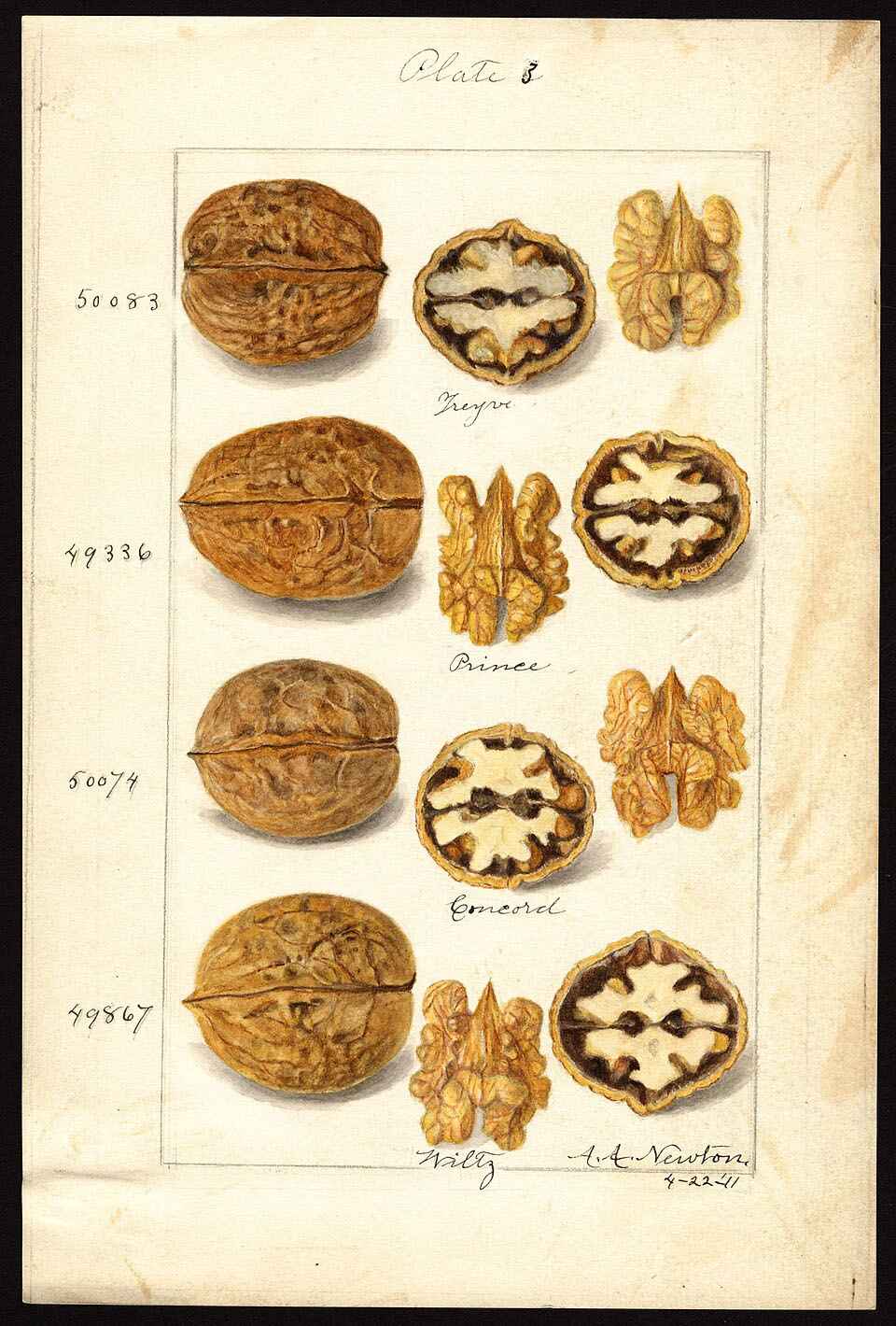
Amanda Almira Newton (1860-1943) Image of walnuts (Juglans) watercolor.
By Susan Fluegel PHD Nutritional Biochemistry and Lori Wood MS Human Nutrition.
*Names and some minor identifying details in all stories in this website are changed to protect people's privacy.
I'm not your doctor so this is not medical information. I'm just a person who would like to see you happy and healthy. If you have any questions or concerns about starting an exercise regiment, diet program, or supplements please consult a professional.
References:
Ayaz M, Sadiq A, Junaid M, Ullah F, Ovais M, Ullah I, Ahmed J, Shahid M. Flavonoids as Prospective Neuroprotectants and Their Therapeutic Propensity in Aging Associated Neurological Disorders. Front Aging Neurosci. 2019 Jun 26;11:155. doi: 10.3389/fnagi.2019.00155. Full article.
Barfoot KL, May G, Lamport DJ, Ricketts J, Riddell PM, Williams CM. The effects of acute wild blueberry supplementation on the cognition of 7-10-year-old schoolchildren. Eur J Nutr. 2019 Oct;58(7):2911-2920. doi: 10.1007/s00394-018-1843-6. Full article.
Bhave VM, Oladele CR, Ament Z, Kijpaisalratana N, Jones AC, Couch CA, Patki A, Garcia Guarniz AL, Bennett A, Crowe M, Irvin MR, Kimberly WT. Associations Between Ultra-Processed Food Consumption and Adverse Brain Health Outcomes. Neurology. 2024 Jun 11;102(11):e209432. doi: 10.1212/WNL.0000000000209432. Abstract.
Chauhan A, Chauhan V. Beneficial Effects of Walnuts on Cognition and Brain Health. Nutrients. 2020 Feb 20;12(2):550. doi: 10.3390/nu12020550. Full article.
Crozier SJ, Preston AG, Hurst JW, Payne MJ, Mann J, Hainly L, Miller DL. Cacao seeds are a "Super Fruit": A comparative analysis of various fruit powders and products. Chem Cent J. 2011 Feb 7;5:5. doi: 10.1186/1752-153X-5-5. Full article.
Flanagan E, Müller M, Hornberger M, Vauzour D. Impact of Flavonoids on Cellular and Molecular Mechanisms Underlying Age-Related Cognitive Decline and Neurodegeneration. Curr Nutr Rep. 2018 Jun;7(2):49-57. doi: 10.1007/s13668-018-0226-1. Full article.
Gomes Gonçalves N, Vidal Ferreira N, Khandpur N, Martinez Steele E, Bertazzi Levy R, Andrade Lotufo P, Bensenor IM, Caramelli P, Alvim de Matos SM, Marchioni DM, Suemoto CK. Association Between Consumption of Ultraprocessed Foods and Cognitive Decline. JAMA Neurol. 2023 Feb 1;80(2):142-150. doi: 10.1001/jamaneurol.2022.4397. Full article.
Gyorkos A, Baker MH, Miutz LN, Lown DA, Jones MA, Houghton-Rahrig LD. Carbohydrate-restricted Diet and Exercise Increase Brain-derived Neurotrophic Factor and Cognitive Function: A Randomized Crossover Trial. Cureus. 2019 Sep 9;11(9):e5604. doi: 10.7759/cureus.5604. Full article.
Hall KD, Ayuketah A, Brychta R, Cai H, Cassimatis T, Chen KY, Chung ST, Costa E, Courville A, Darcey V, Fletcher LA, Forde CG, Gharib AM, Guo J, Howard R, Joseph PV, McGehee S, Ouwerkerk R, Raisinger K, Rozga I, Stagliano M, Walter M, Walter PJ, Yang S, Zhou M. Ultra-Processed Diets Cause Excess Calorie Intake and Weight Gain: An Inpatient Randomized Controlled Trial of Ad Libitum Food Intake. Cell Metab. 2019 Jul 2;30(1):67-77.e3. doi: 10.1016/j.cmet.2019.05.008. Epub 2019 May 16. Erratum in: Cell Metab. 2019 Jul 2;30(1):226. doi: 10.1016/j.cmet.2019.05.020. Erratum in: Cell Metab. 2020 Oct 6;32(4):690. doi: 10.1016/j.cmet.2020.08.014. Full article.
Halvorsen BL, Carlsen MH, Phillips KM, Bøhn SK, Holte K, Jacobs DR Jr, Blomhoff R. Content of redox-active compounds (ie, antioxidants) in foods consumed in the United States. Am J Clin Nutr. 2006 Jul;84(1):95-135. doi: 10.1093/ajcn/84.1.95. Access to full article pdf here.
Hruby A, Jacques PF. Dietary Protein and Changes in Biomarkers of Inflammation and Oxidative Stress in the Framingham Heart Study Offspring Cohort. Curr Dev Nutr. 2019 Mar 28;3(5):nzz019. doi: 10.1093/cdn/nzz019. Full article.
Lamport DJ, Pal D, Moutsiana C, Field DT, Williams CM, Spencer JP, et al. The effect of flavanol-rich cocoa on cerebral perfusion in healthy older adults during conscious resting state: a placebo controlled, crossover, acute trial. Psychopharmacology. 2015;232(17):3227–3234. doi: 10.1007/s00213-015-3972-4. Full article.
Lin TK, Teymourian Y, Tursini MS. The effect of sugar and processed food imports on the prevalence of overweight and obesity in 172 countries. Global Health. 2018 Apr 14;14(1):35. doi: 10.1186/s12992-018-0344-y. Full article.
Juul F, Parekh N, Martinez-Steele E, Monteiro CA, Chang VW. Ultra-processed food consumption among US adults from 2001 to 2018. Am J Clin Nutr. 2022 Jan 11;115(1):211-221. doi: 10.1093/ajcn/nqab305. Summary.
Knüppel A, Shipley MJ, Llewellyn CH, Brunner EJ. Sugar intake from sweet food and beverages, common mental disorder and depression: prospective findings from the Whitehall II study. Sci Rep. 2017 Jul 27;7(1):6287. doi: 10.1038/s41598-017-05649-7. Full article.
Patch CS, Hill-Yardin EL, Lewis M, Ryan L, Daly E, Pearce AJ. The More, the Better: High-Dose Omega-3 Fatty Acids Improve Behavioural and Molecular Outcomes in Preclinical Models in Mild Brain Injury. Curr Neurol Neurosci Rep. 2021 Jul 6;21(9):45. doi: 10.1007/s11910-021-01132-z. Summary.
Prokopidis K, Mazidi M, Sankaranarayanan R, Tajik B, McArdle A, Isanejad M. Effects of whey and soy protein supplementation on inflammatory cytokines in older adults: a systematic review and meta-analysis. Br J Nutr. 2022 Jun 16:1-12. doi: 10.1017/S0007114522001787. Epub ahead of print. PMID: 35706399. Full article.
Pu H, Jiang X, Wei Z, Hong D, Hassan S, Zhang W, Liu J, Meng H, Shi Y, Chen L, Chen J. Repetitive and Prolonged Omega-3 Fatty Acid Treatment After Traumatic Brain Injury Enhances Long-Term Tissue Restoration and Cognitive Recovery. Cell Transplant. 2017 Apr 13;26(4):555-569. doi: 10.3727/096368916X693842. Full article.
Salas-Venegas V, Flores-Torres RP, Rodríguez-Cortés YM, Rodríguez-Retana D, Ramírez-Carreto RJ, Concepción-Carrillo LE, Pérez-Flores LJ, Alarcón-Aguilar A, López-Díazguerrero NE, Gómez-González B, Chavarría A, Konigsberg M. The Obese Brain: Mechanisms of Systemic and Local Inflammation, and Interventions to Reverse the Cognitive Deficit. Front Integr Neurosci. 2022 Mar 29;16:798995. doi: 10.3389/fnint.2022.798995. PMID: 35422689; PMCID: PMC9002268. Full article.
Singh D, Hembrom S. 2019. Neuroprotective Effect of Flavonoids: A Systematic Review. International Journal of Aging Research. 2, 1 (Feb. 2019), 26. DOI:https://doi.org/10.28933/ijoar-2018-11-0906. Full article.
Snelson M, Tan SM, Clarke RE, de Pasquale C, Thallas-Bonke V, Nguyen TV, Penfold SA, Harcourt BE, Sourris KC, Lindblom RS, Ziemann M, Steer D, El-Osta A, Davies MJ, Donnellan L, Deo P, Kellow NJ, Cooper ME, Woodruff TM, Mackay CR, Forbes JM, Coughlan MT. Processed foods drive intestinal barrier permeability and microvascular diseases. Sci Adv. 2021 Mar 31;7(14):eabe4841. doi: 10.1126/sciadv.abe4841. Full article.
Spencer JP. The impact of fruit flavonoids on memory and cognition. Br J Nutr. 2010 Oct;104 Suppl 3:S40-7. doi: 10.1017/S0007114510003934. Full article.
Wu A, Ying Z, Gomez-Pinilla F. Dietary omega-3 fatty acids normalize BDNF levels, reduce oxidative damage, and counteract learning disability after traumatic brain injury in rats. J Neurotrauma. 2004 Oct;21(10):1457-67. doi: 10.1089/neu.2004.21.1457. Abstract.
Witte AV, Kerti L, Hermannstädter HM, Fiebach JB, Schreiber SJ, Schuchardt JP, Hahn A, Flöel A. Long-chain omega-3 fatty acids improve brain function and structure in older adults. Cereb Cortex. 2014 Nov;24(11):3059-68. doi: 10.1093/cercor/bht163. Abstract.