Mitochondria Dysfunction. What Causes Long COVID?
Top 24 Potential Causes of Long COVID (LC) and other post viral infections: Part 3.
Mitochondria are compromised in Long COVID.
Years ago a single mitochondria joined with another single-celled organism in a process called endosymbiosis. Both organisms benefited from the arrangement. The mitochondria received food to make into fuel while the other cell received a bountiful source of energy.
Now, we, and most other life forms on earth, depend on mitochondria for the majority of our energy. Mitochondria live in us but they have their own separate DNA called mtDNA. You inherit your mitochondria from your mom. In fact, any mtDNA found in sperm is degraded during spermatogenesis (sperm creation) (Lee et al. 2023). So now you know which parent to thank for your energy levels.
Mitochondria supply us with energy in exchange for carbohydrates, fats and proteins. They make around 90% of the energy we use.
Do you know that even your emotional state can influence these little balls of energy? They only want to see us happy. So what happens if they are compromised?
In this installment of How the Long COVID Turns:
- 17) Your mitochondria are sickly weaklings.
- 18) Ill mitochondria invade the immune system to cause inflammation.
Special topics:
- Why are your mitochondria so feeble?
- Viruses damage mitochondria.
- Emotional stress damages mitochondria.
- Mitochondrial diseases in dogs.
Viruses damage mitochondria
Viruses can take over mitochondria and steal away the energy meant for us. Indeed some viruses may alter both mitochondrial activities and mtDNA of host cells (Gay et al. 2024).
Even after the viral infection is treated mitochondria DNA may remain damaged and listless, unable to produce sufficient energy for life. Damaged mtDNA can increase production of reactive oxygen species (ROS). ROS can damage cells and tissues. Excess ROS produced by dysfunctional mitochondria can further damage mtDNA creating a vicious cycle.
Mitochondrial impairments particularly affect the tissues with high-energy demand such muscles and brain. Your brain is around 2% of your body mass but uses about 20-25% of the glucose your body makes each day (Aiello et al. 1995). Areas of the brain that serve as hubs to connect the brain demand more energy and have higher activity (Yu et al. 2023).
A loss of energy could cause many of the brain and body symptoms seen in Long COVID, chronic fatigue, and other post viral disorders.
Emotional stress damages mitochondria
Emotional distress resulting from trauma, abuse, loss, discrimination, bereavement or what scientists like to call acute socioeconomic adversity (and I call extreme poverty or being dirt poor) is correlated with higher rates of morbidity, mortality, metabolic disorders and mental disorders. Although the only cure for some distress is time, you can facilitate your healing. For people in poverty it helps to make an action plan so you do not feel helpless. I come from a "acute socioeconomic adversity" background so I personally know the value of having some control over your life.
One theory, mitochondrial allostatic load (MALT), proposes that emotional stress can alter mitochondria structure and function. The presence of acute emotional stress may stimulate mitochondria energy output and antioxidant defences.
This initial over activation works well in the short term but is unsustainable in the face of a continual stressor. Eventually the intense work load causes mitochondria dynamic dysfunction; namely increased formation of reactive oxygen species (ROS), lower energy production, altered calcium handling, mitochondrial fragmentation (where mitochondria networks fall into disrepair), and the release of mitochondrial components into the cell.
Acute psychological stress activates the sympathetic nervous system (SNS) and the hypothalamic–pituitary–adrenal (HPA) axis. These neuroendocrine systems are interconnected. The dysregulation of neuroendocrine signaling and neuroinflammation pathways causes chronic brain and body inflammation due to dysregulated mitochondria, activation of inflammatory pathways, disrupted cellular waste removal and more (see discussion Venkatesan et al. 2026).
There are different ways to recover from trauma. Many people find creating art healing. Others find comfort in remembering their loved ones or burning representations of those who have wronged them. I encourage you to follow your heart whether it cries for peace or for justice. In the case of trauma, it may be useful to see if your brain needs to heal.
Blue Box of Science: What makes your mitochondria so feeble in Long COVID?
a) SARS-CoV-2, the virus that causes COVID-19, triggers a massive inflammatory response once it gets all cozy in the cell. This causes infected mitochondria to increase their production of reactive oxygen species (ROS). ROS are highly reactive chemicals made from oxygen; they are a by-product of cell metabolism. ROS can be helpful or harmful depending on the amount and the situation.
In this case, excess ROS prompts more pro-inflammatory cytokine and ROS production leading to a cytokine storm of inflammation. Your mitochondria have to switch from making energy (ATP) to ROS production. This means LESS energy and MORE inflammation.
In long COVID these mitochondria dysfunction may persist. SARS-CoV-2 can directly infect mitochondria and integrate their viral genome into mitochondrial DNA. This could decrease mitochondrial energy metabolism by affecting oxygen availability and utilization (Stefano et al. 2022). It damages mitochondria and causes their membranes to become more permeable which leads to cell death (apoptosis) (Saleh et al. 2020).
b) Inflammasomes are activated in the immune system. Once mitochondria are compromised, the virus can go on to activate inflammatory pathways, including inflammasomes, which are part of the innate immune system. Inflammasomes are large multiple protein complexes that live in the cell cytosol and self assemble when they sense infection or cellular stress (Dai et al. 2023). Activation of inflammasomes under the wrong conditions can lead to dysregulation of inflammasome assembly. In other words, the proteins are not put together correctly; the box picture shows a drilling rig but your body built a Jackson Pollock painting instead.
This failure to put together inflammasome proteins in the correct order is implicated in multiple diseases; including chronic inflammatory disorder, infectious diseases, and cardiovascular disorders (discussion in Dai et al. 2023). This disfunction can suppress both your innate and your adaptive immune responses.
c) Endoplasmic reticulum (ER) is stressed out. Due to excess ROS production and inflammation, coronavirus infection also causes endoplasmic reticulum (ER) stress inside the cells (Sureda et al. 2020, Georgina et al. 2023). The rough endoplasmic reticulum is a cell organelle that makes proteins, transports proteins, and folds proteins. When it is stressed, protein folding is either inhibited or done incorrectly. Improperly folded proteins are usually nonfunctional or low functioning. Since protein make everything from enzymes to cell membrane channel transport gates this is a big deal which can influence many body systems.
d) Energy production is decreased. Chronic fatigue in people with Long COVID is directly linked to problems in mitochondrial ATP production. People with LC have a lower ATP plasma level (Saito et al. 2024).
Fifty women and men with Long COVID (average age 50) exercised to exhaustion on a bicycle. VO₂ max, a measure of oxygen absorbed and used in the body during exercise, was normal in 34 people and reduced in 16 patients. However, lactate levels were increased early in the exercise process and there was reduced fatty acid oxidation. These are signs of mitochondrial dysfunction; the cell's powerhouse is unable to make energy as efficiently as it should (de Boer et al. 2022).
e) Fewer new mitochondria. There may be impaired mitochondrial biogenesis, the growth and division of mitochondria, due to impaired amino acid and nitrogen metabolism (discussion in Saito et al. 2024). This means less baby mitochondria!
f) Covid-19 downregulates mitochondria genes. Mitochondrial function is reduced during and after SARS-CoV-2 infection. The viral proteins bind to mitochondrial proteins and seem to inhibit oxidative phosphorylation (OXPHOS) while stimulating glycolysis. Oxidative phosphorylation, the metabolic process mitochondria use to generate energy, is impaired in organs like the liver, heart, kidney, and lymph nodes even after people have no signs of the COVID-19 virus (Guarnieri et al. 2023).
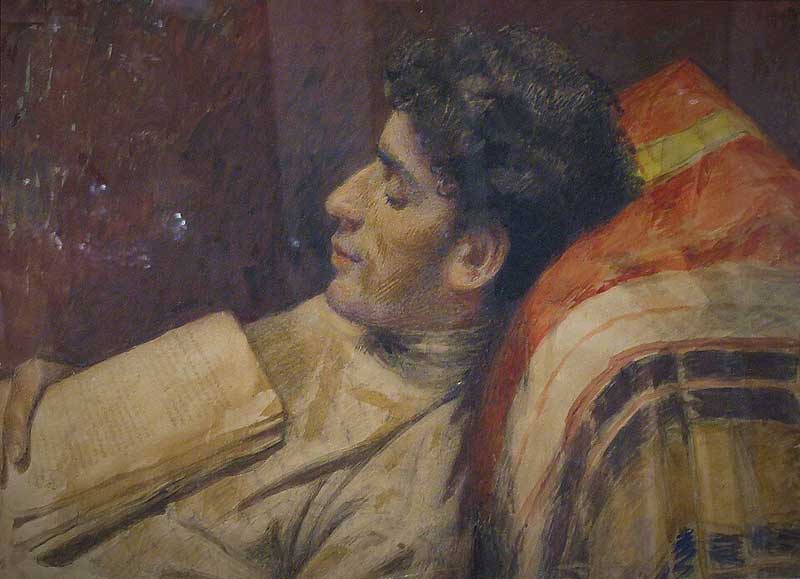
Yehuda Pen. Sleeping man with a Book 1900s.
Are you interested in how brains work?
Check out the Yale Brain Atlas. It is a 3D interactive brain map used by scientists as a brain toolbox. It can make predictions about brain energy use in healthy and diseased brains.
The Brain Atlas takes the brain's software and hardware components into account. Brain software is made up of the electrical signals (and in the real brain those are facilitated by chemicals). Brain hardware is the fibrous neuropil, which is mainly unmyelinated axons, dendrites and glial cells. These cells help transmit the electrical signals among other duties. Glial cells, in particular, have an interesting relationship with neurons and pain.
Regions of the brain vary in their neuropil vs neuronal density. This is reflected in the Brain Atlas which makes it very useful for modeling real life disorders.
17) Your mitochondria are sick and weak in Long COVID:
Do you have chronic fatigue? When your mitochondria are sick, your energy levels plummet! Think of energy as your body's currency. Without energy you cannot buy or make the supplies you need to keep your system healthy.
*Lee Z. (50 something year old woman): "The worst thing for me is feeling constantly tired. I feel like I always need a nap and it is hard to get the energy to do anything. I used to have so much energy but is is gone now."
Konstantin Somov - Lady with the dog relaxing on the lawn before 1939.

Mitochondria are more than just power plants though; they are players in immune response modulation; oxidative stress; apoptosis (programmed cell death); inducing cellular senescence (when the cell's growth is stopped due to stress or other factors); and maintaining cellular and systemic homeostasis.
Just to repeat this important point: Your mitochondria make over 90% of your energy! If they are sick your energy levels plummet.
So what happens to your mitochondria in Long COVID? Mitochondrial dysfunction (the mitochondria get weak and stop working very well) is a major contributor to Long COVID symptoms. These include breathing dysfunctions, cognitive disturbances (brain fog), fatigue and muscle weakness, and cardiac symptoms (discussion in Molnar et al. 2024).
Mitochondrial dysfunctions occur through mechanisms such as inflammation and oxidative stress; immune system dysregulation; vascular and endothelial dysfunction; energy production deficits; and other metabolic disruptions including less mitochondria biogenesis (less baby mitochondria).
Most living organisms contain mitochondria.
18) Mitochondria prompt innate immune responses that increase inflammation:
Long COVID is highly correlated with inflammation and a dysfunctional immune response. People with Long COVID (LC) often show systemic inflammation, immune dysregulation, and decreased organ function (Madsen et al. 2024, Yin et al. 2024). In addition, decreased organ function is associated with mitochondrial dysfunction both during and after COVID-19 infection (discussion Madsen et al. 2024).
So where do mitochondria fit into this picture? When mitochondria spot dangerous invaders, they activate the innate immune system by using pattern recognition receptors (PRRs) (Madsen et al. 2024). PRRs are a type of receptor that recognizes specific molecular structures/chemicals that are found on the surface of pathogens like viruses or bacteria; called pathogen-associated molecular pattern (PAMP); or on damaged or dying cells; called damage-associated molecular patterns (DAMP). Think of PRRs as a combination of bouncers/medics - reading people's ID cards and checking them for injuries. If a dangerous individual or an injured person is detected, PRR sounds the alarm.
There are several types of PRRs including Toll-like receptors (TLRs). Membrane bound TLRs recognize the COVID-19 virus's (SARS-CoV-2) envelope, spike protein and viral RNA. TLRs are potent. They can help destroy viruses but they can also contribute to dysregulated immune functioning (Mantovani et al. 2023).
So far, so good right? But (you knew there was a but coming), immune system activation is not always a good thing.
An immune system on high alert responds with extreme violence. Put simply, the immune system responds to threats by ramping up inflammation. If the resulting inflammation is not tightly regulated it causes hyperinflammation and cytokine storms. Cytokine storms, seen in severe cases of COVID-19, are when the immune system panics and releases an excessive amount of inflammatory chemicals (cytokines). This can cause severe symptoms, organ damage, mutiple organ failure, and even death. Calm down an overactive immune system by reducing inflammation. One way to reduce inflammation is to reduce your intake of highly processed foods by switching them with healthier options.
Did you miss the first two installments of this exciting saga?
Part 1: why your immune system may be doing you dirty after COVID:
- 1) The virus is still present and causing problem.
- 2) Your immune cells quit in mass.
- 3) Zombie virus already laying latent in your body rise up.
- 4) Immune system went full on crazy after COVID infection and started packing heat.
- 5) You start making autoantibodies that attack yourself.
- 6) Your immune system is dialed up to 150%: The interferon pathway story.
Sleeping puppy by Petrov-Vodkin (1916, priv.col).
.jpg)
Mitochondrial diseases in dogs.
If your dog is sick and has symptoms the vet can not explain they may have a mitochondria disorder. Mitochondria live in cells and generate 90% of the energy your dog needs when they are working well (Taylor and Turnbull 2005).
However, problems can arise with energy production. Mutations build up in mitochondria DNA (mtDNA). These mutations can be passed to offspring through the dam. If enough changes in mtDNA occur, the mitochondria genome becomes unstable and mitochondria diseases develop.
Changes in dogs' mitochondria DNA can cause tumors, mitochondrial myopathies and encephalopathies (brain disease and damage). Mitochondrial myopathies have a wide range of symptoms including cognitive impairment, deafness, muscular impairments and neurological symptoms. This is because they influence areas dependent on a large and steady supply of energy such as the muscles, heart, skeleton, kidneys, sensory organs and brain.
Currently there is no cure for these disorders. Treatment normally consists of changes in diet, exercise, supplements and medications to support mitochondrial health and treat any adverse symptoms (Tkaczyk-Wlizło et al. 2022).
Part 2 dives into nine new and novel ways COVID-19 can screw up your health:
- 7) COVID causes your blood to turn into sludge with abnormal blood clotting.
- 8) COVID-19 infection changes how RNA is built.
- 9) Long COVID drains your energy due to metabolomic and immune disturbances.
- 10) COVID-19 suffocates your tissues by cutting off your oxygen supply.
- 11) Don't stress though; stress makes getting Long COVID worse.
- 12) COVID decreases cortisol causing weakness and depression.
- 13) Your body is freaking out! The virus causes Autonomic Nervous System (ANS) dysfunction.
- 14) COVID hammers your gut bacteria.
- 15) Your hypothalamus-pituitary-adrenal axis (HPA axis) is disrupted.
- 16) Endothelial dysfunction drives oxidative stress and inflammation.
By Susan Fluegel PHD Nutritional Biochemistry
Everyone who knows me knows I love mitochondria just as much as I love chocolate. One interesting fact about mitochondria, they burn hotter than the rest of the body. Your mitochondria hum along at 122 degrees Fahrenheit (50 degrees Celsius) (Chrétien et al. 2018, Jacob et al. 2024).
Healthy mitochondria contribute energy to glia cells. These important brain and nerve cells are responsible for much of your mental and physical well being. Glia cells are essential for brain health.
*Names and some minor identifying details in all stories in this website are changed to protect people's privacy.
This information in this website is for informational purposes only and does not constitute medical advice, diagnosis, or treatment.
References:
Aiello LC, Wheeler P. The expensive-tissue hypothesis: the brain and the digestive system in human and primate evolution. Curr Anthropol. 1995:36(2):199–221. PDF.
Chrétien D, Bénit P, Ha H-H, Keipert S, El-Khoury R, Chang Y-T, et al. (2018) Mitochondria are physiologically maintained at close to 50 °C. PLoS Biol 16(1): e2003992. https://doi.org/10.1371/journal.pbio.2003992 Full article.
Dai Y, Zhou J, Shi C. Inflammasome: structure, biological functions, and therapeutic targets. MedComm (2020). 2023 Oct 9;4(5):e391. doi: 10.1002/mco2.391. Full article.
de Boer E, Petrache I, Goldstein NM, Olin JT, Keith RC, Modena B, Mohning MP, Yunt ZX, San-Millán I, Swigris JJ. Decreased Fatty Acid Oxidation and Altered Lactate Production during Exercise in Patients with Post-acute COVID-19 Syndrome. Am J Respir Crit Care Med. 2022 Jan 1;205(1):126-129. doi: 10.1164/rccm.202108-1903LE. Full article.
Gay L, Desquiret-Dumas V, Nagot N, Rapenne C, Van de Perre P, Reynier P, Molès JP. Long-term persistence of mitochondrial dysfunctions after viral infections and antiviral therapies: A review of mechanisms involved. J Med Virol. 2024 Sep;96(9):e29886. doi: 10.1002/jmv.29886. Full article.
Georgieva E, Ananiev J, Yovchev Y, Arabadzhiev G, Abrashev H, Abrasheva D, Atanasov V, Kostandieva R, Mitev M, Petkova-Parlapanska K, Karamalakova Y, Koleva-Korkelia I, Tsoneva V, Nikolova G. COVID-19 Complications: Oxidative Stress, Inflammation, and Mitochondrial and Endothelial Dysfunction. Int J Mol Sci. 2023 Oct 4;24(19):14876. doi: 10.3390/ijms241914876. Full article.
Guarnieri JW, Dybas JM, Fazelinia H, Kim MS, Frere J, Zhang Y, Soto Albrecht Y, Murdock DG, Angelin A, Singh LN, Weiss SL, Best SM, Lott MT, Zhang S, Cope H, Zaksas V, Saravia-Butler A, Meydan C, Foox J, Mozsary C, Bram Y, Kidane Y, Priebe W, Emmett MR, Meller R, Demharter S, Stentoft-Hansen V, Salvatore M, Galeano D, Enguita FJ, Grabham P, Trovao NS, Singh U, Haltom J, Heise MT, Moorman NJ, Baxter VK, Madden EA, Taft-Benz SA, Anderson EJ, Sanders WA, Dickmander RJ, Baylin SB, Wurtele ES, Moraes-Vieira PM, Taylor D, Mason CE, Schisler JC, Schwartz RE, Beheshti A, Wallace DC. Core mitochondrial genes are down-regulated during SARS-CoV-2 infection of rodent and human hosts. Sci Transl Med. 2023 Aug 9;15(708):eabq1533. doi: 10.1126/scitranslmed.abq1533. Full article.
Jacobs HT, Rustin P, Bénit P, Davidi D, Terzioglu M. Mitochondria: great balls of fire. FEBS J. 2024 Dec;291(24):5327-5341. doi: 10.1111/febs.17316. Full article.
Lee W, Zamudio-Ochoa A, Buchel G, Podlesniy P, Marti Gutierrez N, Puigròs M, Calderon A, Tang HY, Li L, Mikhalchenko A, Koski A, Trullas R, Mitalipov S, Temiakov D. Molecular basis for maternal inheritance of human mitochondrial DNA. Nat Genet. 2023 Oct;55(10):1632-1639. doi: 10.1038/s41588-023-01505-9. Full article.
Madsen HB, Durhuus JA, Andersen O, thor Staten P, Rahbech A, Desler D. Mitochondrial dysfunction in acute and post-acute phases of COVID-19 and risk of non-communicable diseases. npj Metab Health Dis 2, 36 (2024). https://doi.org/10.1038/s44324-024-00038-x Full article.
Mantovani S, Oliviero B, Varchetta S, Renieri A, Mondelli MU. TLRs: Innate Immune Sentries against SARS-CoV-2 Infection. Int J Mol Sci. 2023 Apr 29;24(9):8065. doi: 10.3390/ijms24098065. Full article.
Molnar T, Lehoczki A, Fekete M, Varnai R, Zavori L, Erdo-Bonyar S, Simon D, Berki T, Csecsei P, Ezer E. Mitochondrial dysfunction in long COVID: mechanisms, consequences, and potential therapeutic approaches. Geroscience. 2024 Apr 26. doi: 10.1007/s11357-024-01165-5. Full article.
Saito S, Shahbaz S, Luo X, Osman M, Redmond D, Cohen Tervaert JW, Li L, Elahi S. Metabolomic and immune alterations in long COVID patients with chronic fatigue syndrome. Front Immunol. 2024 Jan 18;15:1341843. doi: 10.3389/fimmu.2024.1341843. Full article.
Saleh J, Peyssonnaux C, Singh KK, Edeas M. Mitochondria and microbiota dysfunction in COVID-19 pathogenesis. Mitochondrion. 2020 Sep;54:1-7. doi: 10.1016/j.mito.2020.06.008. Full article.
Stefano GB, Büttiker P, Weissenberger S, Ptacek R, Wang F, Esch T, Bilfinger TV, Raboch J, Kream RM. Biomedical Perspectives of Acute and Chronic Neurological and Neuropsychiatric Sequelae of COVID-19. Curr Neuropharmacol. 2022;20(6):1229-1240. doi: 10.2174/1570159X20666211223130228. Full article.
Su Y, Yuan D, Chen DG, Ng RH, Wang K, Choi J, Li S, Hong S, Zhang R, Xie J, Kornilov SA, Scherler K, Pavlovitch-Bedzyk AJ, Dong S, Lausted C, Lee I, Fallen S, Dai CL, Baloni P, Smith B, Duvvuri VR, Anderson KG, Li J, Yang F, Duncombe CJ, McCulloch DJ, Rostomily C, Troisch P, Zhou J, Mackay S, DeGottardi Q, May DH, Taniguchi R, Gittelman RM, Klinger M, Snyder TM, Roper R, Wojciechowska G, Murray K, Edmark R, Evans S, Jones L, Zhou Y, Rowen L, Liu R, Chour W, Algren HA, Berrington WR, Wallick JA, Cochran RA, Micikas ME; ISB-Swedish COVID-19 Biobanking Unit; Wrin T, Petropoulos CJ, Cole HR, Fischer TD, Wei W, Hoon DSB, Price ND, Subramanian N, Hill JA, Hadlock J, Magis AT, Ribas A, Lanier LL, Boyd SD, Bluestone JA, Chu H, Hood L, Gottardo R, Greenberg PD, Davis MM, Goldman JD, Heath JR. Multiple early factors anticipate post-acute COVID-19 sequelae. Cell. 2022 Mar 3;185(5):881-895.e20. doi: 10.1016/j.cell.2022.01.014. Full article.
Sureda A, Alizadeh J, Nabavi SF, Berindan-Neagoe I, Cismaru CA, Jeandet P, Łos MJ, Clementi E, Nabavi SM, Ghavami S. Endoplasmic reticulum as a potential therapeutic target for covid-19 infection management? Eur J Pharmacol. 2020 Sep 5;882:173288. doi: 10.1016/j.ejphar.2020.173288. Full article.
Tkaczyk-Wlizło A, Krzysztof Kowal, Brygida Ślaska, Mitochondrial DNA alterations in the domestic dog (Canis lupus familiaris) and their association with development of diseases: A review, Mitochondrion, Volume 63, 2022, Pages 72-84, ISSN 1567-7249, https://doi.org/10.1016/j.mito.2022.02.001. Summary.
Taylor R, Turnbull D. Mitochondrial DNA mutations in human disease. Nat Rev Genet 6, 389–402 (2005). https://doi.org/10.1038/nrg1606 Abstract.
Venkatesan S, Comi C, De Marchi F, Esposito T, Gramaglia C, Smirne C, Ola Pour MM, Pirisi M, Vaschetto R, Zeppegno P, Grossini E. Mitochondrial Dysfunction: The Cellular Bridge from Emotional Stress to Disease Onset: A Narrative Review. Biomolecules. 2026 Jan 8;16(1):117. doi: 10.3390/biom16010117. Full article.
Yin K, Peluso MJ, Luo X, Thomas R, Shin MG, Neidleman J, Andrew A, Young KC, Ma T, Hoh R, Anglin K, Huang B, Argueta U, Lopez M, Valdivieso D, Asare K, Deveau TM, Munter SE, Ibrahim R, Ständker L, Lu S, Goldberg SA, Lee SA, Lynch KL, Kelly JD, Martin JN, Münch J, Deeks SG, Henrich TJ, Roan NR. Long COVID manifests with T cell dysregulation, inflammation and an uncoordinated adaptive immune response to SARS-CoV-2. Nat Immunol. 2024 Feb;25(2):218-225. doi: 10.1038/s41590-023-01724-6. Full article.
Yu Y, Akif A, Herman P, Cao M, Rothman DL, Carson RE, Agarwal D, Evans AC, Hyder F. A 3D atlas of functional human brain energetic connectome based on neuropil distribution. Cereb Cortex. 2023 Mar 21;33(7):3996-4012. doi: 10.1093/cercor/bhac322. Full article.