How to Stop Procrastinating
Does stress cause procrastination or does procrastination lead to stress?
Stress and procrastination have a dynamic interaction. Like the chicken and the egg it is sometimes hard to tell which comes first. Putting off tasks we know need done can be caused by stress and not getting tasks done can cause stress.
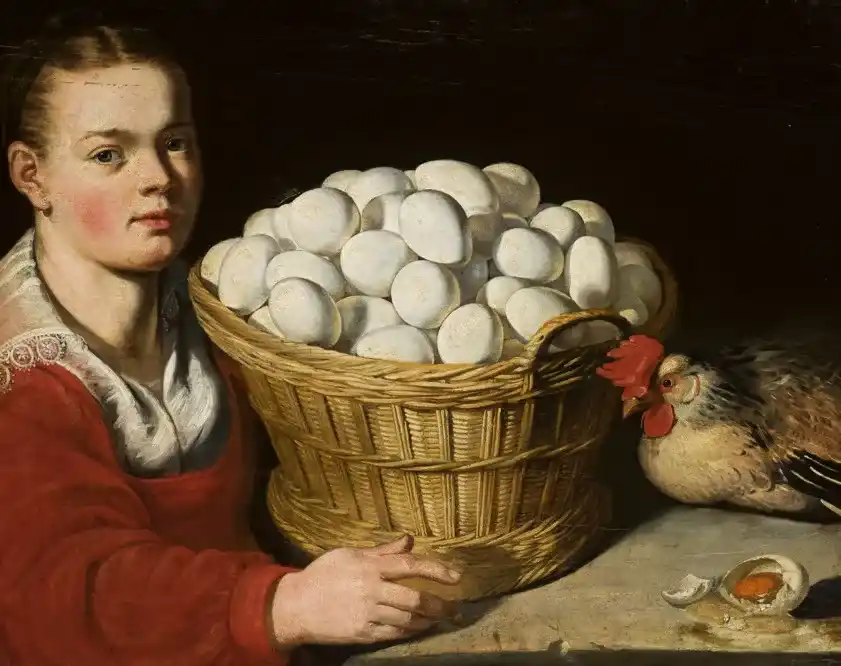
Artist an unknown follower of Joachim Beuckelaer (circa 1533–1575), Girl with a basket of eggs first half of 17th century, oil on oak panel.
Why are you procrastinating under stress?
FM Sirois (2023), who has written a journal review article on this topic, says, "procrastination is a low-resource means of avoiding aversive and difficult task-related emotions." People who procrastinate have higher stress levels, poorer health behaviors, lower self-rated health, used less adaptive coping strategies, had lower quality sleep, and had a greater number of physical illnesses and symptoms (discussion in Sirois 2023).
University students (3525 women and men, average age 24 years) who tend to procrastinate have greater stress over time. Procrastination was associated with depression; anxiety; stress; loneliness; disabling pain in upper body; unhealthy lifestyle behaviors like poor sleep and lack of exercise, and economic difficulties (Johansson et al. 2023).
Procrastination may be a sign that you need to take better care of yourself.
What is your excuse to procrastinate?
You are too tired? Too tired to work on your project but not too tired to scroll TikTok? If you are mentally or physically tired take a short nap or a ten minute walk to refresh yourself. Exercise strengthens your mitochondria to give you more energy.
You want it to be perfect? Let go of perfection - better done than never! Repeat after me: no one is perfect; 80% is good enough. Imperfection is beautiful. Perfection is boring.
Don't like to be told what to do? Own your own desire to do tasks. Say 'I choose to do this' not 'I have to do this' or 'I need to do this'. If you really don't want to do it maybe you need a new job or a housekeeper.
Guilt that it wasn't done last year? Remember: the best time to do something may have been in the past, but the second best time to do it is RIGHT NOW. Guilt is useless.
Too overwhelmed or too confused? Every house is built one nail at a time. Make manageable chunks out of every job. Create a plan and break it into small parts. Make the first part: research how to do it.
Don't know how to do it? Google and You Tube are your friends for instructional websites and videos! Almost all information is at your fingertips now.
In the not so distant past people used to have to walk all the way to a library to check out How to Books or ask advice from strangers with dubious facial hair hanging around garages and hardware stores. You don't have to do that!
Are you too stressed? Try some stress busters and hop into action.
Can't make decisions? Stop thinking and commit to a plan. There is not one perfect plan; many plans are suitable. Commit to one plan and follow it through.
Are you depressed? Find out what type of depression you have and how to start healing it. Sometimes action can help depression.
Challenge yourself: Start working towards the person you want to be by giving yourself goals and challenges. You are never too old to learn something new or to go on an adventure.
Just do it. Be the person who does things NOT the person who whines. You can rewrite your own history.
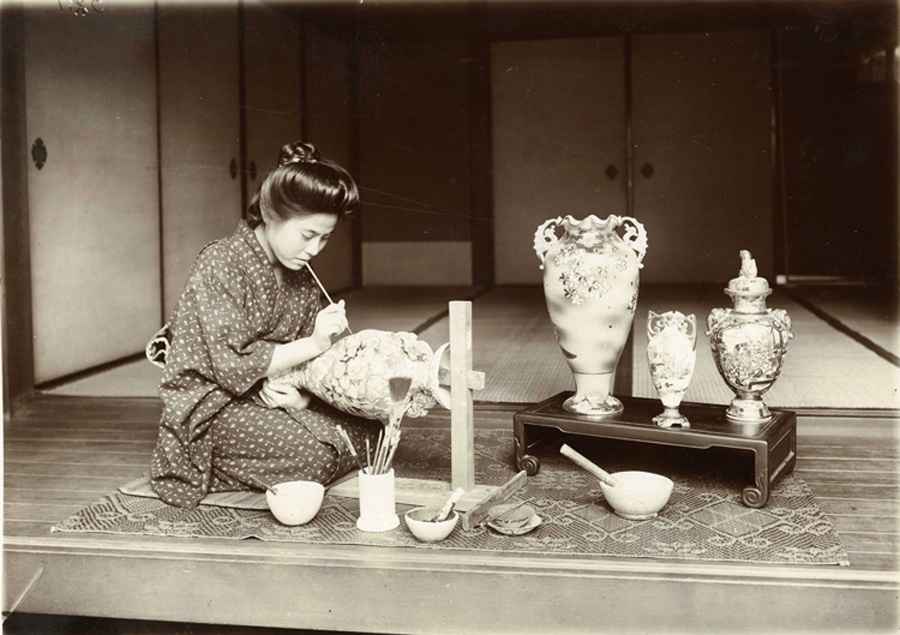
Painting porcelain in Kyoto, by Herbert Ponting c1907.
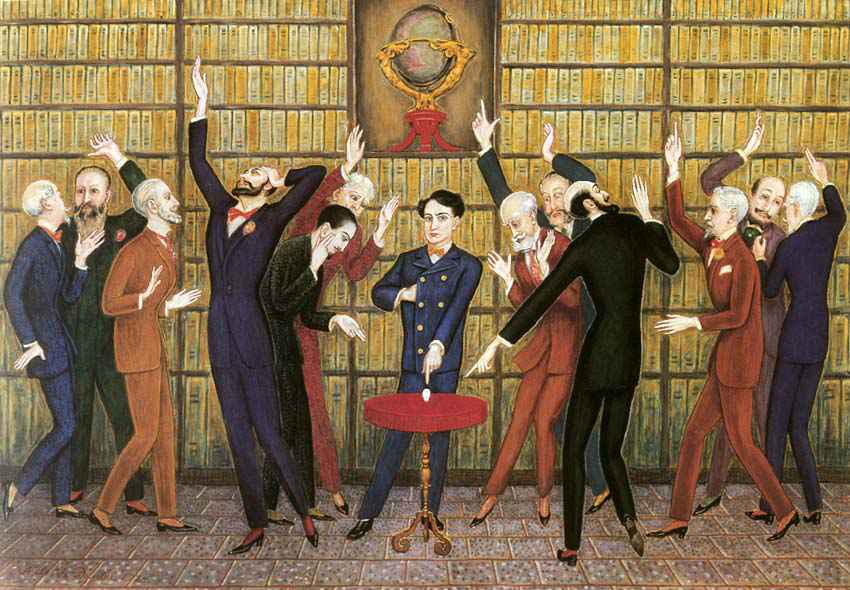
Don't just stand around doing nothing! Nils von Dardel Columbi ägg 1924.
Ten Tips to Combat Procrastination
1) Act when you see something small that needs done.
2) Set a timer and do something for 5 minutes. Tell yourself you can either quit or continue after the timer goes off.
3) Make a list or plan. What is your highest priority or bothering you the most?
4) Break your plan or tasks into small chunks and do one small part NOW.
5) Just do a task that is nearly done. It will be satisfying to check it off your list.
6) Head off distractions: turn phone on silent or use site blocking apps; close distracting browser windows; turn off the TV (unless you use it as white noise) etc. If friends show up to distract you, make them help you instead.
7) Try turning on motivating music (whatever that looks like to you). See what you can get done in 1 or more songs. I always have on music when I work and write.
8) Be realistic and kind to yourself.
9) Promise yourself a treat or reward when you are done if that helps.
10) Tackle the hardest task at your peak productivity times. Are you a morning person? Do the challenging task at the crack of dawn.
Does twilight energize you? Spend your nights tackling chores. Never waste prime times on e-mail and You Tube! Save that for times when energy is low.
Peter Baumgartner - Schlafender Soldat (1862) oil on canvas.
_19_11zon.jpg)
*Jen Q. (41 year old woman): "I beat procrastination by changing my approach to work or chores. I realized that I was always waiting for the perfect moment to start a task (like I will be suddenly inspired to wash the dishes ha, ha). And I thought I had to be in a productive mode to even start working. I would give up easily if I wasn't 'feeling it' while doing a chore.
But then I realized that I needed to just feel whatever I was feeling and just f**king do the thing anyway. If I feel mad or sad or whatever it didn't matter. To my surprise, by the time I was finished I usually felt better! By powering through unfun tasks I didn't want to do I built resilience and a sense of pride in myself."
By Susan Fluegel PHD Nutritional Biochemistry
*Names and some minor identifying details in all stories in this website are changed to protect people's privacy.
This information is for informational purposes only and does not constitute medical advice, diagnosis, or treatment.
References:
Johansson F, Rozental A, Edlund K, Côté P, Sundberg T, Onell C, Rudman A, Skillgate E. Associations Between Procrastination and Subsequent Health Outcomes Among University Students in Sweden. JAMA Netw Open. 2023 Jan 3;6(1):e2249346. doi: 10.1001/jamanetworkopen.2022.49346. Full article.
Sirois FM. Procrastination and Stress: A Conceptual Review of Why Context Matters. Int J Environ Res Public Health. 2023 Mar 13;20(6):5031. doi: 10.3390/ijerph20065031. Full article.