Service Dog Providers
Find a service dog
More information on service dogs
Do you need a service dog? Here are some organizations who provide service dogs for qualified veterans and non-veterans for FREE or close to FREE.
Each of these organizations has a different focus; so it is important to look at who they help.
Many nonprofits donate both dogs and dog handler training to qualified and approved people. Depending on the organization, you may be required to pay for transport, travel or other expenses.
All these organizations require pre-approval and have a wait time. You may need to gather documentation of your condition or recommendations from a doctor and/or the VA. Remember, it takes a lot of time, money and emotional energy to train a great service dog. A fully trained service dog can cost as much as $25,000-$50,000. These organizations want to ensure a stable match between dog and person and a safe home for the dog.
This is not an complete list of service dog providers; I tried to focus on organizations that are regional or nation-wide and are able to provide for dogs free or nearly free to recipients. There are some other good organizations who only provide help for those within their state or that require fundraising or a financial outlay on the part of the person getting the dog.
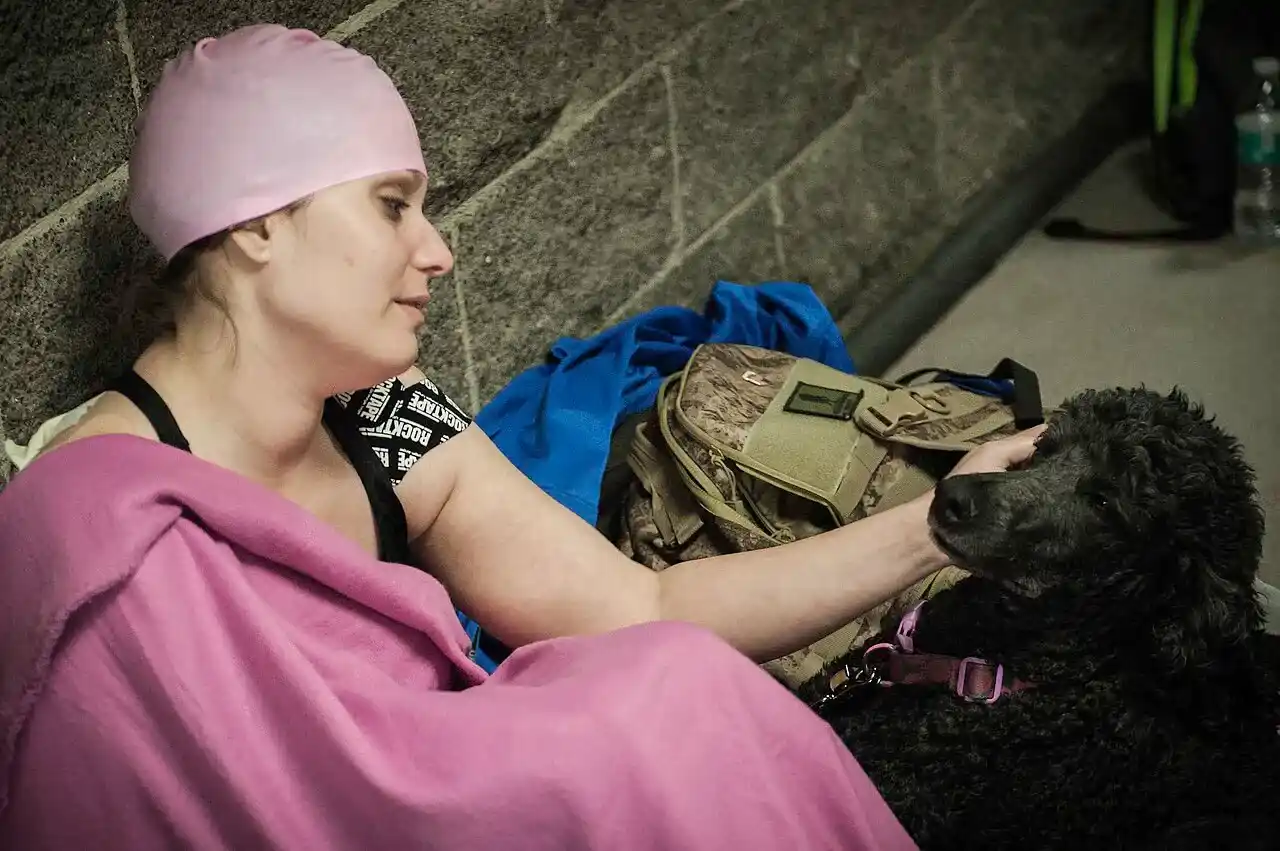
Ashley Crites, Air Force Wounded Warrior Trials swimming competitor, and her service dog at the AFW2 competition, University of Nevada Las Vegas pool Feb. 26, 2017.
Bayside Service Dogs: Dogs available at no cost to children, civilians, and veterans in need.
They encourage a pay-as-you-can campaign for service dogs but people are not turned away due to lack of funds.
This newer non-profit was founded in 2023. Provides dogs to people in need who are at least 10 years old. Dogs are trained for psychiatric and emotional disorders; mobility challenges; autism assistance; hearing alert; facility dogs and purposeful placements (dogs who perform at home tasks).
Puppies are obtained from qualified breeders and go through a year and eight month training process. No money required.
Freedom Service Dogs of America: dogs available for free to help qualified veterans, children and people with physical and mental challenges.
Colorado non-profit founded in 1987 provides trained service dogs to qualified veterans, children and teens with autism or other neurocognitive disabilities, and people with physical challenges resulting from multiple sclerosis, cerebral palsy, muscular dystrophy, spinal cord injuries, and traumatic brain injury.
They also provide professional therapy dogs to working professionals such as social workers, law enforcement, crisis support providers and more.
Provides service dogs and skilled companian dogs at no charge for:
People with mobility challenges from muscular dystrophy, stroke, multiple sclerosis, cerebral palsy, traumatic brain injury (TBI), spinal cord injuries and other problems.
Veterans with service related physical injuries, traumatic brain injury and PTSD. Qualified veterans will need to travel to Colorado.
Children and teens (5-18 years old) who are on the autistic spectrum or have neurocognitive difficulty.
Service Dogs for America: dogs available for adults and children over 12 years old from the lower 48 states who have a disability.
North Dakota nonprofit founded in 1989 provides trained service dogs to assist in mobility, emergency medical response, PTSD, and facility support.
Dogs are trained at Inmate Canine Assistance Programs. These programs benefit both the dog and the residents (inmates) who train them. The residents are carefully selected, handling the dogs is a reward for good behavior and judgement. Each dog is assigned to a team of 1-3 residents who are taught how to care for and train service dogs using positive reinforcement.
Learn how to apply for a service dog here.
Canine Companions: provides dogs to adults, children and veterans with disabilities. Also provides facility dogs to professions in health care, education and criminal justice settings.
This nonprofit with six regional training facilities provides trained dogs to qualified people free of charge. Dogs are fostered by a puppy raiser for their first 1.5 years of life.
Some pups are raised in the Canine Companions Prison Puppy Raising Program. Inmates who are selected in a rigorous selection process, are able to raise and socialize puppies under supervision. Since inmates have a lot of time, puppies raised in this environment get more one on one time with their handlers. Being responsible for a puppy also helps the inmates learn to give back to the community while giving their lives purpose.
Other dogs go to college with the Collegiate Puppy Raising program. College students work together under a faculty advisor to raise and train puppies. Some act as part time caregivers for the puppies.
Adult dogs go through 6-9 months of intense dog college to become a trained service animal. Contact Canine Companions to find out about service dogs in your region.
Mobility Danes of New England: mobility dogs for people in need (including veterans and first responders) between the ages of 12 and 70 years.
This Massachusetts non-profit trains sturdy Great Danes as mobility service dogs.
Dogs are available only to those who live in the northeast.
Great Danes are bred at the MA farm. Puppies are raised with plenty of fresh air and outdoor exercise. Dogs are trained to assist with mobility and additional training customizes the dogs skill set to help the eventual handler.
Applicants must live in the northeastern US. Dogs are donated to qualified applicants. You are required to travel to MA to train with the service dog. Apply for a service dog here.
The book of dogs; an intimate study of mankind's best friend (1919). Great Danes.
 5_81_11zon.jpg)
Donald McLeish A LIFE-SAVING ST. BERNARD AND HIS MASTER AT THE HISTORIC STEPS OF THE ST. BERNARD MONASTERY: SWITZERLAND. Barry, a St. Bernard that saved 40 lives.
 7_83_11zon.jpg)
The organizations below provide service dogs for veterans (sometimes first responders, doctors and next of kin)
America's VetDogs: Veterans and first responders.
NY nonprofit organization that trains dogs for many tasks, including PTSD service dogs, guide dogs, general service dogs, hearing dogs, and military facility dogs.
Puppies are trained during the week in the Prison Puppy Program in which screened and supervised inmates (honorably discharged incarnated veterans are given preference) raise and train future service dogs. During weekends, puppies go home with a volunteer to learn about life outside the pen. Due to the concentrated attention prison trained dogs receive, they normally breeze through their final training process in half the time of home raised pups.
These dogs do double duty in first helping an inmate give back to society and ultimately serving a veteran. Pays all related costs for a service dog for accepted veterans and first responders including travel. Apply for a service dog here.
Canine Companions for Independence: service dogs for veterans.
This national non-profit, with six regional training centers, trains service dogs, facility dogs, skilled companions and hearing dogs.
Dog breeds used are Labrador Retrievers, Golden Retrievers and crosses of the two especially bred for temperament, trainability and health. Puppies are raised with loving volunteer families or by women inmates in a Prison Puppy Raising Program.
Dogs are placed at no cost for veterans with physical disabilities related to military service. Apply for a service dog here.
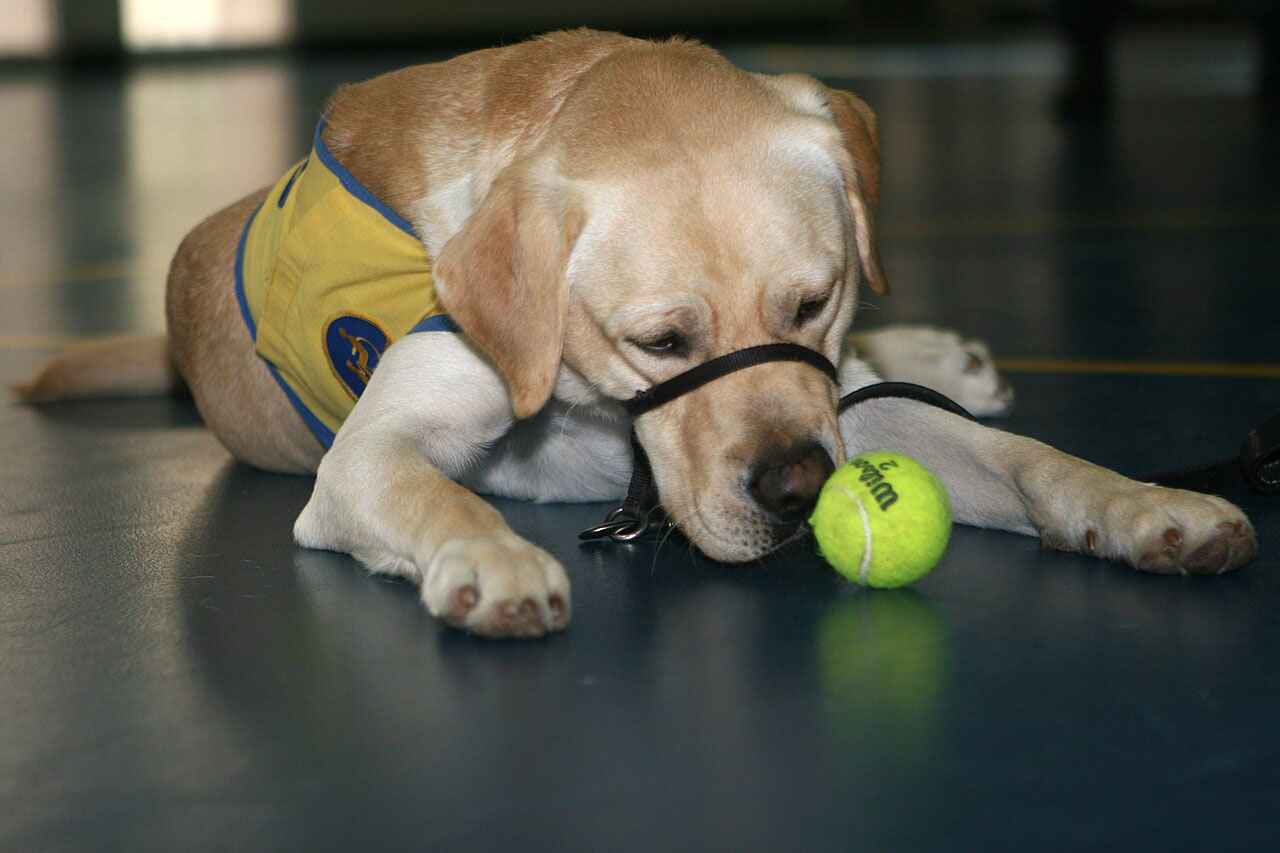
Roghan, a Labrador puppy with Canine Companions for Independence (CCI) trains for his adult role as a service dog. He is tempted with a fun ball during distraction training at Marine Corps Air Station Miramar, California. Specially selected prisoners at the brig are permitted to raise some puppies for CCI.
Canines for Service: provides dogs to veterans.
NC non-profit provides quality service dogs at no cost to qualified veterans with service connect disabilities including mobility, PTSD, and traumatic brain injury.
Dogs used are rescue dogs. Service dogs are carefully matched to their handlers for the best results.
Service dogs placed at no charge to qualified veterans. Veterans need to pay travel expenses to Charleston, SC for training with dog. Apply for a service dog here.
Companions for Heros: provides service dogs to veterans, first responders, some doctors and next of kin.
Georgia non-profit that provides military personnel, veterans, first responders, law enforcement, trauma and emergency doctors and immediate family members and next-of-kin with companion dogs and/or cats obtained from shelters and/or rescues. Will pay for pet adoption fees, schedule check-ins, and provide cost-free AKA training for the dog to meet the requirements of the Americans with Disabilities Act of 1990. This includes training dogs to help with anxiety.
Companions for Heros do not train the dogs themselves. They focus on three types of service animals: companion dogs or cats that provide emotional support, skilled assistance dogs that are trained to help with tasks but are not granted public access, and service dogs for PTSD/Anxiety which are trained to do work for people with emotional and/or physical disabilities and have the legal right to public access. Check out Companions for Heros here.
K9s for Warriors: Veterans.
This Florida non-profit trains rescued animals as service dogs. Animals are provided for veterans suffering from traumatic brain injury, PTSD, and/or military sexual trauma (MST) only.
There are some great testimonials as to what having a service dog has meant to the veterans.
Currently, 68% of the service dogs are rescue animals selected from high kill shelters. To reduce the wait time for dogs from 4 years to 18 months, recently the decision was made to obtain some dogs from select breeders. However, the team still continuously searches high kill shelters for suitable dogs to facilitate their mission of saving two lives. Puppies are raised by volunteers in their homes.
There is no cost for dog or for lodging but you may need to pay for transportation for training. Apply for a service dog here.
Operation Delta Dog: Veterans.
Non-profit that rescues homeless dogs and trains them as service dogs for veterans with TBI, PTSD and MST. Meet the great variety of service dogs at Operation Delta Dog and read their stories.
One of the ways Operation Delta Dog raises money is through their Walk & Wag for Veterans and other events. Funding also comes from sponsorships.
This is a regional program for veterans who live in northeastern Massachusetts, southern New Hampshire, or within driving distance of the training classes in the Lowell, MA area. Veterans who have a diagnosis of TBI, MST and/or PTSD are welcome to apply. Application information for service dogs here.
PatriotPaws Service Dogs: Veterans with mobility disabilities, TBI, or PTSD.
Texas nonprofit that trains and provides service dogs to veterans with a service related disability at no cost. Service dogs include mobility assistance service dogs, PTSD dogs, companion dogs, therapy dogs, and social/skilled companion dogs.
Dogs used are from breeder donations, rescue dogs and service dog puppy raisers.
The Prison Program trains women and men prison inmates to train service dogs. Dogs live with the inmates in a dormitory like area which includes outdoor runs. Inmates are tested quarterly on their ability to train potential service dogs in the 55 behaviors needed for certification.
Prison programs have been shown to help prevent recidivism in former inmates. For example, the recidivism rate for inmate dog trainers in this program is less than 3%. Volunteers help socialize dogs to life outside the pen.
Service dogs are donated to qualified veterans. You must pay transportation and accommodation costs for 10 days of training with the dog in Texas. Apply for a service dog here.
Paws of War: Veterans and their families.
This organization helps veterans and war torn pets. They have several great programs:
Service dogs and support dogs free for qualified veterans. This includes PTSD and TBI service dogs.
War Torn Pups and Cats: No pet is left behind! This program brings dogs and cats rescued by military personnel serving overseas home with them.
A mobile vet clinic free for veterans throughout Long Island CA.
Helping Heros provides food, fencing or other needs for veterans and their pets.
Mission Well Done: finds great homes for retired working and service dogs so they can have the retirement they deserve. Pays for all the dogs veterinarian needs.
Ukraine Rescue: helps both people and their pets in war ravished Ukraine.
Paws of War trains rescue and shelter dogs to be service or companion dogs. Many of these animals are obtained from kill shelters.
Check out the application process for service dogs here.
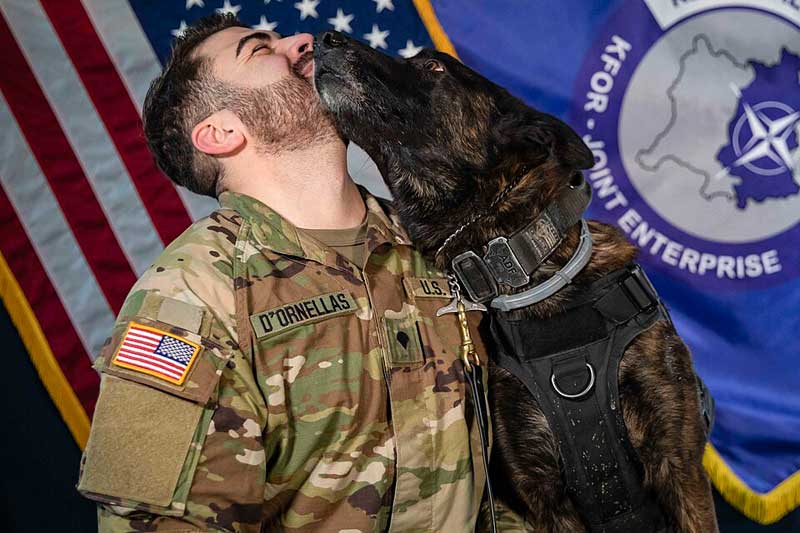
Military working dog Ddunn distracts his handler, Army Spc. Richard D’ornellas, as they sit for a photo at Camp Bondsteel, Kosovo 2023.
Puppy Jake Foundation: Veterans.
Iowa nonprofit providing service dogs to restore independence to veterans.
See cute pictures of the golden retrievers, labrador retrievers and German shepherds puppies they are training here. Puppies are purchased from breeders and raised by foster families. Service dogs are trained to the specific needs of each veteran.
There is no charge for the service dog or training camp for accepted veterans. Apply for a service dog here (there is an $150 application fee).
The Battle Buddy Foundation: Service disabled combat veterans.
Ohio and California non-profit organization committed to helping veterans with PTSD, TMI and other combat related injuries. This small non-profit provides psychiatric and mobility service dogs at no cost to veterans; contact them here.
Most puppies are donated by breeders. Puppies are raised by committed volunteers.
This website works better on a smaller window (it is designed for a phone or small device). If viewing on a large screen computer, make the window smaller for a better viewing experience.
A Scotch lassie and her half-dozen setter puppies. Photograph by William Reid.

This Able Veteran: Veterans suffering with PTSD. They also train dog trainers!
In this program, veterans with PTSD are individually accessed in order to pair them with the ideal PTSD service dog. The dog and veteran are trained as a team during a three-week Trauma Resiliency program.
This Able Veteran has partnered with Clinical Outcomes Group and SIU Carbondale's department of psychology to study the effectiveness of their approach. So far the research shows that veteran's PTSD symptoms significantly decrease during the program and the 6 months afterward. See the results of this research study on service dogs and PTSD.
Here is the application for This Able Veteran's service dog program.
Warrior Canine Connection: Veterans.
In this MD non-profit, veterans train dogs to help other veterans. They use a Mission Based Trauma Recovery model where warriors interact with the dog as it moves from puppyhood to adult dog. Warrior Canine Connection trains and places dogs for people with physical and psychiatric disabilities, as well as facility dogs and military family support dogs.
Golden Retrievers and Labrador Retrievers are bred and trained as service dogs. Puppies are raised in an enriched environment and are named after service members and veterans who have made significant contributions to the USA. Dogs are named in honor of Veterans and Service Members. Check out the adorable puppy cam!
At 10 weeks, puppies are placed with a family who cares for them for the next 18-24 months.
Dogs are placed with veterans for free but there may be transportation and accommodation costs for a two week training camp. Apply for a service dog here.
Working Dogs for Vets: Veterans.
Tennessee non-profit that trains shelter and rescue dogs to become service dogs for disabled veterans. They have a No Veteran Left Behind Program that enables veterans across the country to train their own service dog. Veterans may be able to train their own pet but normally they are matched with a suitable shelter dog. This program uses volunteers and other veterans to form a team to help train service dogs.
Working Dogs for Vets does not charge for their services, it is 100% volunteer based. They ask that people pay it forward by helping other veterans train their service dogs.
Check out the application process for service dogs here.
Patriot Service Dogs: Honorably discharged veterans under 70 years old.
Dogs are trained to help veterans with PTSD and MST (military sexual trauma), mobility or balance issues and to help retrieve items.
Puppies are trained at the Lowell Correctional Facility in Central Florida by a inmate-trainer starting with an eight week program called WOOF. Often this same trainer continues to teach the dog for two years as they graduate from simple commands to more complex ones. Volunteer puppy raisers take the dog on field trips outside the correction unit 2x a week. The puppies work on skills they connect get in an institutional setting. Over the next two years the puppies learn 89 different commands!
Patriot Service Dogs normally selects its service dogs from specially bred puppies but occasionally a special rescue dog makes the cut and is devoted from pet training into service pup training.
Veterans application for service dogs here.
Why correctional facilities (prisons) are the perfect place to train service rescue dogs.
You may have noticed that a lot of these service dog organizations use inmate programs to either raise puppies, train older dogs or both. This is a great idea for serval reasons:
Training dogs or raising puppies is a highly desirable job in prison. Many people want to do this and there is normally a waiting list. This means that the selection process can be pretty rigorous to get great puppy wranglers. Obviously, only the best behaved are selected to look after the pups.
Prisoners have nothing but time. There are no kids to raise and no commuting job. They can be with and train the dogs 24-7.
Many inmates are lonely and have lots of love to devote on their canine charges.
Training the job gives inmates a important role to play in society. They are giving back by training a dog while gaining valuable skills for gainful employment later.
Any skills the dogs cannot be taught in an institutional setting are taught by other volunteers who coordinate with the inmate trainer. They teach the dogs to socialize in restaurants, stores etc.
The ADA defines Service Animals as either dogs or miniature horses. Other animals are not considered Service Animals but can be Emotional Support or Therapy Animals.
The revised Americans with Disabilities Act (ADA) states that "a service animal is any dog that is individually trained to do work or perform tasks for the benefit of an individual with a disability, including a physical, sensory, psychiatric, intellectual, or other mental disability...
Miniature Horses
A public entity or private business must allow a person with a disability to bring a miniature horse on the premises as long as it has been individually trained to do work or perform tasks for the benefit of the individual with a disability, as long as the facility can accommodate the miniature horse's type, size, and weight. The rules that apply to service dogs, outlined below, also apply to miniature horses."
If you cannot have a service dog due to allergies or religious reasons consider a miniature horse instead.
(information on service animals accessed Feb 11, 2026).
Do you want to help?
All of these organizations need volunteers as well as financial help.
Check out the individual links for more information on how to contribute.
The book of dogs; an intimate study of mankind's best friend (1919).
 6_82_11zon.jpg)
By Susan Fluegel PHD Nutritional Biochemistry
*Names and some minor identifying details in all stories in this website are changed to protect people's privacy.
This information in this website is for informational purposes only and does not constitute medical advice, diagnosis, or treatment.