What Causes Exercise Intolerance
Exercise intolerance is when your body has a hard time performing exercise or other activities.
Exercise or just living makes you feel worse NOT better.
*Evelyn P. (24 year old woman) "Just walking to the car from my front door made me short of breath and light-headed. Any kind of mild activity - no matter how easy - makes me feel sick to my stomach and causes my head to throb painfully. I get dizzy, weak, achy, sick and overly fatigued. I feel like taking a nap and often crash for several hours. When I get up I still feel tired."
Exercise intolerance is very similar or identical to: Post-exertional malaise (PEM), post-exertional symptom exacerbation (PESE) and post-exertional neuroimmune exhaustion(PENE)
These are medical conditions that causes symptoms to get worse after even minor physical or mental exertion. It is common in Long COVID, fibromyalgia, and myalgic encephalomyelitis/chronic fatigue syndrome (ME/CFS).
Click here to see what might help with exercise intolerance.
So what causes exercise intolerance anyway?
The following list is for Long COVID, but it is extremely likely that all people with exercise intolerance or PEM have some or all of these dysfunctions. Luckily, Long COVID is ramping up research for all sorts of disorders including chronic fatigue disorders, traumatic brain injuries (TBI) and concussions. The good news is, many of these problems can be corrected or at least improved with diet, brain training, and, ironically, exercise to help strengthen your mitochondria.
18 potential causes for exercise intolerance or PEM
- 1) Mitochondrial dysfunctions
- 2) Impaired oxygen extraction
- 3) Autonomic nervous system (ANS) dysregulation
- 4) Cerebral Autoregulation (CA)
- 5) Abnormal skeletal muscle structure
- 6) Reduced exercise capacity
- 7) Deconditioning
- 8) Dysfunctional breathing or breathing pattern disorders
- 9) Hypocapnia
- 10) Ventilatory inefficiency (V/Q mismatch)
- 11) Impaired microcirculation
- 12) Endothelial dysfunction
- 13) Abnormal blood clotting markers
- 14) Pulmonary vascular problems
- 15) Heart preload failure
- 16) Chronotropic incompetence
- 17) Loss of mechanical efficiency
- 18) Exercise may consume metabolites needed for energy and repair
1) Mitochondrial dysfunctions occur in people with no energy:
This occurs when mitochondria produce less energy and/or over produce inflammatory chemicals due to disease, genetic abnormality or disuse. Any disease or disorder that increases inflammation, such as metabolic disorders, can cause mitochondria dysfunction. COVID-19 can influence your mitochondria.
People with mitochondria mutations or disorders often have exercise intolerance. Aerobic activity can improve mitochondria health and increase exercise tolerance even in people with mitochondria mutations (Jeppesen 2020).
SARS-CoV-2, the COVID-19 virus, can infect mitochondria and integrate their viral genome into mitochondrial DNA. This could impair mitochondrial energy metabolism by targeting oxygen use and availability (Stefano et al. 2022). One human study found that impaired exercise capacity in Long COVID patients was associated with lower mitochondrial function (Appelman et al. 2024).
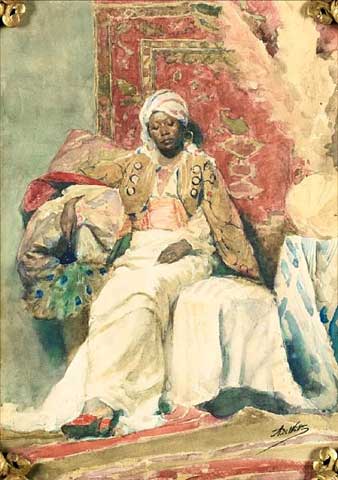
Adrien de Witte (1850-1935) - Rêverie watercolor unknown date.
2) People with exercise intolerance have impaired oxygen extraction:
Kahn et al. 2023 found that 41 out of 55 people with Long-COVID and exercise intolerance had impaired peak systemic oxygen extraction (pEO2). So what does that mean? The heart was pumping normally and the lungs were oxygenating the blood normally, BUT the body's tissues were unable to take up the oxygen. The tissues were low in oxygen.
So far researchers are not sure what is causing this problem. They believe it may be due to vascular beds either not constricting enough or not directing intramuscular blood flow to the appropriate spot.
Lack of oxygen may contribute to strenuous exercise triggering mitochondrial dysfunction in muscle cells (Appelman et al. 2024).
3) Autonomic nervous system (ANS) dysregulation is common after any brain injury:
The ANS controls involuntary physiologic processes such as heart rate, blood pressure, breathing, digestion, metabolism, water balance, sexual responses and temperature. The ANS and other brain regions can be damaged as a result of a concussion, brain injury, Long COVID, inflammation or other immune disorders.
The ANS is comprised of two parts, the sympathetic nervous system (SNS) and the parasympathetic nervous system (PNS). The SNS prepares the body for an emergency (fight, flight, flop, friend or freeze). It does this by increasing cortisol production, ramping up heart rate, increasing blood pressure, and releasing stored fats and sugars while suppressing non-needed systems like digestion and flirting. After the stressful event, the PNS slows the heart rate and helps the body return to normal.
When this system is out of whack (scientific term meaning we have no idea how to describe the mess), you have problems with automatic regulation during exercise. Activities like exercise put a lot of demands on your body. Heart rate, blood pressure, blood flow and nutrient flow need to increase temporarily during the activity and return to normal when you are done.
When you have exercise intolerance, the SNS keeps overreacting like a drama llama in full meltdown. Blood pressure and blood flow regulation to the brain don't work properly. This is known as vascular dysregulation. Symptoms include feeling pressure in your head, headaches that feels like a large band is tightening around your head, heart pounding sounds in your head, shortness of breath, or nauseated feelings.
The only way to heal this and return your ANS to normal is by exercising and gradually training your system to behave normally again (Leddy et al. 2020).
4) Exercise intolerance may be due to cerebral autoregulation (CA):
This is the ability of the brain blood vessel network (cerebral vasculature) to keep blood flow stable despite changes in body blood pressure. Physical, emotional, and/or mental stress causes heart rate and blood pressure changes. Regulating this through CA change helps maintain a constant blood flow and pressure throughout the brain.
By communicating with the ANS, CA can constrict (make smaller) or dilate (make larger) the blood vessels coming into the brain. If the CA neurons are damaged after a brain injury or microclots due to a virus like COVID-19, they may not respond correctly to blood pressure changes.
Due to this, exercise can increase blood pressure in your brain, which causes nausea, chronic pain, dizziness, and headaches. Likewise, if blood pressure decreases, it causes light-headedness or dizziness. Like with a dysfunctional ANS, you need to exercise to retrain the CA system.
5) People with Long COVID show abnormal skeletal muscle structure:
Researchers compared 25 women and men with Long COVID to 21 controls (average age 42). None of the people had been hospitalized with COVID-19. People with Long COVID (LC) had abnormal skeletal muscle structure.
People with LC had amyloid-containing deposits in skeletal muscles and an increased proportion of fast twitch glycolytic muscle fibers (Appelman et al. 2024). These muscle fibers have fast contractions, contain less mitochondria, use anaerobic glycolysis for ATP/energy source, and tire quickly. Having these abnormal muscles is associated with a lower exercise capacity in people.
In other words, muscles are easily tired leaving people prone to chronic fatigue.
6) Most people with exercise dysfunction have a reduced exercise capacity:
This is a pretty nonspecific term that means you have some unknown dysfunction in some unknown part of the complex exercise response. Not very helpful for figuring out how to solve the problem. Extremely unhelpful if that is all your doctor tells you.
7) Deconditioning occurs when you are sick:
A fancy word for getting out of shape due to physical inactivity or spending three months in a hospital bed. You can be deconditioned and still have exercise intolerance.
8) People with Long COVID may have dysfunctional breathing or breathing pattern disorders:
This is a respiratory condition characterized by irregular or abnormal breathing patterns. It may include hyperventilation, breathlessness, wheezing, cough, throat tightness, or exercise-induced bronchoconstriction. A very small study noted that 20 out of their 21 post recovery COVID-19 patients had breathing dysregulation (van Voorthuizen et al. 2022).
9) People with exercise intolerance may have hypocapnia:
Hypocapnia is a dysfunctional breathing disorder where people have abnormally low concentrations of CO2 caused by rapid, deep breathing (hyperventilation). Symptoms include dizziness, inability to think clearly, fatigue, headaches, high blood pressure, twitchy muscles, shortness of breath and rapid breathing.
Compared to fitness matched controls, people with chronic fatigue syndrome (ME/CFS) had inefficient exercise ventilation and augmented perception of effort (Cook et al. 2022). Ventilatory efficiency is the amount of ventilation present relative to the amount of CO2 present.
When you have a high level of ventilation relative to the amount of CO2 it likely means that the people with ME/CFS's lungs had to work harder than usual to get rid of excess CO2.

10) Exercise intolerance may be caused by ventilatory inefficiency (V/Q mismatch):
This is when one or more areas of the lungs receive oxygen but do not receive blood flow or they receive blood flow and do not receive oxygen (Neder et al. 2022).
11) People with Long COVID can have impaired microcirculation:
Blood circulation is impaired; capillaries become clotted or blocked; and there is abnormal distribution of microvascular blood flow. Blood does not reach inner cells due to blockages.
This may be due to amyloid-containing deposit accumulation in blood vessels causing local hypoxia (Appelman et al. 2024).
12) Endothelial dysfunction in Long COVID:
Cells lining the blood vessels are diseased or abnormal. Typically there is imbalanced vasodilation and vasoconstriction, elevated amounts of reactive oxygen species (ROS), an excess of proinflammatory factors, and too little nitric oxide (NO) bioavailability. One study (618 women and men), found that approximately 50% of Long COVID patients had endothelial dysfunction including impaired microcirculation (Charfeddine et al. 2021).
Endothelial dysfunction and thrombosis can be fueled by cross-talk between immune cells and structural cells in the pulmonary vasculature (Kumar et al. 2023). Scientists use the term cross talk to describe direct or indirect effects that one signaling pathway can have on a different signaling pathway.
13) People with impaired exercise capability have abnormal blood clotting markers:
Long COVID messes with blood clotting markers. Long COVID can affect the ratio of Von Willebrand factor (VWF), a protein that helps clot blood, to ADAMTS13, a protein that helps control VWF in order to prevent it from clogging up blood vessels. Some Long COVID patients had more VWF than ADAMTS13 in the bloodstream which means that they have more chance of developing blood clots.
About 55% of people with Long COVID and impaired exercise capability had a VWF/ADAMTS13 ratio of equal or greater to 1.5 (only 28% of Long COVID patients altogether had a VWF/ADAMTS13 ratio of equal or greater to 1.5. (Prasannan et al. 2022).
14) The virus may cause pulmonary vascular problems:
This includes a variety of conditions affecting the blood vessels between the heart and lungs, such as overall inflammation, edema, alveolar damage, microthrombosis, and the buildup of cytotoxic molecules in lung vasculature. It may be fueled by interactions between immune cells and pulmonary vascular structural cells (Kumar et al. 2023).
15) Viruses can cause heart preload failure:
This is a reduced pressure in the right atrial of the heart along with reduced VO2 max.
16) Long COVID may cause chronotropic incompetence, an inability to increase heart rate when exercising:
Some subgroups of people with Long COVID showed the inability to increase heart rate in response to exercise (Mustonen et al. 2024).
17) Lack of energy may be due to loss of mechanical efficiency:
People with Long COVID had loss of mechanical efficiency (Pleguezuelos et al. 2021). This means it takes you more energy to do the same amount of work.
Mechanical efficiency is a person's ability to transfer energy consumed as food into external work. Poorer mechanical efficiency will increase the percentage of maximal oxygen uptake (VO2max) required to perform or to sustain mechanical work (exercise). If you have reduced mechanical efficiency you need more energy to perform at a given work output. In other words, it costs a person with Long COVID more adenosine triphosphate (ATP) to do work than a healthy person.
Cook et al. 2022 reported that people with ME/CFS consistently rated exercise as requiring more effort than their matched controls.
18) Exercise may consume metabolites needed for energy and repair:
Baraniuk 2025 found several metabolic changes in the cerebrospinal fluid in people with post-exertional malaise (PEM) and myalgic encephalomyelitis (ME/CFS) that indicated metabolic disturbances. ME/CFS has many of the same symptoms as long COVID (Jason and Dorri 2022). PEM is another term for exercise intolerance.
In people with PEM, exercise consumed metabolites; in the control group, exercise generated metabolites. Think about this: IF you have exercise intolerance your body may be using up your metabolites that are needed to make energy and repair your body!
Disruption from this includes (discussed in Baraniuk 2024):
1) Changes in glucose, the citric acid cycle, trans-aconitate, and coenzyme A in energy metabolism.
2) Changes in folate and one-carbon metabolism that affect sarcosine, creatine, purines, and thymidylate (used in DNA biosynthesis)
People with PEM had elevated serine (an amino acid) and decreased phospholipids, which was correlated with decreased 5MTHF, the active form of folate. Folate is an essential B vitamin responsible for one-carbon metabolism in the brain. One carbon metabolism plays an essential role in epigenetic through methylation, DNA repair, lipid metabolism, purine synthesis and more (see Virdi et al 2023).
3) Shifts in aromatic and anaplerotic amino acids. Anaplerotic molecules re-fill or replenish the intermediary molecules in the citric acid cycle so are important in energy production.
4) Brain white matter dysfunction as indicated by increased sphingomyelins and hexylceramides and fMRI alterations.
By Susan Fluegel PHD Nutritional Biochemistry
*Names and some minor identifying details in all stories in this website are changed to protect people's privacy
I'm not your doctor so this is not medical information. I'm just a person who would like to see you happy and healthy. If you have any questions or concerns about starting an exercise regiment, diet program, or supplements please consult a professional.
Disclaimer: This is not medical advice. Exercise intolerance can be caused by problems that need treated; like heart disease. Please try to find out what is causing your exercise intolerance.
References:
Appelman B, Charlton BT, Goulding RP, Kerkhoff TJ, Breedveld EA, Noort W, Offringa C, Bloemers FW, van Weeghel M, Schomakers BV, Coelho P, Posthuma JJ, Aronica E, Joost Wiersinga W, van Vugt M, Wüst RCI. Muscle abnormalities worsen after post-exertional malaise in long COVID. Nat Commun. 2024 Jan 4;15(1):17. doi: 10.1038/s41467-023-44432-3. Full article.
Baraniuk JN. Exertional Exhaustion (Post-Exertional Malaise, PEM) Evaluated by the Effects of Exercise on Cerebrospinal Fluid Metabolomics Lipidomics and Serine Pathway in Myalgic Encephalomyelitis/Chronic Fatigue Syndrome. International Journal of Molecular Sciences. 2025; 26(3):1282. https://doi.org/10.3390/ijms26031282 Full article.
Charfeddine S, Ibn Hadj Amor H, Jdidi J, Torjmen S, Kraiem S, Hammami R, Bahloul A, Kallel N, Moussa N, Touil I, Ghrab A, Elghoul J, Meddeb Z, Thabet Y, Kammoun S, Bouslama K, Milouchi S, Abdessalem S, Abid L. Long COVID 19 Syndrome: Is It Related to Microcirculation and Endothelial Dysfunction? Insights From TUN-EndCOV Study. Front Cardiovasc Med. 2021 Nov 30;8:745758. doi: 10.3389/fcvm.2021.745758. Full article.
Cook DB, VanRiper S, Dougherty RJ, Lindheimer JB, Falvo MJ, Chen Y, Lin JS, Unger ER; MCAM Study Group. Cardiopulmonary, metabolic, and perceptual responses during exercise in Myalgic Encephalomyelitis/Chronic Fatigue Syndrome (ME/CFS): A Multi-site Clinical Assessment of ME/CFS (MCAM) sub-study. PLoS One. 2022 Mar 15;17(3):e0265315. doi: 10.1371/journal.pone.0265315. Full article.
Durstenfeld MS, Sun K, Tahir P, Peluso MJ, Deeks SG, Aras MA, Grandis DJ, Long CS, Beatty A, Hsue PY. Use of Cardiopulmonary Exercise Testing to Evaluate Long COVID-19 Symptoms in Adults: A Systematic Review and Meta-analysis. JAMA Netw Open. 2022 Oct 3;5(10):e2236057. doi: 10.1001/jamanetworkopen.2022.36057. Full article.
Hord NG, Tang Y, Bryan NS. Food sources of nitrates and nitrites: the physiologic context for potential health benefits. Am J Clin Nutr. 2009 Jul;90(1):1-10. doi: 10.3945/ajcn.2008.27131. Full article.
Jason LA, Dorri JA. ME/CFS and Post-Exertional Malaise among Patients with Long COVID. Neurol Int. 2022 Dec 20;15(1):1-11. doi: 10.3390/neurolint15010001. PMID: 36648965; Full article.
Jeppesen TD. Aerobic Exercise Training in Patients With mtDNA-Related Mitochondrial Myopathy. Front Physiol. 2020 May 21;11:349. doi: 10.3389/fphys.2020.00349. Full article.
Jones AM, Vanhatalo A, Seals DR, Rossman MJ, Piknova B, Jonvik KL. Dietary Nitrate and Nitric Oxide Metabolism: Mouth, Circulation, Skeletal Muscle, and Exercise Performance. Med Sci Sports Exerc. 2021 Feb 1;53(2):280-294. doi: 10.1249/MSS.0000000000002470. Full article.
Kahn PA, Joseph P, Heerdt PM, Singh I. Differential cardiopulmonary haemodynamic phenotypes in PASC-related exercise intolerance. ERJ Open Res. 2024 Feb 12;10(1):00714-2023. doi: 10.1183/23120541.00714-2023. Full article.
Kumar R, Aktay-Cetin ö, Craddock V, Morales-Cano D, Kosanovic D, Cogolludo A, Perez-Vizcaino F, Avdeev S, Kumar A, Ram AK, Agarwal S, Chakraborty A, Savai R, de Jesus Perez V, Graham BB, Butrous G, Dhillon NK. Potential long-term effects of SARS-CoV-2 infection on the pulmonary vasculature: Multilayered cross-talks in the setting of coinfections and comorbidities. PLoS Pathog. 2023 Jan 12;19(1):e1011063. doi: 10.1371/journal.ppat.1011063. Full article.
Leddy JJ, Wilber CG, Willer BS. Active recovery from concussion. Curr Opin Neurol. 2018 Dec;31(6):681-686. doi: 10.1097/WCO.0000000000000611. Full article.
Mustonen T, Kanerva M, Luukkonen R, Lantto H, Uusitalo A, Piirilö P. Cardiopulmonary exercise testing in long covid shows the presence of dysautonomia or chronotropic incompetence independent of subjective exercise intolerance and fatigue. BMC Cardiovasc Disord. 2024 Aug 8;24(1):413. doi: 10.1186/s12872-024-04081-w. Full article.
Pleguezuelos E, Del Carmen A, Llorensi G, Carcole J, Casarramona P, Moreno E, Ortega P, Serra-Prat M, Palomera E, Miravitlles MM, Yebenes JC, Boixeda R, Campins L, Villelabeitia-Jaureguizar K, Garnacho-Castaño MV. Severe loss of mechanical efficiency in COVID-19 patients. J Cachexia Sarcopenia Muscle. 2021 Aug;12(4):1056-1063. doi: 10.1002/jcsm.12739. Full article.
Prasannan N, Heightman M, Hillman T, Wall E, Bell R, Kessler A, Neave L, Doyle A, Devaraj A, Singh D, Dehbi HM, Scully M. Impaired exercise capacity in post-COVID-19 syndrome: the role of VWF-ADAMTS13 axis. Blood Adv. 2022 Jul 12;6(13):4041-4048. doi: 10.1182/bloodadvances.2021006944. Full article.
Stefano GB, Büttiker P, Weissenberger S, Ptacek R, Wang F, Esch T, Bilfinger TV, Raboch J, Kream RM. Biomedical Perspectives of Acute and Chronic Neurological and Neuropsychiatric Sequelae of COVID-19. Curr Neuropharmacol. 2022;20(6):1229-1240. doi: 10.2174/1570159X20666211223130228. Full article.
van Voorthuizen EL, van Helvoort HAC, Peters JB, van den Heuvel MM, van den Borst B. Persistent Exertional Dyspnea and Perceived Exercise Intolerance After Mild COVID-19: A Critical Role for Breathing Dysregulation? Phys Ther. 2022 Oct 6;102(10):pzac105. doi: 10.1093/ptj/pzac105. Full article.
Virdi S, McKee AM, Nuthi M, Jadavji NM. The Role of One-Carbon Metabolism in Healthy Brain Aging. Nutrients. 2023 Sep 7;15(18):3891. doi: 10.3390/nu15183891. Full article.