What is Long COVID?
You may not be afraid of COVID-19 but you should be afraid of Long COVID (LC)
Lying in bed for over a year, losing your job because your focus and memory are gone, unable to walk without breathlessness, not being able to smell, feeling weak and dizzy: all these are symptoms of long COVID.
One reason Long COVID gets trash talked is that it is not a clearly defined disorder. That doesn't mean it is fake though. This disorder can influence multiple body systems in different ways. No two people with Long COVID have the exact same symptoms.
According to the National Academies of Science, Medicine, and Medicine, Long COVID is a complex chronic condition. It can result in over 200 health outcomes across multiple body systems. We are learning more about the symptoms of Long COVID every day.
Want to know what causes Long COVID? Check out how the immune system may contribute to Long COVID plus other weird and odd Long COVID causes here.
If you have Long COVID find a good doctor that believes you! Don't put up with being treated poorly.
Jessie O (62 year old woman): "The crap some doctors say in medical subreddits about long covid and similar disorders like fibromyalgia are totally shocking. The total lack of sympathy and the overwhelming arrogance is insane. They talk about their patients like they are pretending to be ill ... for what reason would someone want to lay in bed all day? It has opened my eyes to the willful blindness and huge ego of many doctors."
 by Vasiliy Polenov c1873 oil on canvas_39_11zon.jpg)
Ill girl (preliminary version) by Vasiliy Polenov c1873 oil on canvas.
If you want a little light bed time reading, here is the full report on the Long-Term Health Effects of COVID-19. It is 242 pages of excitement and fun, you may want to save this for nights when you cannot sleep.
Eight Long COVID subtypes with common symptoms (symptoms listed from most prevalent to least prevalent):
Respiratory 20%: breathlessness, dyspnea, cough, chest pain, chest tightness, congestion
General fatigue 20%: severe and/or constant fatigue
Psychological 18%: PTSD and cPTSD symptoms, depression, mood swings, insomnia, anxiety
Neurological 16%: memory problems, malaise, headache, sleep problems, loss/change of smell, loss/change of taste or smell, vision problems, tremors/chills, tinnitus
Dermatological 12%: hair loss, skin rashes
Cardiovascular 10%: tachycardia (heart beat over 100 beats/minute), palpitations (abnormal heartbeat), hypertension, arrhythmia (irregular heartbeat)
Musculoskeletal 9%: muscle weakness, joint pain, myalgia (muscle pain)
Gastrointestinal 5%: stomach pain, diarrhea, constipation, abdominal pain
Miscellaneous symptoms: sore throat, dizziness, fever, loss of appetite, sweats
This is a global summary looking at 144 studies (discussion Hou et al. 2025).
As you can see above, Long COVID can affect the brain.
Four clustered subtypes of Long COVID and their prevalence (Zhang et al. 2023):
Researchers looked at over 34,500 women and men of all ethnic groups (median age 58 years) who had COVID-19 previously in 2020-2021. They checked for clusters of symptoms that appeared together.
Type 1: 34% of people with Long COVID had heart, kidney, and circulatory problems.
Most people in this group were older (52-75 years old) and had been much sicker with the original COVID-19 infection. The hospitalization rate was 61% and most of this group occurred with the first wave of the pandemic. There was a higher number of men (48% of all the men had problems). Many had pre-existing conditions.
Type 2: 33% of people with Long COVID had lung conditions, sleep disorders, and anxiety.
These people were younger on average than those in Type 1 (35-64 years). Many had pre-existing problems with asthma, allergies and inflammation.
Type 3: 23% of people with Long COVID had muscle pain, connective tissue disorders, and nervous system disorders like headaches and wake-sleep disorders.
People in this group had the highest amount of doctor visits before getting sick with COVID-19. They were more likely to have autoimmune and allergy disorders.
Type 4: 10% of people with Long COVID had digestive and respiratory problems.
Some people will experience a mixture of these types. It is also possible that symptom or clusters will change as the virus evolves.
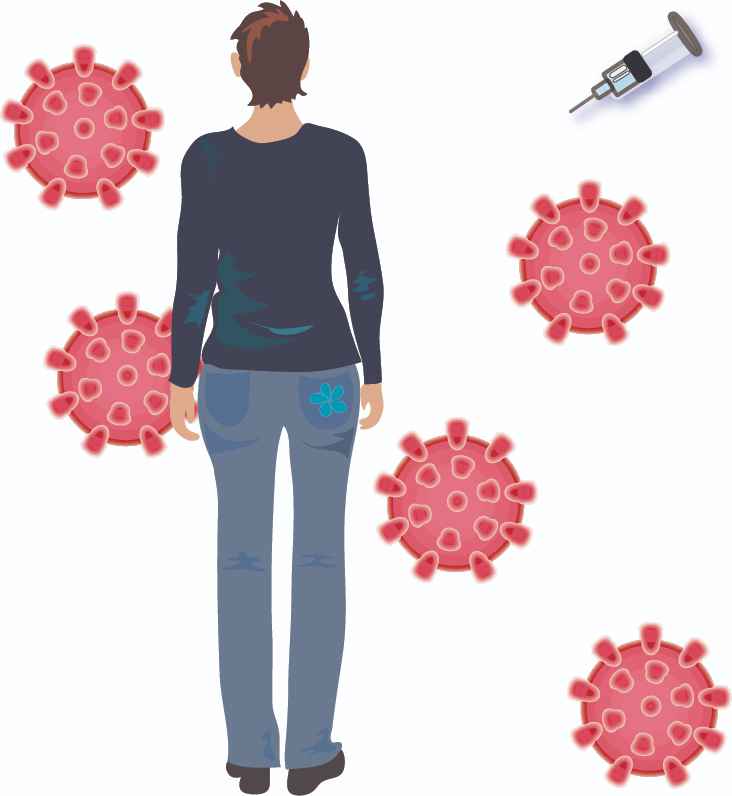
Be a Long COVID guinea pig!
If you are interested in participating in Long COVID studies check out RECOVER: Researching COVID to Enhance Recovery Long COVID research studies. You will receive payment for participating in these studies and help advance knowledge of Long COVID.
Studies
Observational studies: You will not be asked to get any treatment, medications or shots. Your health will be monitored with check-ups and blood tests.
Clinical trial studies: You will get treatment for Long COVID. It could be conventional or experimental therapies and/or medications. Obviously, you get to check out and consent to the treatment beforehand.
If you choose to participate in a trial make sure you understand all the potential benefits and risks of the treatment.
*Maria M's story: Long COVID with brain fog.
"After I had Covid for the first time in 2023, my brain seems to be permanently stuck in foggy and mushy. I can't focus and words seem to swim before my eyes. I can't think. Stutter when I talk. I am falling behind at work. Can't think through complex things in the way I used to. I feel discouraged. My doctor said it was due to my age - I am only 48! I feel like a tired 86 though."
Maria is fearful of losing her job due to her lack of focus and low energy level. She used to easily work a 50 hour work week as a paralegal while training for marathons in the morning. Right now, however, she is only able to work at home part time for 3 days a week.
Who develops long COVID?
Anyone can get Long COVID. It is documented in people of all ages; in men and women; in children; in all ethnic and racial groups; in previously healthy people; in people with preexisting conditions; in unvaccinated people and in fully vaccinated people; in people whose had a mild case of COVID-19; and in those who were hospitalized with the virus (discussion in Greenhalgh et al. 2024, Yousaf et al. 2025).
You can get Long COVID whether you believe in it or not. Science doesn't care what people believe.
The three greatest risk factors for Long COVID (LC) are:
1) Being unvaccinated for COVID-19.
Why do vaccines help protect against LC? Vaccines reduce the risk of developing more severe COVID infections. Getting sicker is associated with a greater risk of LC. Getting vaccinated also allows your immune system to eliminate the COVID-19 virus more rapidly. This reduces the chance that viral particles are left behind by the immune system to sneakily cause trouble.
One study found that vaccinated veterans (mostly older White males) had half the chance of catching LC compared to unvaccinated veterans (Xie et al. 2024).
Kids can be at risk for Long COVID too. Children who catch COVID-19 have a 1-3% chance of developing Long COVID. Vaccinated children had a 57% decreased chance of developing one or symptoms of LC and a 73% decreased chance of developing two or more symptoms of LC (Yousaf et al. 2025).
2) Catching COVID-19 from pre-Omicron variants of COVID.
The earliest COVID-19 cases were the worst in terms of people's health and catching Long COVID. As COVID-19 progresses there are less cases of LC. Researcher think that about 70% of the decline in LC was because people got vaccinated and 30% was related to changes in how the virus behaves. Changes in the COVID virus, SARS-CoV-2, may make people less susceptible to developing Long COVID (Xie et al. 2024).
3) Being a woman (women are more susceptible than men).
Women are at 1.5 times greater risk of LC than men. Women are at greater risk for most autoimmune disorders.
4) Bonus risk: catching COVID-19 more than once makes it more likely to get Long COVID.
This study matched people using demographics, health and vaccination histories. Reinfection with COVID significantly increased the risk of developing LC by 35% (Brannock et al. 2025 preprint).
(Discussion Thomson et al. 2022, Greenhalgh et al. 2024, Xie et al. 2024, Hou et al. 2025).
Blue Box of Science: whether you get Long COVID may depend on how your immune system is tuned: The interferon pathway
When cells detect an infection they release interferon. Interferon is like the Bat-Signal in Gotham City. It lets surrounding cells know it is time to gear up to fight the invading virus. Interferon receptors, such as interferon receptor 2 (IFNAR2), are used by cells to detect interferon.
Infereron signaling can go astray and cause the immune system to under or overreact. When this happens, people are more likely to get severe or Long COVID. Researchers discovered that there are two versions of IFNAR2; a working version and a shorter nonfunctional version that can sense inferferon but cannot transmit a signal to other cells. The short IFNAR2 acts as a decoy sucking up interferon and interfering with signaling from the normal IFNAR2. This blunts the cell's immune response to viruses.
The ratio of normal to short IFNAR2 may work as a tuning dial to help control the strength of your immune response. People with a abnormally high amount of the short variant of IFNAR2 could be more prone to severe infections; while people with low levels of short IFNAR2 could develop more autoimmune problems like Long COVID (discussion in Pasquesi et al. 2024).
Long COVID has a complicated relationship with your immune system.
Other risks for Long COVID.
According to Thomson et al. (2022) and Greenhalgh et al. (2024), people who get Long COVID are more likely to:
✿ Be between 45-69 years old; younger and older people have less risk. This may depend on the strain of COVID-19, though (Greenhalgh et al. 2024).
✿ Be in psychological distress; people who experience worry, depression, anxiety, loneliness and perceived stress have around 1.5 times the risk as those who are not in distress
✿ Be overweight or obese.
✿ Have asthma.
✿ Have poor overall health and /or preexisting conditions.
✿ Be sicker with COVID-19 or get sick with COVID-19 more than once.
✿ Not getting antiviral during initial illness.
✿ Be unable to rest when sick with COVID-19.
✿ Live in poverty.
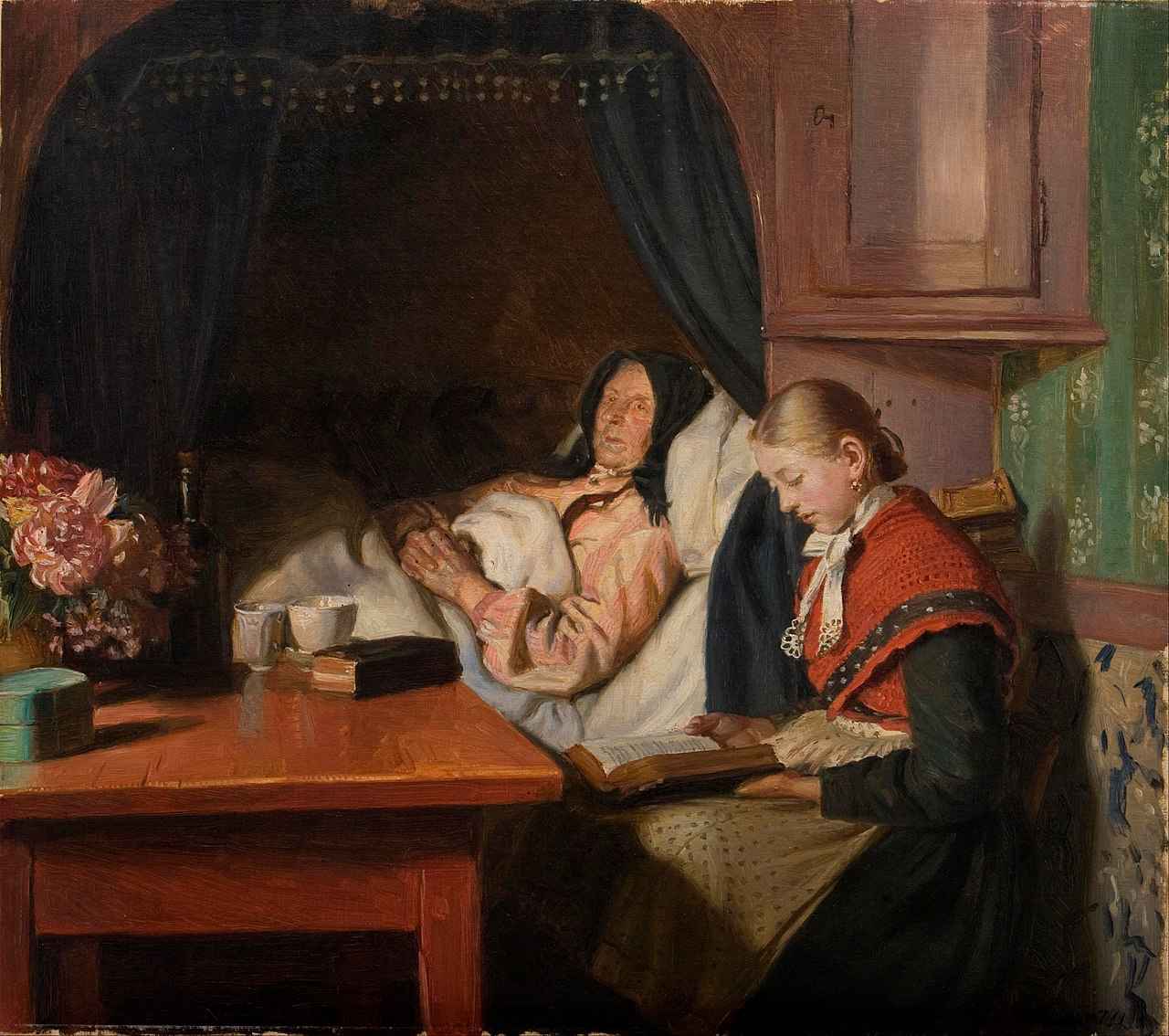
Michael Ancher - By a Sickbed oil on canvas c1879.
Yes, I know that many of these factors are things you can't change.
There are several things you can do, however, like get vaccinated, learn how to manage stress, and work on improving overall health. Knowledge is power.
By Susan Fluegel PHD Nutritional Biochemistry
*Names and small details changed to protect people's privacy.
I'm not your doctor so this is not medical information. I'm just a person who would like to see you happy and healthy. If you have any questions or concerns about starting an exercise regiment, diet program, or supplements please consult a professional.
References:
Brannock M Daniel , Emily Hadley, Alexander Preiss, Megan L Fitzgerald, Nita Jain, Emily Taylor, Andrew Wylam, Yun J Yoo, Elaine Hill, Richard A Moffitt. Incidence of Long COVID Following Reinfection with COVID-19. medRxiv 2025.08.12.25333155; doi: https://doi.org/10.1101/2025.08.12.25333155 Full article.
Greenhalgh T, Manoj Sivan, Alice Perlowski, Janko Nikolich. Long COVID: a clinical update. The Lancet, 2024; doi: 10.1016/S0140-6736(24)01136-X. Full article.
Hou Y, Gu T, Ni Z, Shi X, Ranney ML, Mukherjee B. Global Prevalence of Long COVID, Its Subtypes, and Risk Factors: An Updated Systematic Review and Meta-analysis. Open Forum Infect Dis. 2025 Aug 30;12(9):ofaf533. doi: 10.1093/ofid/ofaf533. Full article.
National Academies of Sciences, Engineering, and Medicine. 2024. Long-Term Health Effects of COVID-19: Disability and Function Following SARS-CoV-2 Infection. Washington, DC: The National Academies Press. https://doi.org/10.17226/27756. Full free online book here.
Pasquesi GIM, Allen H, Ivancevic A, Barbachano-Guerrero A, Joyner O, Guo K, Simpson DM, Gapin K, Horton I, Nguyen L, Yang Q, Warren CJ, Florea LD, Bitler BG, Santiago ML, Sawyer SL, Chuong EB. Regulation of human interferon signaling by transposon exonization. bioRxiv [Preprint]. 2023 Sep 15:2023.09.11.557241. doi: 10.1101/2023.09.11.557241. Full article.
Xie Y, Choi T, Al-Aly Z. Postacute Sequelae of SARS-CoV-2 Infection in the Pre-Delta, Delta, and Omicron Eras. N Engl J Med. 2024 Aug 8;391(6):515-525. doi: 10.1056/NEJMoa2403211. Full article.
Yousaf AR, Mak J, Gwynn L, Lutrick K, Bloodworth RF, Rai RP, Jeddy Z, LeClair LB, Edwards LJ, Olsho LEW, Newes-Adeyi G, Dalton AF, Caban-Martinez AJ, Gaglani M, Yoon SK, Hegmann KT, Phillips AL, Burgess JL, Ellingson KD, Rivers P, Meece JK, Feldstein LR, Tyner HL, Naleway A, Campbell AP, Britton A, Saydah S. COVID-19 Vaccination and Odds of Post-COVID-19 Condition Symptoms in Children Aged 5 to 17 Years. JAMA Netw Open. 2025 Feb 3;8(2):e2459672. doi: 10.1001/jamanetworkopen.2024.59672. Full article.
Zhang H, Zang C, Xu Z, Zhang Y, Xu J, Bian J, Morozyuk D, Khullar D, Zhang Y, Nordvig AS, Schenck EJ, Shenkman EA, Rothman RL, Block JP, Lyman K, Weiner MG, Carton TW, Wang F, Kaushal R. Data-driven identification of post-acute SARS-CoV-2 infection subphenotypes. Nat Med. 2023 Jan;29(1):226-235. doi: 10.1038/s41591-022-02116-3. Full article.Type 2 Diabetes