Exercise Trains Your Mitochondria
Exercise TRAINS the mitochondria in your fat cells to be more functional and produce more energy
Mitochondria are cell organelles that produce most of the energy in your body
The ability of mitochondria to produce energy (called respiration) decreases as people age. However, you can have healthier mitochondria at any age. A recent small study looked at young (20-32 years old) and older men (62-73 years old) that were either untrained, moderately trained, or highly trained. In well-trained older men, mitochondria in the fat cells produced twice as much energy as the fat cells in untrained older men (Gudiksen et al. 2022). That means more energy to go about your daily life (or crush those younger than you - you choose)!
Exercise also increases the number of mitochondria in your fat cells. This is called browning or beiging since an increase in dark colored mitochondria make the fat cell appear brown or beige. (Stanford et al. 2015). Mitochondria are brown due to their high iron content.
Adding more mitochondria to fat cells turns them into lean mean fat burning machines! Instead of storing excess energy as fat, brown fat cells burn it for energy and heat.
- Exercise activates Mitochondrial Quality Control (MQC)
- Lack of physical activity can cause problems
- Exercise reduces inflammation
- How to exercise even when you aren't feeling it
- How to turn your white fat cells brown
- Exercise slows brain aging, grows new brain cells, and reduces brain inflammation
Exercise activates Mitochondrial Quality Control (MQC)
Mitochondrial Quality Control (MQC) is a critical process in keeping mitochondria healthy especially in energy intensive tissue (like heart an brain tissue). When mitochondria are impaired, cells have to try to shore up ailing mitochondria.
Techniques to repair mitochondria include:
Fission/fusion: cleaving off damaged mitochondria parts and fusing on healthy parts. This is maintained in a balance. When mitochondrial fusion increases, mitochondria become elongated with higher network connectivity. When mitochondrial fission increases, you have more fragmented unconnected mitochondria.
Mitophagy: getting rid of irreversibly damaged mitochondria.
Mitochondrial biogenesis: replacing lost mitochondria.
If one of these steps go wrong in MQC, you get mitochondrial dysfunction. This compromises cell metabolism and can trigger pathologic conditions in the cell.
Physical activity regulates MQC.
Healthy MQC repairs or eliminates mitochondria that are damaged and encourages the regeneration of new healthy mitochondria.
Exercise activates several mechanisms that increase mitochondria biogenesis. One of the main ones is peroxisome proliferator-activated receptor γ coactivator 1α (PGC-1α to its friends).
PGC-1α is a central regulator of mitochondrial biogenesis; it also handles brown fat, mitochondrial functions, metabolic flexibility, anti-inflammation, oxidative stress, and endoplasmic reticulum homeostasis (Cao et al. 2024).
Exercise helps clear out defective mitochondria by promoting autophagy (mitophagy). Physical activity enhances mitochondrial quality and function by facilitating their turnover (discussion Sorriento et al. 2021).
Exercise, specifically sprint interval training and high intensity interval training, enhances mitochondria fusion. High intensity exercise inhibits mitochondrial fission.
Exercise promotes general mitochondrial health by activating intracellular pathways that counteract the defects in mitochondrial dynamics (discussion Sorriento et al. 2021).
Lack of physical activity is a risk factor for:
★ Whole body inflammation
★ Brain inflammation
★ Metabolic diseases like type 2 diabetes, obesity, asthma, fatty liver
★ Premature death, cardiovascular disease, stroke, and diabetes
★ Brain shrinkage
★Dementia and memory loss
★ Poor mental health (Chekroud et al. 2018)
★ Fatty buildup in heart and arteries
Dancing girl percian hermitage 19th century unknown artist.

Exercise reduces inflammation
Exercising for 6 weeks reduced levels of pain and lowered inflammatory cytokines in women and men with arthritis (Vijay et al. 2021). Cytokines are small proteins secreted by the immune system that control the activity and growth of immune and blood cells.
In the same study, the bacteria in the gut that produce short-chain fatty acids (SCFA) increased while bacteria that produced inflammation decreased. SCFAs have anti-inflammatory properties and could be used to treat inflammatory diseases, including metabolic disorders, asthma and Long COVID. The main SCFAs are acetate (C2), propionate (C3) and butyrate (C4). SCFAs modify how immune cells behave and can control production and release of cytokines (there is a good discussion of their role in Vinolo et al. 2011).
Exercise also increased endocannabinoid circulating levels which reduces overall inflammation. These lipid based chemicals are part of the endocannabinoid system, which is present nearly everywhere in the body. Endocannabinoids play a role in anti-proliferative, anti-inflammatory, and anti-metastatic effects throughout the body (Maida and Daeninck 2016). More specifically, endocannabinoids reduce and suppress the perception of pain.
Twenty minutes of exercise reduced inflammation by modulating cytokines (Dimitrov et al. 2017). People who exercised had lower production of tumor necrosis factor (TNF). TNF is a cytokine made by white blood cells that promotes inflammation.
Exercise suppressed TNF in several ways.
1) It decreases lipopolysaccharide (LPS) which elevates epinephrine levels. High epinephrine inhibits TNF.
2) Exercise suppresses TNF production via β2-adrenergic receptors. The β2-adrenergic receptors increase catecholamines (such as dopamine, adrenaline, and noradrenaline). Catecholamines act as neurotransmitters and hormones and inhibit TNF.
Théodore Ralli Resting Shepherdess Daydreaming oil on canvas date 1873 until 1909.

How to exercise even when you aren't feeling it
Even if you are sick or have Long COVID, it is important to try to move your body as best as you can.
★ Exercise increases blood flow to the brain so it is vital for a healthy active brain. Studies in rodents suggest that exercise promotes new brain cells (neurogenesis) in the hippocampus. The hippocampus deals with learning and memory.
★ Exercise improves spacial navigation. This is the ability to remember things like where you put your glasses or parked your car.
★ People who exercise have better episodic memory. Episodic memory is the ability to recall everyday events from your past. It includes your unique recollection or take of experiences, events, and situations (Eisenstein et al. 2021).
★ Older people who are physically active do better on cognitive tasks such as reasoning, vocabulary, memory and reaction time than older people who are inactive (Kumar et al. 2022).
★ Movement improves cognitive regulation in children, which is the ability to ignore distractions and multi-task (Bucklet et al. 2014). This is something a lot of us could use help with!
★ High intensity exercise improves memory (Loprinzi et al. 2021).
★ Exercise decreases stress and anxiety.
★ Exercise decreases depression (review of research in Miller et al. 2021).
More ways on how to motivate yourself to exercise.
Warning: You may need to go slow if you have exercise intolerance.
Long COVID (LC) with exercise intolerance can be brutal. It strips away your exercise gains and leaves you weak. A meta-study found that exercise capacity was reduced more than 3 months after the SARS-CoV-2 infection in people with LC compared with people without LC (Durstenfeld et al. 2022).
If you can't exercise you can concentrate on eating to help heal Long COVID.
Science Bite:
How to turn your white fat cells brown
Why do you want more brown or beige fat cells? Brown and beige fat (adipose) cells use extra energy to make heat while white fat cells use extra energy to store fat or make ATP. Creating heat from energy is called thermogenesis. In other words, brown fat burns energy instead of storing it as fat!
What is the difference between brown and beige fat cells? Brown cells always contain large numbers of mitochondria while beige cells develop mitochondria after activation. Both brown and beige fat contain numerous small lipid droplets. White adipose cells store their fat in one giant lipid droplet.
Brown and beige adipose cells have a higher production of uncoupling protein 1 (UCP1). UCP1 is a small protein channel embedded in the mitochondrial cell wall. These channels produce heat by allowing energy, in the form of hydrogen ions (protons), to escape from the mitochondria. Since the body does not use this stored energy for work, it is released as heat.
In white fat cells, any hydrogen ions released from the mitochondria are used to turn the ATPase pump like a microscopic water wheel. As the ATPase turns it squeezes ADP and elemental phosphate together to make ATP (the body's main energy molecular). In this case, the body uses the stored energy found in the protons for work.
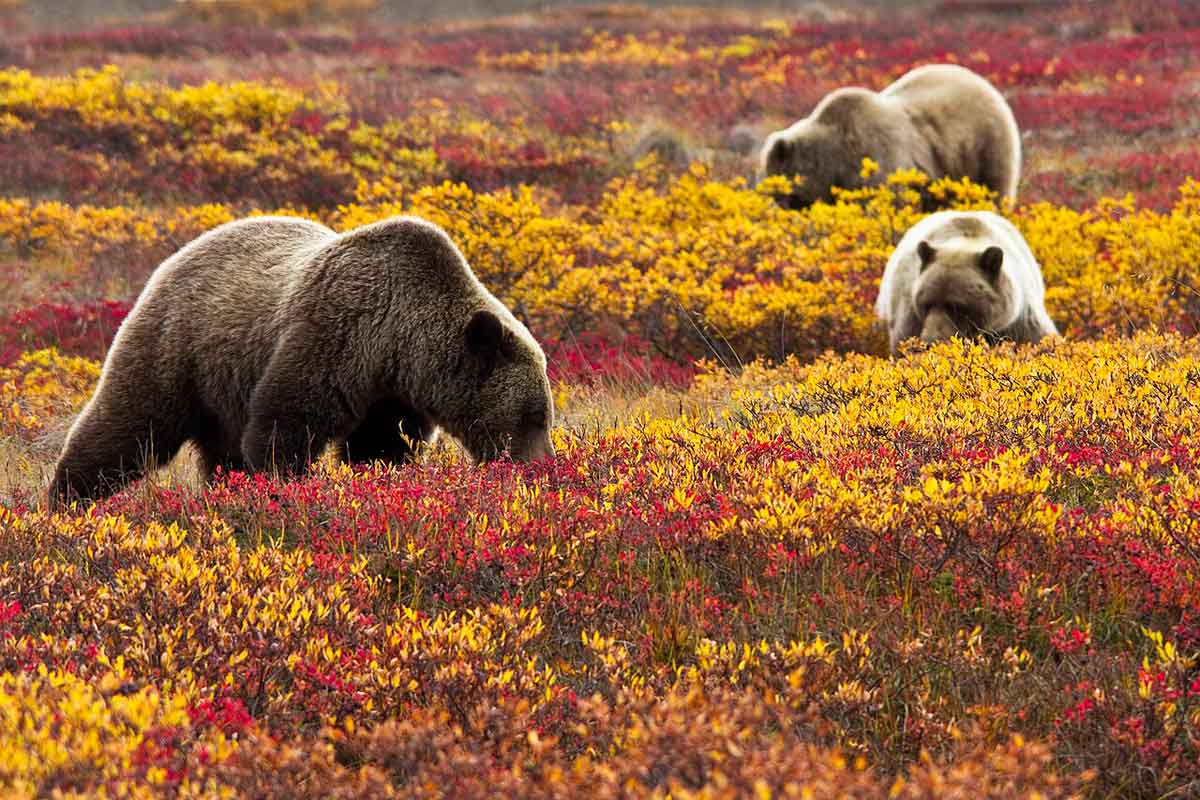
Grizzly Bears in Blueberries NPS Photo/Jacob W. Frank Denali National Park 2011.
What causes white adipose cells to turn brown?
Some triggers:
1) Exercise or being in a cold environment triggers brown and beige fat formation.
2) Food compounds can directly activate the gene, SIRT1, responsible for making UPC1. These foods include:
- ☆ Curcumin (from tumeric)
- ☆Resveratrol (from grapes and blueberries)
- ☆ Capsaicin/capsinoids (from hot peppers)
- ☆ Isoflavones (genistein from soy)
- ☆ Berberin (an alkaloid found in many plants including barberry and oregon grape)
- ☆ Omega-3 fatty acids
- ☆ Menthol, quercetin (from berries, apples, grapes, onions and other vegetables), capsaicin/capsinoids, green tea and omega-3 fatty acids indirectly increase the SIRT1 gene via several different mechanisms.
For more details see El Hadi et al. 2019 and Armani et al. 2022.
Did you know that there are FIVE different colors of fat cells?
Definitions:
The endocannabinoid system is a very complicated cell-signaling network system. It helps maintain homeostasis in the body by acting as a master regulator. This system includes endocannabinoid signaling molecules, G-protein-coupled cannabinoid receptors, and enzymes that are involved in ligand biosynthesis and inactivation. A few of its many duties include regulating the central and peripheral mechanisms of food intake; lipid synthesis and turnover in the liver and adipose tissue; and glucose metabolism in muscle cells.

Exercise slows brain aging, grows new brain cells, and reduces brain inflammation
Exercise slows cognitive aging, reduces neurodegeneration and maintains white matter integrity in the brain (Prakash et al. 2014, de Lange 2016, Tarumi et al. 2020). This is due to increased brain plasticity and reduced inflammation within the hippocampus (Gleeson et al. 2011). If you can't exercise, check out other ways to maintain brain health.
White matter integrity is important since white matter helps you focus and problem solve. White matter is found in the deeper tissues of the brain and contains nerve fibers. Disruption in white matter integrity was associated with poor performance on mental tasks such as executive function, processing speed, and episodic memory (Fjell et al. 2017).
Recent research shows that exercise in mice produces clusterin which binds to endothelial cells in the brain and reduces neuroinflammatory gene expression. In other words, clusterin reduces brain inflammation. People who exercised for 6 months had higher levels of clusterin (De Miguel et al. 2021).
Exercise may inhibit immune cells in the brain called microglia. Microglia are necessary, they watch for infection and damage in the brain and remove dying cells and debris. They also activate new neurons in neurogenesis which is correlated with learning and memory.
However, microglia can be activated inappropriately which causes them to produce inflammatory chemicals like cytokines. This can lead to brain inflammation and cognitive impairment (Casaletto et al. 2022). Glia and microglia play a big part in brain health and pain management.
Another way exercise improves health is through myokines. Myokines are small bioactive proteins produced when muscles move. Myokines increase brain and body health.
By Susan Fluegel PHD Nutritional Biochemistry
*Names and some minor identifying details in all stories in this website are changed to protect people's privacy
I'm not your doctor so this is not medical information. I'm just a person who would like to see you happy and healthy. If you have any questions or concerns about starting an exercise regiment, diet program, or supplements please consult a professional.
References:
Armani A, Feraco A, Camajani E, Gorini S, Lombardo M, Caprio M. Nutraceuticals in Brown Adipose Tissue Activation. Cells. 2022; 11(24):3996. https://doi.org/10.3390/cells11243996 Full article.
Cao, L., Li, Y., Smirnov, A. et al. PGC-1α: key regulator of mitochondrial biogenesis and cellular differentiation in metabolic and regenerative tissues. Cell Biosci 16, 9 (2026). https://doi.org/10.1186/s13578-025-01519-2 Full article.
Casaletto KB, Lindbergh CA, VandeBunte A, Neuhaus J, Schneider JA, Buchman AS, Honer WG, Bennett DA. Microglial Correlates of Late Life Physical Activity: Relationship with Synaptic and Cognitive Aging in Older Adults. J Neurosci. 2022 Jan 12;42(2):288-298. doi: 10.1523/JNEUROSCI.1483-21.2021. Full article.
Conceição LS, Neto MG, do Amaral MA, Martins-Filho PR, Oliveira Carvalho V. Effect of dance therapy on blood pressure and exercise capacity of individuals with hypertension: A systematic review and meta-analysis. Int J Cardiol. 2016 Oct 1;220:553-7. doi: 10.1016/j.ijcard.2016.06.182. Summary.
de Lange AG, Brthen AC, Grydeland H, Sexton C, Johansen-Berg H, Andersson JL, Rohani DA, Nyberg L, Fjell AM, Walhovd KB. White matter integrity as a marker for cognitive plasticity in aging. Neurobiol Aging. 2016 Nov;47:74-82. doi: 10.1016/j.neurobiolaging.2016.07.007. Full article.
De Miguel Z, Khoury N, Betley MJ, Lehallier B, Willoughby D, Olsson N, Yang AC, Hahn O, Lu N, Vest RT, Bonanno LN, Yerra L, Zhang L, Saw NL, Fairchild JK, Lee D, Zhang H, McAlpine PL, Contrepois K, Shamloo M, Elias JE, Rando TA, Wyss-Coray T. Exercise plasma boosts memory and dampens brain inflammation via clusterin. Nature. 2021 Dec;600(7889):494-499. doi: 10.1038/s41586-021-04183-x. Abstract.
Dimitrov S, Hulteng E, Hong S. Inflammation and exercise: Inhibition of monocytic intracellular TNF production by acute exercise via 2-adrenergic activation. Brain Behav Immun. 2017 Mar;61:60-68. doi: 10.1016/j.bbi.2016.12.017. Full article.
Durstenfeld MS, Sun K, Tahir P, Peluso MJ, Deeks SG, Aras MA, Grandis DJ, Long CS, Beatty A, Hsue PY. Use of Cardiopulmonary Exercise Testing to Evaluate Long COVID-19 Symptoms in Adults: A Systematic Review and Meta-analysis. JAMA Netw Open. 2022 Oct 3;5(10):e2236057. doi: 10.1001/jamanetworkopen.2022.36057. Full article.
El Hadi H, Di Vincenzo A, Vettor R, Rossato M. Food Ingredients Involved in White-to-Brown Adipose Tissue Conversion and in Calorie Burning. Front Physiol. 2019 Jan 11;9:1954. doi: 10.3389/fphys.2018.01954. Full article.
Fjell AM, Sneve MH, Grydeland H, Storsve AB, Amlien IK, Yendiki A, Walhovd KB. Relationship between structural and functional connectivity change across the adult lifespan: A longitudinal investigation. Hum Brain Mapp. 2017 Jan;38(1):561-573. doi: 10.1002/hbm.23403. Full article.
Gleeson M, Bishop NC, Stensel DJ, Lindley MR, Mastana SS, Nimmo MA. The anti-inflammatory effects of exercise: mechanisms and implications for the prevention and treatment of disease. Nat Rev Immunol. 2011 Aug 5;11(9):607-15. doi: 10.1038/nri3041. Abstract and key points.
Gudiksen A, Qoqaj A, Ringholm S, Wojtaszewski J, Plomgaard P, Pilegaard H. Ameliorating Effects of Lifelong Physical Activity on Healthy Aging and Mitochondrial Function in Human White Adipose Tissue. J Gerontol A Biol Sci Med Sci. 2022 Jun 1;77(6):1101-1111. doi: 10.1093/gerona/glab356. Full article.
Hong AR, Kim SW. Effects of Resistance Exercise on Bone Health. Endocrinol Metab (Seoul). 2018 Dec;33(4):435-444. doi: 10.3803/EnM.2018.33.4.435. Full article.
Maida V, Daeninck PJ. A user's guide to cannabinoid therapies in oncology. Curr Oncol. 2016 Dec;23(6):398-406. doi: 10.3747/co.23.3487. Full article.
Pleguezuelos E, Del Carmen A, Llorensi G, Carcole J, Casarramona P, Moreno E, Ortega P, Serra-Prat M, Palomera E, Miravitlles MM, Yebenes JC, Boixeda R, Campins L, Villelabeitia-Jaureguizar K, Garnacho-Castaño MV. Severe loss of mechanical efficiency in COVID-19 patients. J Cachexia Sarcopenia Muscle. 2021 Aug;12(4):1056-1063. doi: 10.1002/jcsm.12739. Full article.
Prakash RS, Voss MW, Erickson KI, Kramer AF. Physical activity and cognitive vitality. Annu Rev Psychol. 2015 Jan 3;66:769-97. doi: 10.1146/annurev-psych-010814-015249. Abstract.
Prasannan N, Heightman M, Hillman T, Wall E, Bell R, Kessler A, Neave L, Doyle A, Devaraj A, Singh D, Dehbi HM, Scully M. Impaired exercise capacity in post-COVID-19 syndrome: the role of VWF-ADAMTS13 axis. Blood Adv. 2022 Jul 12;6(13):4041-4048. doi: 10.1182/bloodadvances.2021006944. Full article.
Stanford KI, Middelbeek RJ, Goodyear LJ. Exercise Effects on White Adipose Tissue: Beiging and Metabolic Adaptations. Diabetes. 2015 Jul;64(7):2361-8. doi: 10.2337/db15-0227. Epub 2015 Jun 7. Erratum in: Diabetes. 2015 Sep;64(9):3334. Full article.
Sorriento D, Di Vaia E, Iaccarino G. Physical Exercise: A Novel Tool to Protect Mitochondrial Health. Front Physiol. 2021 Apr 27;12:660068. doi: 10.3389/fphys.2021.660068. Full article.
Tarumi T, Thomas BP, Tseng BY, Wang C, Womack KB, Hynan L, Lu H, Cullum CM, Zhang R. Cerebral White Matter Integrity in Amnestic Mild Cognitive Impairment: A 1-Year Randomized Controlled Trial of Aerobic Exercise Training. J Alzheimers Dis. 2020;73(2):489-501. doi: 10.3233/JAD-190875. Abstract.
Vijay A, Kouraki A, Gohir S, Turnbull J, Kelly A, Chapman V, Barrett DA, Bulsiewicz WJ, Valdes AM. The anti-inflammatory effect of bacterial short chain fatty acids is partially mediated by endocannabinoids. Gut Microbes. 2021 Jan-Dec;13(1):1997559. doi: 10.1080/19490976.2021.1997559. Full article.
Vinolo MA, Rodrigues HG, Nachbar RT, Curi R. Regulation of inflammation by short chain fatty acids. Nutrients. 2011 Oct;3(10):858-76. doi: 10.3390/nu3100858. Full article.