Brain Invasion. What Causes Long COVID?
Top 24 Potential Causes of Long COVID (LC) and other post viral infections. Part 4.
What is worse than being too tired to move? Too tired to think. Long COVID often comes with brain dysfunctions caused by blood clots, leaky blood vessels, brain inflammation, and other dysfunctions. Even if you don't have Long COVID, your brain may need healing.
One of the most annoying symptoms of Long COVID is that you can't move or think. I don't know about you, but being sick in bed and having a brain too foggy to do anything sounds horrible. I used to get brain fog due to food intolerances and I hated it. By the way, if you think your brain fog is caused by a food allergy you may want to try an elimination diet. It worked for me. It turned out I have to avoid gluten and likely have Celiac's disease.
One thing to remember is that your brain and your body are connected. Low energy levels in the body often correlate to low energy levels in the body. Things like blood clots and inflammation spread from body to brain and vice versa. Interesting, being physically active may help your brain recover from Long COVID.
Latest news on Long COVID and the brain below:
19) Microclots gum up brain in Long COVID.
20) Low serotinin brings on brain fog.
21) COVID causes brain inflammation.
22) Too much glutamate causes brain impairments.
23) Leaky blood vessels damage the brain in Long COVID.
24) Brain activity may be altered in Long COVID.
William Simpson: A tinted lithograph showing evacuation of the sick and injured from Balaklava. Edmond Morin (lithographer) 1855.

19) Micro-sized abnormal blood clots are gumming up your brain and body in Long COVID:
COVID-19 virus can infect endothelial cells lining the blood vessels. This can cause blood clots through damage and/or inflammation. Fighting COVID and other viruses can cause inflammation and damage to blood vessels and the circulatory system through friendly fire. Basically, your cells get damaged when immune cells fire on invading viruses with chemical weapons.
Abnormal blood clotting, as discussed in Part 2, can also lead to micro blood clots in the body and the brain (Bell et al. 2022, Transkei and Alalia 2022, Georgina et al. 2023). These mini blood clots mess with the body's circulation, which in turn influence every system in the body.
Blood contains a soluble protein called fibrinogen which is used when blood clots form. Fibrinogen stops bleeding in the body by converting to fibrin, which forms a solid and insoluble clot.
Interestingly, the fibrinogen in blood can clot into an abnormal amyloid form of fibrin. Amyloids are insoluble forms of protein that are resistant to proteolysis, the breakdown of proteins. This means that these rogue clots stay in the body longer since they are difficult to break down.
In Long COVID, extensive numbers of these abnormal fibrin amyloid microclots form and persist in the body. These clots can entrap other proteins, which can cause production of various autoantibodies (causing inflammation and triggering the body to attack itself) (Bell et al. 2022).
Recent research shows that fibrin can bind to the SARS-CoV-2 spike protein during COVID infection. This forms blood clots in the brain and lungs that cause inflammation and long COVID cognitive problems. Fibrin prompts neuroinflammation and causes neuronal loss after COVID infection, partially by activating immune components in the brain and lungs (discussion in Ryu et al. 2024).
Think you have inflammation on the brain? Learn some techniques to heal brain inflammation.
In addition, excess inflammation can cause overall endothelial dysfunction. Endothelial cells line the blood vessels. They help the blood vessels relax and contract; and direct the exchange of chemicals and nutrients from the blood to the tissue. Too much inflammation increases blood clotting and microthrombi (small blood clots) formation (Georgina et al. 2023). This endothelial dysfunction contributes to cardiovascular disease.
20) Got brain fog? COVID-19 has hammered your serotonin reserves:
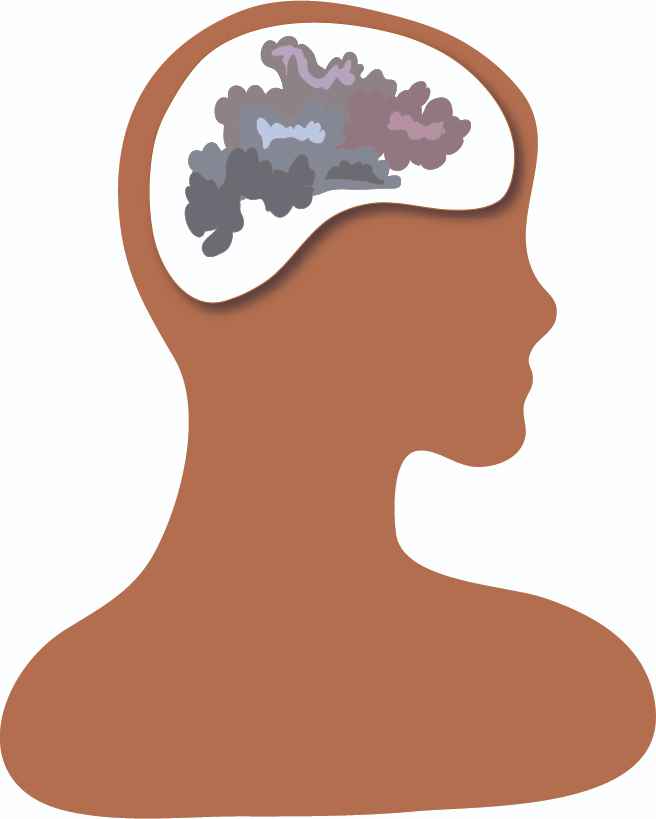
People with Long COVID and brain fog have much lower levels or serotonin than people who have recovered from COVID-19 without brain fog symptoms (Wong et al. 2024). Other neurological symptoms included with brain fog are memory loss and changes in mood.
Serotonin is a signaling molecule (neurotransmitter) that helps regulate the vagus nerve. The vagus nerve, in turn, regulates many aspects of the parasympathetic nervous system. This includes digestion, energy metabolism, immune system, respiration, heart rate, mood, taste, speech and more (Breit et al. 2018).
The vagus nerve influences the gut, the brain and inflammation as part of the brain-gut axis. The brain gut axis is a two-way communication system that sends signals between the brain and the gastrointestinal tract. It can influence mood, stress, immunity, hunger, pain, digestion and more.
COVID-19 infection can deplete serotonin. This may be due to replication of rogue COVID-19 virus in the gastrointestinal tract.
When serotonin levels dip, vagus nerve activity decreases. This impairs brain activity by its negative effects on hippocampal responses, ability to think, and memory (Wong et al. 2024).
Blue Box of Science: Researchers found that COVID-19 viral infection and type I interferon-driven inflammation reduce serotonin concentrations through three mechanisms:
1) Your intestine absorbs less of the serotonin precursor tryptophan (an amino acid). Since you have less tryptophan, your body makes less serotonin (the gut makes 90% of serotonin).
2) Blood platelets become hyperactive which is associated with low blood platelet numbers (thrombocytopenia), clot formation and inflammation. Less platelets impacts serotonin storage since platelets store almost all the body's serotonin. Less platelets = less room to store serotonin.
3) Serotonin is depleted faster due to increased monoamine oxidase (MAO)-mediated serotonin turnover. MOA is an enzyme that breaks down serotonin.
What's up with Type I interferons (type I IFN) and inflammation?
Type I IFN help defend the body against viruses and other pathogens. Like most of your immune system components, they can be helpful or harmful. If type I IFN is dysregulated it can contribute to autoimmune disorders such as systemic sclerosis (hardening and tightening of connective tissues), myositis (immune system attacks muscles), Sjögren’s syndrome (immune system attacks moisture producing glands in eyes, mouth and body), and rheumatoid arthritis (immune system attacks tissue near joints) (discussion in Crow and Ronnblom 2019).
21) Long COVID has your brain is on fire (inflamed) and not in a good way:
Long COVID can cause brain damage due to blood clots, inflammation, and metabolic dysfunction. People with cognitive disorders and LC had more markers of inflammation in their brain when compared to people with LC and no cognitive symptoms (Fernndez-Castaeda et al. 2022). So if you have had a traumatic brain injury (TBI), history of concussions, mini or regular strokes, or other brain trauma you are at risk of chronic brain inflammation after contacting COVID.
Chronic brain inflammation could contribute to COVID fog (brain fog) along with increased rates of anxiety, depression, disordered sleep and fatigue. Brain fog causes confusion, forgetfulness, and a lack of mental clarity and focus. Here are how some people with LC have described brain fog to me:
*Kristen C (21 year old woman) "I have a hard time thinking and processing new information or new environments. Thinking is exhausting. It is like my brain is moving through a fog and feels fuzzy. I had to drop out of college due to poor grades and my parents think I am just lazy."
Lester M (recently retired man in late 60's) "I lack focus and time slips away from me. My motivation is gone and I feel like I have lost months and years of my life. I forget important details of my life. It is hard to think."
Amanda C (early 40's year old woman) "It is like my brain is drenched in molasses and it takes a long time for a thought or a word to escape. I feel disoriented and detached from my life. I am in danger of losing my job because of some mistakes but I can't motivate myself to care."
Ben G (former Air Force, 30 something year old man) "Covid has undone all of my therapy and coping with my TBI. I feel like I am at square one again with all the trauma symptoms back. It feels too hard to start again."
People with Long COVID and cognitive impairment (brain fog), have a disrupted blood–brain barrier (BBB) function. This included a dampened immune response; problems with blood clotting; and immune cells that tried to stick to brain endothelial cells (in a petri dish) (Greene et al. 2024).
22) Long COVID brain fog is associated with an increase in AMPA glutamate receptors in the brain:
Glutamate (glutamic acid) is an amino acid that functions as the brain's most abundant excitatory neurotransmitter. It regulates many brain functions by transmitting nerve signals. Some researchers consider glutamate the master transmitter (Pal 2021).
Too much or too little glutamate can cause neurological problems.
People who develop cognitive impairments, like brain fog, after COVID (SARS-CoV-2 infection) showed significant upregulation of alpha-amino-3-hydroxy-5-methyl-4-isoxazolepropionic acid receptors (AMPAR) across their brains (Fujimoto et al. 2025). Brain fog includes symptoms such as feeling out of it, headache, malaise, fatigue, and altered levels of consciousness.
Researchers compared 30 people with Long COVID (LC) to 80 healthy people. People with LC had a widespread increase in brain density of AMPAR. Higher AMPAR density was correlated to higher levels of cognitive impairment. Researchers could tell LC patients from healthy people by looking at their brain scans (Fujimoto et al. 2025).
AMPARs are essential for the brain's neuroplasticity; mood; learning; as well as spatial, fear and recognition memory. AMPARs dysfunctions are associated with cognitive dysfunction in aging and some neurological and psychiatric diseases such as Alzheimer's disease, amyotrophic lateral sclerosis (ALS), schizophrenia, and epilepsy (de León-López et al. 2025).
23) Brain bleeds cause Long COVID (LC) brain fog:
Blood–brain barrier (BBB) breakdown may contribute to cognitive-LC. There is evidence of leaky blood vessels, microvascular injury and a hyperactive immune system in the brain of people showing symptoms of Long COVID.
BBB dysfunction was present during neurological impairment in LC. Blood vessel leakiness could be used to distinguish people with brain fog and cognitive decline from people suffering from Long-COVID without a side of brain fog (Greene et al. 2024).

24) Long COVID causes increased brain activity.
A small study found that people with Long COVID had increased activity in areas of the brain connected to emotion, stress, and memory. People who had the highest amount of anxiety and depression, and a poorer quality of life, had higher cellular activity in the hippocampus and amygdala. These regions of the brain help regulate emotional control, memory, and responses to stress. Neurodiverse people often have a harder time dealing with stress.
The study included 14 people with long COVID, 11 people that were healthy, and 13 people with multiple sclerosis (MS). Everyone in the study got PET scans to detect neuroinflammation and magnetic resonance imaging (MRI) scans to check out the brain structure and any changes in brain white matter. White matter connects different areas of the brain. It contains bundles of myelinated axons (nerve fibers), glial cells and the spinal cord.
Interestingly, they also found that people with Long COVID initially had high brain inflammation. However, the brain inflammation resolved over time to reach normal levels after 16 months (Tuomaala et al. 2026).
Read the first, second and third thrilling installments in What Causes Long COVID?
Part 1 includes six exciting reasons your immune system may be doing you dirty:
- 1) The virus is waging a gorilla war in your body.
- 2) Virus infection summons zombie viruses already laying latent in your body.
- 3) Your immune cells are waving white flags.
- 4) Instead of quitting; your immune system went full on Rambo after COVID infection and started packing heat.
- 5) You start making autoantibodies that attack yourself.
- 6) Your immune system is dialed up too high: The interferon pathway story.
 Part 2 dives into eight new and novel ways COVID-19 can screw up your heath:
- 7) Your blood turns solid. COVID causes abnormal blood clotting.
- 8) COVID-19 infection splices RNA wrongly.
- 9) Your energy plummets. Long COVID drains your energy due to metabolomic and immune disturbances.
- 10) COVID-19 suffocates your tissues by cutting off your oxygen.
- 11) Don't stress though; stress makes getting Long COVID worse.
- 12) If feeling crappy wasn't enough, COVID virus decreases cortisol causing weakness and depression.
- 13) The virus causes Autonomic Nervous System (ANS) dysfunction.
- 14) COVID hammers your gut bacteria.
- 15) Your hypothalamus-pituitary-adrenal axis (HPA axis) is disrupted.
- 16) Endothelial dysfunction drives oxidative stress and inflammation.
Part 3 discusses how COVID 19 hammers your mitochondria.
- 17) Your mitochondria turn weak!
- 18) Virus stimulated mitochondria trigger immune attack.
- Check out how COVID-19 attacks your brain in Part 4 on this page. This is sometimes called cognitive-Long COVID or cognitive-LC.
By Susan Fluegel PHD Nutritional Biochemistry
I always joke that if you want to make your living with your brain you need to take care of it. Make your brain last a lifetime by practicing brain training. People who have brain trauma benefit from using brain training to help with cognitive healing (not quite as catchy as Marvin Gayle's song on another type of healing).
* Names and some other small details have been changed to protect people's privacy.
This information is for informational purposes only and does not constitute medical advice, diagnosis, or treatment.
References:
Dai Y, Zhou J, Shi C. Inflammasome: structure, biological functions, and therapeutic targets. MedComm (2020). 2023 Oct 9;4(5):e391. doi: 10.1002/mco2.391. Full article.
de Boer E, Petrache I, Goldstein NM, Olin JT, Keith RC, Modena B, Mohning MP, Yunt ZX, San-Millán I, Swigris JJ. Decreased Fatty Acid Oxidation and Altered Lactate Production during Exercise in Patients with Post-acute COVID-19 Syndrome. Am J Respir Crit Care Med. 2022 Jan 1;205(1):126-129. doi: 10.1164/rccm.202108-1903LE. Full article.
de León-López CAM, Carretero-Rey M, Khan ZU. AMPA Receptors in Synaptic Plasticity, Memory Function, and Brain Diseases. Cell Mol Neurobiol. 2025 Jan 22;45(1):14. doi: 10.1007/s10571-024-01529-7. Full article.
Fujimoto Y, Abe H, Eiro T, Tsugawa S, Tanaka M, Hatano M, Nakajima W, Ichijo S, Arisawa T, Takada Y, Kimura K, Sano A, Hirahata K, Sasaki N, Kimura Y, Takahashi T. Systemic increase of AMPA receptors associated with cognitive impairment of long COVID. Brain Commun. 2025 Oct 1;7(5):fcaf337. doi: 10.1093/braincomms/fcaf337. Full article.
Georgieva E, Ananiev J, Yovchev Y, Arabadzhiev G, Abrashev H, Abrasheva D, Atanasov V, Kostandieva R, Mitev M, Petkova-Parlapanska K, Karamalakova Y, Koleva-Korkelia I, Tsoneva V, Nikolova G. COVID-19 Complications: Oxidative Stress, Inflammation, and Mitochondrial and Endothelial Dysfunction. Int J Mol Sci. 2023 Oct 4;24(19):14876. doi: 10.3390/ijms241914876. Full article.
Greene C, Connolly R, Brennan D, Laffan A, O'Keeffe E, Zaporojan L, O'Callaghan J, Thomson B, Connolly E, Argue R, Meaney JFM, Martin-Loeches I, Long A, Cheallaigh CN, Conlon N, Doherty CP, Campbell M. Blood-brain barrier disruption and sustained systemic inflammation in individuals with long COVID-associated cognitive impairment. Nat Neurosci. 2024 Mar;27(3):421-432. doi: 10.1038/s41593-024-01576-9. Epub 2024 Feb 22. Erratum in: Nat Neurosci. 2024 May;27(5):1019. doi: 10.1038/s41593-024-01644-0. Full article.
Guarnieri JW, Dybas JM, Fazelinia H, Kim MS, Frere J, Zhang Y, Soto Albrecht Y, Murdock DG, Angelin A, Singh LN, Weiss SL, Best SM, Lott MT, Zhang S, Cope H, Zaksas V, Saravia-Butler A, Meydan C, Foox J, Mozsary C, Bram Y, Kidane Y, Priebe W, Emmett MR, Meller R, Demharter S, Stentoft-Hansen V, Salvatore M, Galeano D, Enguita FJ, Grabham P, Trovao NS, Singh U, Haltom J, Heise MT, Moorman NJ, Baxter VK, Madden EA, Taft-Benz SA, Anderson EJ, Sanders WA, Dickmander RJ, Baylin SB, Wurtele ES, Moraes-Vieira PM, Taylor D, Mason CE, Schisler JC, Schwartz RE, Beheshti A, Wallace DC. Core mitochondrial genes are down-regulated during SARS-CoV-2 infection of rodent and human hosts. Sci Transl Med. 2023 Aug 9;15(708):eabq1533. doi: 10.1126/scitranslmed.abq1533. Full article.
Madsen HB, Durhuus JA, Andersen O, thor Staten P, Rahbech A, Desler D. Mitochondrial dysfunction in acute and post-acute phases of COVID-19 and risk of non-communicable diseases. npj Metab Health Dis 2, 36 (2024). https://doi.org/10.1038/s44324-024-00038-x Full article.
Mantovani S, Oliviero B, Varchetta S, Renieri A, Mondelli MU. TLRs: Innate Immune Sentries against SARS-CoV-2 Infection. Int J Mol Sci. 2023 Apr 29;24(9):8065. doi: 10.3390/ijms24098065. Full article.
Molnar T, Lehoczki A, Fekete M, Varnai R, Zavori L, Erdo-Bonyar S, Simon D, Berki T, Csecsei P, Ezer E. Mitochondrial dysfunction in long COVID: mechanisms, consequences, and potential therapeutic approaches. Geroscience. 2024 Apr 26. doi: 10.1007/s11357-024-01165-5. Full article.
Pal MM. Glutamate: The Master Neurotransmitter and Its Implications in Chronic Stress and Mood Disorders. Front Hum Neurosci. 2021 Oct 29;15:722323. doi: 10.3389/fnhum.2021.722323. Full article.
Saito S, Shahbaz S, Luo X, Osman M, Redmond D, Cohen Tervaert JW, Li L, Elahi S. Metabolomic and immune alterations in long COVID patients with chronic fatigue syndrome. Front Immunol. 2024 Jan 18;15:1341843. doi: 10.3389/fimmu.2024.1341843. Full article.
Saleh J, Peyssonnaux C, Singh KK, Edeas M. Mitochondria and microbiota dysfunction in COVID-19 pathogenesis. Mitochondrion. 2020 Sep;54:1-7. doi: 10.1016/j.mito.2020.06.008. Full article.
Stefano GB, Büttiker P, Weissenberger S, Ptacek R, Wang F, Esch T, Bilfinger TV, Raboch J, Kream RM. Biomedical Perspectives of Acute and Chronic Neurological and Neuropsychiatric Sequelae of COVID-19. Curr Neuropharmacol. 2022;20(6):1229-1240. doi: 10.2174/1570159X20666211223130228. Full article.
Su Y, Yuan D, Chen DG, Ng RH, Wang K, Choi J, Li S, Hong S, Zhang R, Xie J, Kornilov SA, Scherler K, Pavlovitch-Bedzyk AJ, Dong S, Lausted C, Lee I, Fallen S, Dai CL, Baloni P, Smith B, Duvvuri VR, Anderson KG, Li J, Yang F, Duncombe CJ, McCulloch DJ, Rostomily C, Troisch P, Zhou J, Mackay S, DeGottardi Q, May DH, Taniguchi R, Gittelman RM, Klinger M, Snyder TM, Roper R, Wojciechowska G, Murray K, Edmark R, Evans S, Jones L, Zhou Y, Rowen L, Liu R, Chour W, Algren HA, Berrington WR, Wallick JA, Cochran RA, Micikas ME; ISB-Swedish COVID-19 Biobanking Unit; Wrin T, Petropoulos CJ, Cole HR, Fischer TD, Wei W, Hoon DSB, Price ND, Subramanian N, Hill JA, Hadlock J, Magis AT, Ribas A, Lanier LL, Boyd SD, Bluestone JA, Chu H, Hood L, Gottardo R, Greenberg PD, Davis MM, Goldman JD, Heath JR. Multiple early factors anticipate post-acute COVID-19 sequelae. Cell. 2022 Mar 3;185(5):881-895.e20. doi: 10.1016/j.cell.2022.01.014. Full article.
Sureda A, Alizadeh J, Nabavi SF, Berindan-Neagoe I, Cismaru CA, Jeandet P, Łos MJ, Clementi E, Nabavi SM, Ghavami S. Endoplasmic reticulum as a potential therapeutic target for covid-19 infection management? Eur J Pharmacol. 2020 Sep 5;882:173288. doi: 10.1016/j.ejphar.2020.173288. Full article.
Tuomaala J, Saraste M, Smith E, Kuusi M, Westerberg E, Honkonen E, Kargar R, Laaksonen S, Lehto J, Luoma A, Matilainen M, Misin O, Atosuo J, Kanerva M, Liira H, Laakso S, Posharina T, Saunavaara V, Wahlroos S, Rajander J, Airas L. Association between post-COVID-19 neuropsychiatric symptoms and persistent glial activation in the limbic system: a TSPO PET study. J Neurol. 2026 Apr 30;273(5):298. doi: 10.1007/s00415-026-13842-w. Full article.
Yin K, Peluso MJ, Luo X, Thomas R, Shin MG, Neidleman J, Andrew A, Young KC, Ma T, Hoh R, Anglin K, Huang B, Argueta U, Lopez M, Valdivieso D, Asare K, Deveau TM, Munter SE, Ibrahim R, Ständker L, Lu S, Goldberg SA, Lee SA, Lynch KL, Kelly JD, Martin JN, Münch J, Deeks SG, Henrich TJ, Roan NR. Long COVID manifests with T cell dysregulation, inflammation and an uncoordinated adaptive immune response to SARS-CoV-2. Nat Immunol. 2024 Feb;25(2):218-225. doi: 10.1038/s41590-023-01724-6. Full article.