COVID-19 Vaccination Myths and Truths
I like to debunk vaccination myths because I hate it when people use fear to control other people.
There has been a lot of false information spread about vaccinations designed to try to scare people. Whatever you decide, you should make your decisions based on facts not fear. Find out more about the COVID-19 vaccination here.
New Science: mRNA vaccines train your innate immune system!
Lets address some misconceptions about the COVID-19 mRNA vaccination.
- I've had COVID-19 so do I need to get vaccinated?
- Are mRNA vaccines untested?
- Do mRNA vaccines use dangerous ingredients?
- Do mRNA vaccines cause infertility?
- Isn't is better to get natural immunity?
- Do mRNA vaccines change your DNA?
- Is is dangerous for pregnant people to get vacinated?
- Is COVID-19 more dangerous than the flu?
- Can you be tracked using vaccinations?
- What is the deal with COVID-19 and 5G wireless networks?
- Bonus: how do mRNA vaccinations work?
Myth: I've had COVID-19 so why bother to get vaccinated, boosted or take any sort of precautions.
Truth: Every time you get COVID-19 it increases your chance of dying or becoming disabled.
The bad news about COVID-19 just keeps on rolling in. A large study, based on the health records of over 5.6 million people treated by the VA Health System, reported on the increased risk of death or disability with repeated infections. When compared with people with only one Covid-19 infection, people with two or more confirmed COVID-19 infections had more than twice the risk of dying and three times the risk of hospitalization within 6 months of their last COVID-19 infection.
People who developed COVID-19 more than once also had higher risks for lung, heart, blood, diabetes, gastrointestinal, kidney, mental health, musculoskeletal and neurological (mental health) disorders (Bowe et al. 2022). You also have more chances of developing Long COVID!
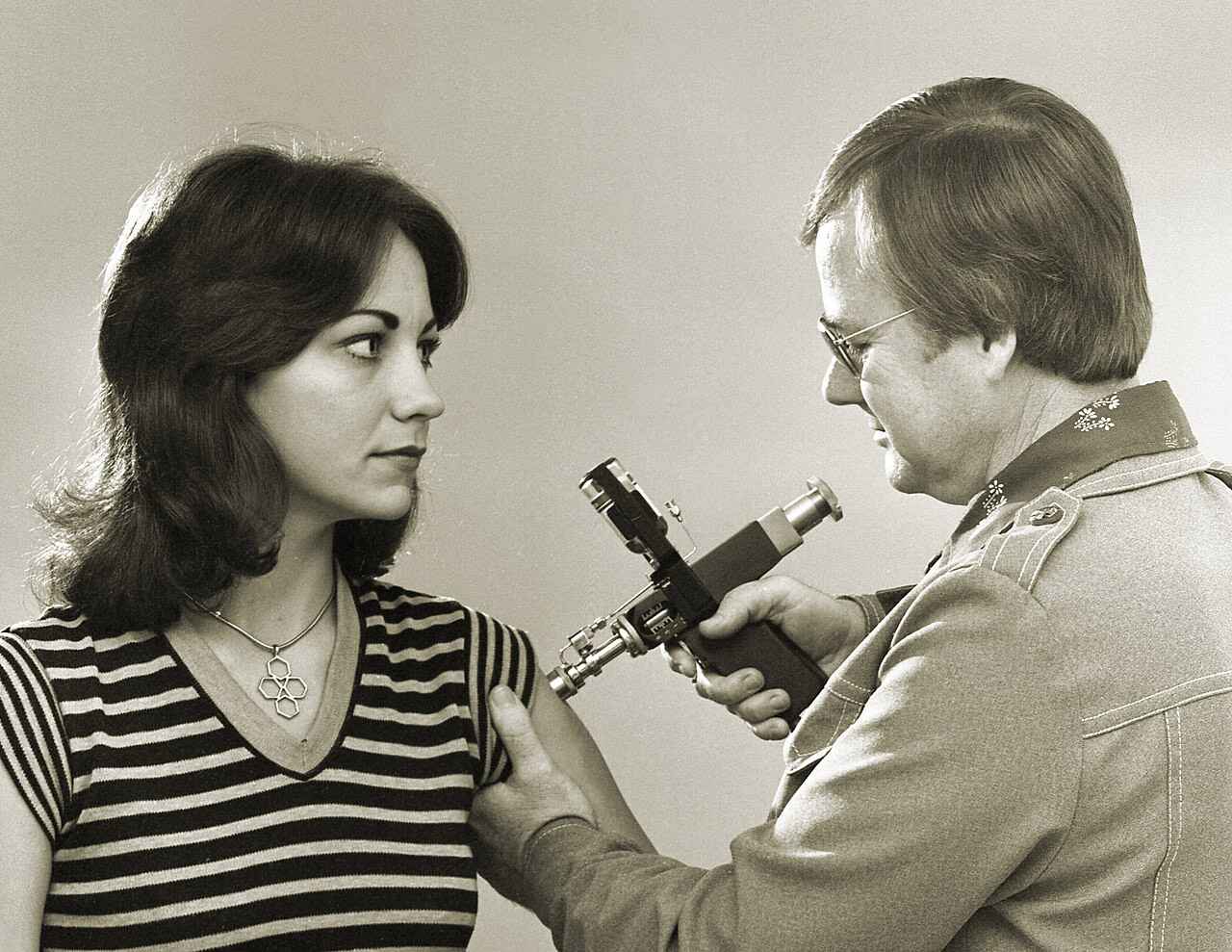
Woman receives vaccination in 1976 for Swine Flu using a jet injector, also known as a “Ped-O-Jet®”. Photo by CDC/ Robert E. Bates.
A single dose vaccination decreases your risk of developing Long COVID by about one third but doesn't eliminate it. Getting boosters will reduce your risk of Long COVID even more.
A recent study of over 1.6 million people showed that a single dose of vaccine (either Pfizer, Moderna, AstraZeneca, or Janssen) was 29% effective at preventing long COVID when compared to unvaccinated people. Protection against long COVID was 35% effective for people vaccinated before getting sick from COVID-19. Getting vaccinated after COVID-19 infection was 27% effective against long COVID (Hatfield et al. 2022).
In an earlier study, military veterans who had the primary two vaccination doses of the Moderna or Pfizer-BioNTech vaccines or one dose of the Johnson & Johnson/Janssen vaccine reduced their risk of death by 34% and the risk of getting long COVID by 15%. Vaccines were very effective in preventing lung and blood-clotting disorders; they declined about 49% and 56%, respectively (Al-Aly et al. 2022). The same study found that Long COVID risks were 17% higher among vaccinated immunocompromised people.
Keeping current on vaccinations and boosters decreases your chance of Long COVID.
At the beginning of the pandemic, people had around a 10% chance of developing Long COVID after a COVID-19 infection. Currently, the chance of getting Long COVID is 3.5%. Researchers found that about 70% of the decline was due to vaccination and the other 30% due to changes in the virus (Al-Aly et al. 2024, Ioannou et al. 2025).
Julie Ribault - The Sick Mother, c1835 watercolor painting.
Blue Box of Science:
mRNA-based COVID-19 vaccines train the innate immune system
The innate immune system reacts immediately to threats such as viruses and other pathogens. It is made up of a loose allegiance of natural killer cells, white blood cells, the complement system, natural antibiotics, RNAi (RNA molecules that stop viruses from replicating), local cells and apoptosis (cell death) (Burrell et al. 2017).
Two consecutive COVID-19 (SARS-CoV-2) mRNA vaccinations or one booster vaccination activate the innate immune system and change its epigenetic profile to make it more effective at fighting pathogens (Simonis et al. 2025).
Immune memory is extremely important to develop persistent antimicrobial immune responses. COVID-19 mRNA vaccination increases histone H3 lysine 27 acetylation (H3K27ac) at promoters of human monocyte-derived macrophages (white blood cells). This is a epigenetic modification which may change epigenetic memory. In this case, the white blood cells are primed to secrete pro-inflammatory cytokines that allow them to respond quickly and effectively to viruses and other threats.
Histones are clumps of basic proteins that DNA coils around to create structural units called nucleosomes. Histone modification is the chemical modification of histones which changes how DNA is accessed. The DNA can uncoil from the histones making it easier to access certain genes.
Myth: mRNA vaccines, like Pfizer-BioNTech and Moderna, are unproven new technology.
Truth: mRNA technology has been researched since the 1960's (which is over 60 years ago).
The mRNA vaccines have been studied for flu, Zika, rabies, cancer, cytomegalovirus (CMV) and more. Human cancer trials using mRNA have been ongoing since 2011. The only reason scientists were able to move quickly during the pandemic is because of all the ground breaking work done before on mRNA.
These vaccines have been in the works for a long time. Scientists were experimenting with this concept in 1990 (Wolff et al. 1990). Two years later, Jirikowski et al. (1992), used mRNA to successfully treat rats with a genetic mutation. From that time it was a race to develop stable mRNA and use it to treat cancer as a vaccine, cure parasite infestations, and treat allergies (Fiedler et al. 2016, Beck et al. 2021).
Interestingly, COVID-19 research has helped accelerate the research into cancer vaccinations (more in Beck et al. 2021, Fan et al. 2023).
Myth: mRNA vaccines use dangerous ingredients.
Truth: The ingredients used in mRNA vaccinations are similar to those found in food (and healthier than those in ultraprocessed foods).
That's right, put down the fast food if you are concerned about unsafe ingredients. I don't want anyone munching on a faux cheese puff while sipping artificially sweetened cherry soda telling me about how they don't put harmful substances in their body.
The Pfizer-BioNTech and Moderna vaccinations contain mRNA, fats/lipids that help the mRNA enter the cell, as well as sugars and salt/acid stabilizers which keep the vaccine stable. The J&J vaccination uses acids, salts, sugar and ethanol (an alcohol).
There are no preservatives, antibiotics, medicines, radioactive waste, moon dust, human tissues, food proteins, metals, tracking devices, nanobots or latex.
Myth: mRNA vaccines cause infertility.
Truth: mRNA vaccines do not cause infertility.
COVID-19 vaccination in either the woman or man is unrelated to fertility among couples trying to conceive through intercourse. The time-to-pregnancy was similar regardless of vaccination status of the couples involved (Wesselink et al. 2022).
On the other hand, men who catch COVID-19 may have a temporary decline in fertility. COVID-19 infection in men is associated with poor sperm quality and other reproductive dysfunction.
Myth: The natural immunity I get from getting sick with COVID-19 is better than the vaccination.
Truth: COVID-19 vaccinations are a safer and more dependable way to build immunity to COVID-19 than getting sick with COVID-19.
Let's imagine the immune system as a police station booking area. When a harmful virus is discovered the immune system picks several features to identify the virus. In a real police station, normally things like mug shots, fingerprints and drivers license are used to record the person for later identification.
What if instead, the police sergeant on duty randomly picked ways to identify the felon. One person may have their shoe size, hair color and fingernails recorded while another is identified by their eye color, hand span and mug shot? That's crazy, you say?
Well, wait until you hear that is what your body does with harmful viruses and bacteria.
When you develop natural immunity your body randomly picks things to use to identify the dangerous virus. This means that immunity between people can vary depending on whether your body picked that dangerous spike the virus uses to attach to your cell or that decorative hat the virus insists on wearing. In addition, if the initial viral attack isn't too severe, your body may not develop a strong immune response to it at all. Natural immunity is also only good against the particular variant that you catch.
The COVID-19 vaccinations are designed to elicit a strong immune reaction from the body. The proteins selected for the vaccination and presented for your body to recognize are from the spike attachment protein. This means that your body is more likely to select, recognize and respond to a dangerous virus even when it has mutated. Vaccines and boosters are designed to try to cover a broad range of virus variants. As the virus changes, we update the vaccination.
COVID vaccinations may even protect you from covid relatives like cold viruses
Wait, it gets better. The more COVID-19 vaccinations and boosters you get the more diverse antibiotics your body makes for any of the coronaviruses. People who received multiple COVID-19 vaccination, the original variant, followed by the boosters and updated variant vaccines, produced super antibodies.
These antibodies were able to neutralize a wide variety of SARS-CoV-2 variants and even some very distantly related coronaviruses (Liang et al. 2024). Coronavirus relatives includes such favorites as some types of the common cold, SARS, Middle East Respiratory Syndrome (MERS), and SARS-CoV-2.
This research suggests that keeping up to date on your COVID-19 vaccinations helps you to gradually develop a stockpile of broadly neutralizing antibodies. These antibodies protect you not only from new SARS-CoV-2 variants but also other coronavirus species.
Vaccination helps reduce the chance of reinfection after a person has had COVID-19
A large study of 18 million women and men looked at people who have recovered from COVID-19. People who received 2-3 vaccine doses have a 50% to 60% lower risk of reinfection than those who are not vaccinated. Vaccinated people also have a 55% lower possibility of developing severe COVID-19 if re infected (Flacco et al. 2022).
Myth: mRNA vaccinations change people's DNA.
Truth: mRNA does not alter your DNA.
Scientists wish it were that easy to correct defective DNA. If it were that easy to change people's DNA we would have cures for all sorts of nasty genetic diseases. There would be dancing in the hallways at research centers, universities and hospitals all over the world. Cakes and balloons would be involved!
That is because there are over 6,000 known genetic disorders and only 10% are treatable. Only 10% ...ARE TREATABLE. Over 300 million people live with a rare disease of some sort; 72% of rare diseases are genetic and 70% of rare diseases start in childhood (Nguengang Wakap et al. 2020).
We have millions of little kids with incurable or hard to treat diseases; nobody is hiding the miracle cure for those children. Hopefully, we will have a way to treat these genetic diseases soon.
In your body, messenger RNA (mRNA) is copied from DNA in the cell nucleus. The single strand mRNA is transferred out of the nucleus and used as a template or recipe for your body to make proteins.
Messenger RNA is very fragile. It is quickly broken down after it is used by enzymes called ribonucleases (RNase). One main role of RNases is to clear unneeded RNA in the cell. Most mRNA is so unstable that in research labs we have to spray areas with a compound called RNase-OFF when we are working with RNA. RNase-OFF destroys RNase enzymes that will unwinds the RNA.
Happy Days by Edward Henry Potthast (c1910-1920) oil on panel.
 oil on panel_11_11zon.jpg)
Myth: mRNA vaccines are dangerous during pregnancy.
Truth: mRNA vaccination before or during pregnancy protects the baby and mother.
Catching COVID-19 is harmful for the fetus.
Catching COVID-19 is dangerous to potential parents. According to the CDC, women who catch COVID-19 when pregnant are more likely to have complications that can negatively affect them and their developing baby. COVID-19 increases the risk of miscarriage and stillbirth.
Getting the COVID-19 vaccination during pregnancy was not associated with larger risks of peripartum adverse outcomes, such as preterm birth, low Apgar score at 5 minutes, small size for gestational age, cesarean delivery, postpartum hemorrhage, and chorioamnionitis. COVID-19 vaccination during pregnancy was actually associated with lower risks of being admitted to a neonatal intensive care unit admission, less chance of intrauterine fetal death, and less chance of maternal SARS-CoV-2 infection (Watanabe et al. 2022).
Compared to vaccinated women, unvaccinated pregnant women had:
More complications and miscarriages. Researchers looking at pregnancy outcomes in Scotland reported that severe complications known to be associated with developing COVID-19 during pregnancy, such as critical care admission and perinatal mortality, were more common in unvaccinated women than in vaccinated pregnant women.
More premature babies. Unvaccinated women who catch COVID-19 within 28 days of birth are twice as likely to suffer preterm births (16.6 preterm births per 100) compared to women who are vaccinated (8.6 preterm births) or women with no confirmed SARS-CoV-2 infection (7.9 preterm births). Similarly, unvaccinated women who catch COVID-19 within 28 days of birth are 5.5 times more likely to have a stillborn or early neonatal death (22.6 neonatal mortality per 1000 babies born) compared to women who are vaccinated (4.3 stillborns or neonatal deaths) or women with no confirmed SARS-CoV-2 infection (5.6 stillborns or neonatal deaths) (Stock et al. 2022).
More sick infants. Babies from women who had COVID-19 during pregnancy were significantly more likely to go into respiratory distress when compared to babies from women who were vaccinated and did not catch COVID-19. Around 17% of infants born to mothers who developed COVID-19 during pregnancy had respiratory distress (Man et al. 2024). Getting vaccinated protected babies from respiratory distress.
Vaccination helps out the infant as well. According to the CDC, maternal vaccination for COVID-19 was associated with a reduced risk of hospitalization for Covid-19, including for critical illness, for babies that are younger than 6 months of age.
Myth: Covid-19 is no more dangerous than the flu.
Not So Fun Truth: In the USA, flu killed 22,000 people in 2019-2020; in 2020 COVID-19 killed 385,666 people.
Almost 1.1 million people have died of COVID-19 in the USA so far.
Flu death rates were not even calculated in 2020-2021 since they were so low due to social distancing. According to CDC data, COVID is 6 times more deadly to children and teens than the flu. When people die of COVID-19 it is normally because their over active immune system results in organ failure. That is still a death caused by COVID-19.
According to researchers at the National Institutes of Health (NIH), COVID-19 was the 3rd leading cause of death in the USA between March of 2020 and October of 2021. In case you are wondering, heart disease was the first cause of death and cancer the second case of death. Ironically, COVID-19 contributes to cardiovascular deaths.
Myths: The government is exaggerating the number of COVID-19 deaths.
Truth: We are likely under reporting some COVID-19 deaths.
People are not spending 6 months in the hospital dying of obesity or hypertension. Nobody has to be put on a respirator due to their type 2 diabetes (T2D) or abdominal obesity. It is also likely that many deaths caused by COVID-19 are being misreported as due to stroke or heart attack. People do not wear hazmat suits around people dying of heart disease.
To calculate unreported COVID-19 deaths, researchers look at excess deaths - these are deaths that statistically should not have occurred in that year. If you are curious about excess deaths associated with COVID-19 check out the CDC's page on Excess Deaths Associated with COVID-19.
My dad (Bill Fluegel pictured below) died of COVID-19 so I get pretty mad about this myth.

Myth: Bill Gates is tracking you through a microchip or some sort of microelectronics injected with the vaccination.
Truth: There is no microchip in the vaccination.
Unless you are a reclusive celebrity or Taylor Swift, no-one cares enough about you to use a vaccination injected microchip to track you.
Most people voluntarily carry around a device that allows others to track you; it is called a smartphone. If anyone wants to find out where you are or where you used to be, it is a lot easier to hack into your smartphone, find your car's GPS, keep track of your credit cards, spy on your ring camera, creep through your baby moniter, hack your computer or check out what you are doing in cyberspace. If that makes you rethink getting a blue tooth fridge it should!
Let face it, why would the government care where you or I go (unless one of us is a Russia spy, homeland terrorist or reality star)? Even if you are engaging in some sort of criminal mastermind activity; cell phone tracking, drones and cyberspace hacking is a lot easier and cheaper way to keep tabs on you. I don't know Bill Gates personally but I'm pretty sure he has better stuff to do then tracking me; like spending his billions of dollars on fun new video games. If any celebrity is tracking you is is more likely to be Peter Thiel and his flock of Palantir cameras combined with AI (which I encourage you to learn about). If you, like I, are not a fan of living in a Police State check out Campaign ZERO.
If you want to know who else is tracking you online it is either all the companies trying to separate you from your money by selling you something or bad actors/AI bots trying to radicalize you. Many of these companies use algorithms to predict and track your online movements. Search "how to protect myself from online tracking" to find out how to stop bleeding your information online. I've started using search engines like Duck Duck Go that don't try to predict what I will want. Or you could go old school and delete troublesome social media apps.
Personally, due to my research, I have given up and resigned myself to being followed around by a parade of questionable snake oil health products and pharmaceutical advertisements on the web. Try searching for information on every conceivable health care product, alternative medicine, and multiple illnesses and see what happens to you.
Don't think you are being targeted? Try internet searches using incognito search engines and compare to the same search in your regular account. Many social media accounts are also designed to keep funneling more and more extreme content to you. You start out looking at how to fix a faucet and suddenly you are exposed to angry people screaming about how you are being mistreated by anyone different than you or people trying to convince you the earth is flat.
Blue Box of Science:
How do mRNA vaccines work anyway?
Your body makes its own mRNA.
Messenger RNA (mRNA) is like an instruction booklet or a template that your body uses to make proteins. Your body keeps DNA tucked away in the nucleus of the cell where it is safer. To make proteins, your body copies the original instructions from DNA into mRNA copies. Proteins templates consists of a sequence or list of amino acids. Once the amino acids are connected together and processed they form a protein.
After mRNA is made by the body, it leaves the cell nucleus and interacts with ribosomes on the rough endoplasmic reticulum (RER). Ribosomes read the mRNA template or sequence. As the ribosome reads the mRNA, it grabs and attaches the amino acids it codes for to make a protein strand. Messenger RNA is really fragile; it is degraded (destroyed) after a few days and does not stick around.
mRNA vaccinations use mRNA to help give your immune system a boost.
The mRNA in COVID-19 vaccinations does not go into your cell nucleus or interact at all with your DNA. Instead, it enters one of your cells and has a little chat with your ribosomes; which are cool structures that act like little protein factories. The vaccination mRNA instructs the ribosomes in your cells to make a harmless spike protein that is similar to the one that COVID-19 uses to attach to your cells. Your ribosomes churn out a ton of these spike proteins. The new proteins than leave the cell. It is like the vaccination is outsourcing protein production to the factories in your cells.
When your immune system detects these harmless proteins, it says, "what is this weird and dangerous looking protein fragment?" and mounts a defense. The first time your immune system sees a threat it takes a few days to formulate an attack strategy. Basically, during a strong immune reaction to a foreign protein, your body creates more memory B and T cells (B lymphocytes). This trains your immune system to recognize and attack COVID-19 viruses or anything with that protein later.
B and T memory immune cells hang around until they detect the SARS-CoV-2 virus. At that point the memory B cell activates into a plasma cell that churns out thousands of neutralizing antibodies per second. Memory T 'killer' cells identify and kill any damaged cells, and they let the immune system that a repeat invasion is underway
Boosters allow your memory B cells to detect more versions/mutations of the SARS-CoV-2 virus (Muecksch et al. 2022). Getting those extra doses supercharges your immune system defenses.
Messenger RNA vaccines are promising because they can be developed and produced quickly, and they are flexible and adaptable to virus variants.
About 60% of all adult COVID-19 deaths in the USA since June 2021, could have been prevented through vaccination with just the primary vaccination series alone. This is an estimated 234,000 deaths. For more about preventable COVID-19 deaths, see the Peterson-KFF Health System Tracker brief by Amin et al. 2022.
Myth: Getting the mRNA COVID-19 vaccination causes you to become a 5G hotspot or COVID-19 is spread by 5G wireless networks.
Truth: No...just no.
I wish I had obtained a free personal mobile 5G hotspot from getting vaccinated. It would save me a lot of money on data plans. The vaccine does not make you a hotspot.
Viruses do not come from or travel on wireless networks. Viruses have been hanging out on Earth for 3.5 billion years. They laugh at our puny wireless networks.
Mobile devices send and receive low power radio signals (waves) from a base station or cell tower. The base stations are linked to other parts of the mobile and fixed network. This is a telecommunication network. Each part of the cellular network operates using different frequencies of waves (from 600MHz at the low end to 24GHz at the high end).
Mobile 4G and 5G wireless hotspots connect to this cellular network. They receive the cellular signal, convert it to a Wi-Fi signal and make it available to nearby devices. Thankfully, there is no way a virus could be transmitted via a radio wave or could cause you to suddenly start emitting radio waves. If you need to know more check out all the great YouTube videos showing how 5G works.
Blue Box of Science:
Electromagnetic wave radiation may be able to inactivate pathogenic viruses.
Exposing viruses to electromagnetic waves destroyed pathogenic virus both in solutions and on the surface of objects. The electromagnetic waves may destroy viruses due to several different mechanisms.
1) the thermal effects of the electromagnetic waves heat up the virus and kill it.
2) a process called resonance effect transfers the energy from the electromagnetic waves to the virus; this ruptured the envelop of some viruses.
3) the electromagnetic waves alter the polarity of different proteins and nucleic acids like DNA and RNA.
3) electromagnetic waves can cause the molecules to rotate and vibrate.
Rapidly twisting and rotating proteins that are also changing polarity can become denatured and thus inactivated. This can kill the virus(much more detailed discussion in Xiao et al. 2022).
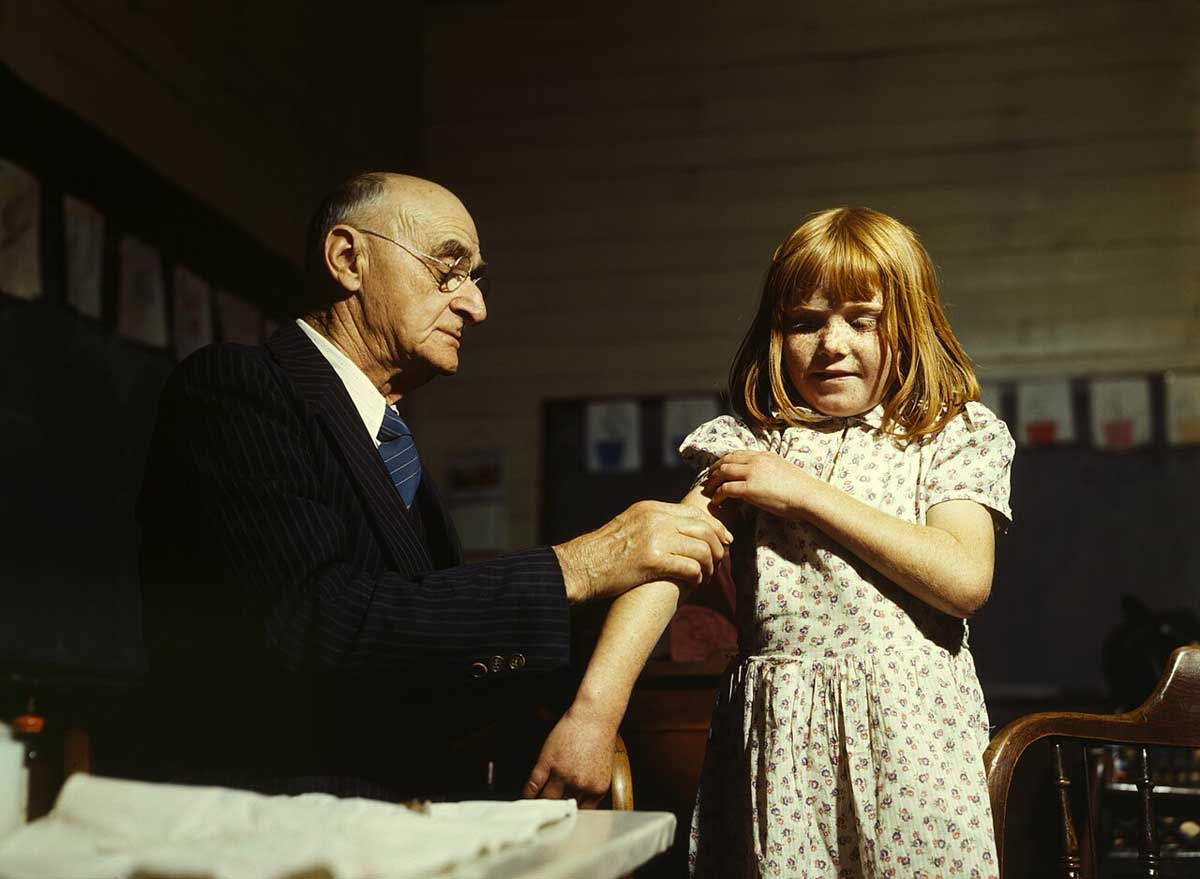
Dr. Schreiber giving a typhoid inoculation to a girl at San Augustine County, Texas 1943.
By Susan Fluegel PHD Nutritional Biochemistry
*Names and some minor identifying details in all stories in this website are changed to protect people's privacy.
This information is for informational purposes only and does not constitute medical advice, diagnosis, or treatment.
References:
Al-Aly Z, Bowe B, Xie Y. Long COVID after breakthrough SARS-CoV-2 infection. Nat Med. 2022 Jul;28(7):1461-1467. doi: 10.1038/s41591-022-01840-0. Full article.
Al-Aly Z, Davis H, McCorkell L, Soares L, Wulf-Hanson S, Iwasaki A, Topol EJ. Long COVID science, research and policy. Nat Med. 2024 Aug;30(8):2148-2164. doi: 10.1038/s41591-024-03173-6. Full article.
Andersson NW, Bech Svalgaard I, Hoffmann SS, Hviid A. Aluminum-Adsorbed Vaccines and Chronic Diseases in Childhood : A Nationwide Cohort Study. Ann Intern Med. 2025 Jul 15. doi: 10.7326/ANNALS-25-00997. Epub ahead of print. Erratum in: Ann Intern Med. 2025 Jul 17. doi: 10.7326/ANNALS-25-03233. Full pdf.
Arnsten A, Mazure CM, Sinha R. This is your brain in meltdown. Sci Am. 2012 Apr;306(4):48-53. doi: 10.1038/scientificamerican0412-48. Full article.
Bowe B, Xie Y, Al-Aly Z. Acute and postacute sequelae associated with SARS-CoV-2 reinfection. Nat Med (2022). https://doi.org/10.1038/s41591-022-02051-3 Full article.
Beck JD, Reidenbach D, Salomon N, Sahin U, Türeci Ö, Vormehr M, Kranz LM. mRNA therapeutics in cancer immunotherapy. Mol Cancer. 2021 Apr 15;20(1):69. doi: 10.1186/s12943-021-01348-0. Full article.
Burrell CJ, Howard CR, Murphy FA. Innate Immunity. Fenner and White's Medical Virology. 2017:57–64. doi: 10.1016/B978-0-12-375156-0.00005-9. Full article.
Cromer D, Steain M, Reynaldi A, Schlub TE, Khan SR, Sasson SC, Kent SJ, Khoury DS, Davenport MP. Predicting vaccine effectiveness against severe COVID-19 over time and against variants: a meta-analysis. Nat Commun. 2023 Mar 24;14(1):1633. doi: 10.1038/s41467-023-37176-7. Full article.
Di Pietrantonj C, Rivetti A, Marchione P, Debalini MG, Demicheli V. Vaccines for measles, mumps, rubella, and varicella in children. Cochrane Database Syst Rev. 2021 Nov 22;11(11):CD004407. doi: 10.1002/14651858.CD004407.pub5. Full article.
Fan T, Zhang M, Yang J, Zhu Z, Cao W, Dong C. Therapeutic cancer vaccines: advancements, challenges, and prospects. Signal Transduct Target Ther. 2023 Dec 13;8(1):450. doi: 10.1038/s41392-023-01674-3. Full article.
Fiedler K, Lazzaro S, Lutz J, Rauch S, Heidenreich R. mRNA Cancer Vaccines. Recent Results Cancer Res. 2016;209:61-85. doi: 10.1007/978-3-319-42934-2_5. Abstract.
Flacco ME, Acuti Martellucci C, Baccolini V, De Vito C, Renzi E, Villari P, Manzoli L. COVID-19 vaccines reduce the risk of SARS-CoV-2 reinfection and hospitalization: Meta-analysis. Front Med (Lausanne). 2022 Nov 9;9:1023507. doi: 10.3389/fmed.2022.1023507. Full article.
Halasa NB, Olson SM, Staat MA, Newhams MM, Price AM, Pannaraj PS, Boom JA, Sahni LC, Chiotos K, Cameron MA, Bline KE, Hobbs CV, Maddux AB, Coates BM, Michelson KN, Heidemann SM, Irby K, Nofziger RA, Mack EH, Smallcomb L, Schwartz SP, Walker TC, Gertz SJ, Schuster JE, Kamidani S, Tarquinio KM, Bhumbra SS, Maamari M, Hume JR, Crandall H, Levy ER, Zinter MS, Bradford TT, Flori HR, Cullimore ML, Kong M, Cvijanovich NZ, Gilboa SM, Polen KN, Campbell AP, Randolph AG, Patel MM; Overcoming Covid-19 Investigators. Maternal Vaccination and Risk of Hospitalization for Covid-19 among Infants. N Engl J Med. 2022 Jul 14;387(2):109-119. doi: 10.1056/NEJMoa2204399. Full article.
Hviid A, Hansen JV, Frisch M, Melbye M. Measles, Mumps, Rubella Vaccination and Autism: A Nationwide Cohort Study. Ann Intern Med. 2019 Apr 16;170(8):513-520. doi: 10.7326/M18-2101. Full article.
Ioannou GN, Berry K, Rajeevan N, Li Y, Yan L, Huang Y, Bui D, Hynes DM, Rowneki M, Hickok A, Niederhausen M, Shahoumian TA, Bohnert A, Boyko EJ, Korpak A, Fox A, Baraff A, Iwashyna TJ, Maciejewski ML, Smith VA, Berkowitz TSZ, Pura JA, Hebert P, Wong ES, O'Hare AM, Osborne TF, Viglianti EM, Aslan M, Bajema KL. Target Trial Emulation of SARS-CoV-2 Infection Versus No Infection and Risk of Post-COVID-19 Conditions in the Omicron Variant Versus Prior Eras. Clin Infect Dis. 2025 Aug 1;81(1):10-19. Abstract.
Jain A, Marshall J, Buikema A, Bancroft T, Kelly JP, Newschaffer CJ. Autism occurrence by MMR vaccine status among US children with older siblings with and without autism. JAMA. 2015 Apr 21;313(15):1534-40. doi: 10.1001/jama.2015.3077. Erratum in: JAMA. 2016 Jan 12;315(2):204. doi: 10.1001/jama.2015.17754. Full article.
Jirikowski GF, Sanna PP, Maciejewski-Lenoir D, Bloom FE. Reversal of diabetes insipidus in Brattleboro rats: intrahypothalamic injection of vasopressin mRNA. Science. 1992 Feb 21;255(5047):996-8. doi: 10.1126/science.1546298. Abstract.
Liang CY, Raju S, Liu Z, Li Y, Asthagiri Arunkumar G, Case JB, Scheaffer SM, Zost SJ, Acreman CM, Gagne M, Andrew SF, Carvalho Dos Anjos DC, Foulds KE, McLellan JS, Crowe JE Jr, Douek DC, Whelan SPJ, Elbashir SM, Edwards DK, Diamond MS. Imprinting of serum neutralizing antibodies by Wuhan-1 mRNA vaccines. Nature. 2024 Jun;630(8018):950-960. doi: 10.1038/s41586-024-07539-1. Abstract.
Man OM, Azamor T, Cambou MC, Fuller TL, Kerin T, Paiola SG, Cranston JS, Mok T, Rao R, Chen W, Jung JU, Martinez VF, Foo SS, Nielsen-Saines K. Respiratory distress in SARS-CoV-2 exposed uninfected neonates followed in the COVID Outcomes in Mother-Infant Pairs (COMP) Study. Nat Commun. 2024 Jan 24;15(1):399. doi: 10.1038/s41467-023-44549-5. Full article.
Marra AR, Kobayashi T, Suzuki H, et al. The effectiveness of coronavirus disease 2019 (COVID-19) vaccine in the prevention of post COVID-19 conditions: A systematic literature review and meta-analysis. Antimicrobial Stewardship & Healthcare Epidemiology. 2022;2(1):e192. doi:10.1017/ash.2022.336 Full article.
Mohammed SA, Rajashekar S, Giri Ravindran S, Kakarla M, Ausaja Gambo M, Yousri Salama M, Haidar Ismail N, Tavalla P, Uppal P, Hamid P. Does Vaccination Increase the Risk of Autism Spectrum Disorder? Cureus. 2022 Aug 12;14(8):e27921. doi: 10.7759/cureus.27921. Full article.
Muecksch, Frauke & Wang, Zijun & Cho, Alice & Gaebler, Christian & Ben Tanfous, Tarek & Dasilva, Justin & Bednarski, Eva & Ramos, Victor & Zong, Shuai & Johnson, Brianna & Raspe, Raphael & Schaefer-Babajew, Dennis & Shimeliovich, Irina & Daga, Mridushi & Yao, Kai-Hui & Schmidt, Fabian & Millard, Katrina & Turroja, Martina & Jankovic, Mila & Nussenzweig, Michel. (2022). Increased memory B cell potency and breadth after a SARS-CoV-2 mRNA boost. Nature. 607. 1-6. 10.1038/s41586-022-04778-y. Full article.
Nakamura T, Ueda J, Mizuno S, Honda K, Kazuno AA, Yamamoto H, Hara T, Takata A. Topologically associating domains define the impact of de novo promoter variants on autism spectrum disorder risk. Cell Genom. 2024 Feb 14;4(2):100488. doi: 10.1016/j.xgen.2024.100488. Full article.
Simonis A, Theobald SJ, Koch AE, Mummadavarapu R, Mudler JM, Pouikli A, Göbel U, Acton R, Winter S, Albus A, Holzmann D, Albert MC, Hallek M, Walczak H, Ulas T, Koch M, Tessarz P, Hänsel-Hertsch R, Rybniker J. Persistent epigenetic memory of SARS-CoV-2 mRNA vaccination in monocyte-derived macrophages. Mol Syst Biol. 2025 Apr;21(4):341-360. doi: 10.1038/s44320-025-00093-6. Full article.
Stock SJ, Carruthers J, Calvert C, Denny C, Donaghy J, Goulding A, Hopcroft LEM, Hopkins L, McLaughlin T, Pan J, Shi T, Taylor B, Agrawal U, Auyeung B, Katikireddi SV, McCowan C, Murray J, Simpson CR, Robertson C, Vasileiou E, Sheikh A, Wood R. SARS-CoV-2 infection and COVID-19 vaccination rates in pregnant women in Scotland. Nat Med. 2022 Mar;28(3):504-512. doi: 10.1038/s41591-021-01666-2. Full article.
Toor J, Echeverria-Londono S, Li X, Abbas K, Carter ED, Clapham HE, Clark A, de Villiers MJ, Eilertson K, Ferrari M, Gamkrelidze I, Hallett TB, Hinsley WR, Hogan D, Huber JH, Jackson ML, Jean K, Jit M, Karachaliou A, Klepac P, Kraay A, Lessler J, Li X, Lopman BA, Mengistu T, Metcalf CJE, Moore SM, Nayagam S, Papadopoulos T, Perkins TA, Portnoy A, Razavi H, Razavi-Shearer D, Resch S, Sanderson C, Sweet S, Tam Y, Tanvir H, Tran Minh Q, Trotter CL, Truelove SA, Vynnycky E, Walker N, Winter A, Woodruff K, Ferguson NM, Gaythorpe KA. Lives saved with vaccination for 10 pathogens across 112 countries in a pre-COVID-19 world. Elife. 2021 Jul 13;10:e67635. doi: 10.7554/eLife.67635. Full article.
Taylor LE, Swerdfeger AL, Eslick GD. Vaccines are not associated with autism: an evidence-based meta-analysis of case-control and cohort studies. Vaccine. 2014 Jun 17;32(29):3623-9. doi: 10.1016/j.vaccine.2014.04.085. Summary.
Nguengang Wakap S, Lambert DM, Olry A, Rodwell C, Gueydan C, Lanneau V, Murphy D, Le Cam Y, Rath A. Estimating cumulative point prevalence of rare diseases: analysis of the Orphanet database. Eur J Hum Genet. 2020 Feb;28(2):165-173. doi: 10.1038/s41431-019-0508-0. Full article.
Watanabe A, Yasuhara J, Iwagami M, Miyamoto Y, Yamada Y, Suzuki Y, Takagi H, Kuno T. Peripartum Outcomes Associated With COVID-19 Vaccination During Pregnancy: A Systematic Review and Meta-analysis. JAMA Pediatr. 2022 Oct 3;176(11):1098–106. doi: 10.1001/jamapediatrics.2022.3456. Epub ahead of print. Erratum in: JAMA Pediatr. 2022 Nov 1;176(11):1154. Full article.
Watson OJ, Barnsley G, Toor J, Hogan AB, Winskill P, Ghani AC. Global impact of the first year of COVID-19 vaccination: a mathematical modelling study. Lancet Infect Dis. 2022 Sep;22(9):1293-1302. doi: 10.1016/S1473-3099(22)00320-6. Full article.
Wesselink AK, Hatch EE, Rothman KJ, Wang TR, Willis MD, Yland J, Crowe HM, Geller RJ, Willis SK, Perkins RB, Regan AK, Levinson J, Mikkelsen EM, Wise LA. A Prospective Cohort Study of COVID-19 Vaccination, SARS-CoV-2 Infection, and Fertility. Am J Epidemiol. 2022 Jul 23;191(8):1383-1395. doi: 10.1093/aje/kwac011. Full article.
Wolff JA, Malone RW, Williams P, Chong W, Acsadi G, Jani A, Felgner PL. Direct gene transfer into mouse muscle in vivo. Science. 1990 Mar 23;247(4949 Pt 1):1465-8. doi: 10.1126/science.1690918. Abstract.
Xiao Y, Zhao L, Peng R. Effects of electromagnetic waves on pathogenic viruses and relevant mechanisms: a review. Virol J. 2022 Oct 12;19(1):161. doi: 10.1186/s12985-022-01889-w. Full article.
Xie Y, Choi T, Al-Aly Z. Postacute Sequelae of SARS-CoV-2 Infection in the Pre-Delta, Delta, and Omicron Eras. N Engl J Med. 2024 Aug 8;391(6):515-525. doi: 10.1056/NEJMoa2403211. Full article.
Rates of COVID-19 Cases or Deaths by Age Group and Vaccination Status and Booster Dose