Does Your Brain Need to Heal?
How can you tell if your brain is sick?
Brain injuries can change who you are as a person. Do you feel angry, out of control, depressed, listless or foggy? Do you have problems remembering things? Do your friends and family say that you have changed? All these can be caused by brain damage.
Metabolic disorders that causes whole body inflammation can cause behavior changes. If your body is inflamed so is your brain and this can influence how you act. Other factors can influence brain health. Your brain may be over or underactive.
If you are feeling or acting in a way that doesn't feel right to you you may need brain healing.
What can cause brain damage?
- COVID and other post viruses cause brain fog
- Emotional and physical stress influence the brain
- Brain and head injuries
- PTSD and cPTSD can cause brain damage
- Metabolic disorders and neuroinflammation
- Chemo brain
Brain inflammation (neuroinflammation)
Chronic brain inflammation can sap your dreams and goals (see why inflammation causes brain damage)
Brain inflammation can drain your life of meaning. A large study (8,999 people over 50 years old), found that people who feel like they have a higher purpose in life; namely that their life is driven and goal-oriented; had lower systemic immune inflammation than people who felt life had no purpose. Having a higher purpose in life was associated with lower neutrophil (white blood cell) counts, lower ratio of neutrophils/lymphocytes, and lower systemic immune inflammation index (SII) (Sutin et al. 2024). People with a low SII index (less inflammation) have greater survival rates for many cancers, hip fractures, and various diseases as well.
People who felt little or NO purpose in life had more inflammation as measured by higher concentrations of inflammatory cytokines; namely C-reactive protein, interleukin-6, interleukin-10, interleukin-1ra, and soluble tumor necrosis factor receptor 1 (sTNFR1). Soluble tumor necrosis factor receptors hook up with our favorite inflammatory cytokine TNF-a. High levels of sTNFR1 are also associated with cardiovascular disease and increased death rates (discussion in Befekadu et al. 2022).
Lower levels of neutrophils, interleukin-6, and sTNFR1 are also associated with better episodic memory; this is the long term memory that allows you to recall personal experiences and events (discussion Sutin et al. 2024).

Do any of these symptoms resonate with you?
Your brain may be crying out for help.
- Is it hard to concentrate? Are you walking around in a fog?
- Do you feel depressed? Does your life seem colorless and grey?
- Do you have difficulty focusing on tasks or things that you want to do? Is it hard to get motivated?
- Are you angry all the time? does the littlest thing set you off?
- Are you constantly stressed out and anxious?
- Does life seem meaningless? Have you lost your sense of wonder at the world?
- Do you not recognize the person you have become?
- Are friends and family telling you you have changes or making comments about your poor memory?
- Do you lose minutes, hours or days?
- Do you have difficulty speaking clearly? Is it hard to remember words?
- Have you lost your ability to bounce back from trauma or adapt to change? Start training your brain
 3_79_11zon.jpg)
Even if you don't know why or how your brain is damaged, you can start healing your brain one small step at a time. Mental stimulation can help rebuild your brain better.
If you are having problems navigating everyday life you may need physical or mental therapy. Consider a service dog to help you with your physical or emotional needs.
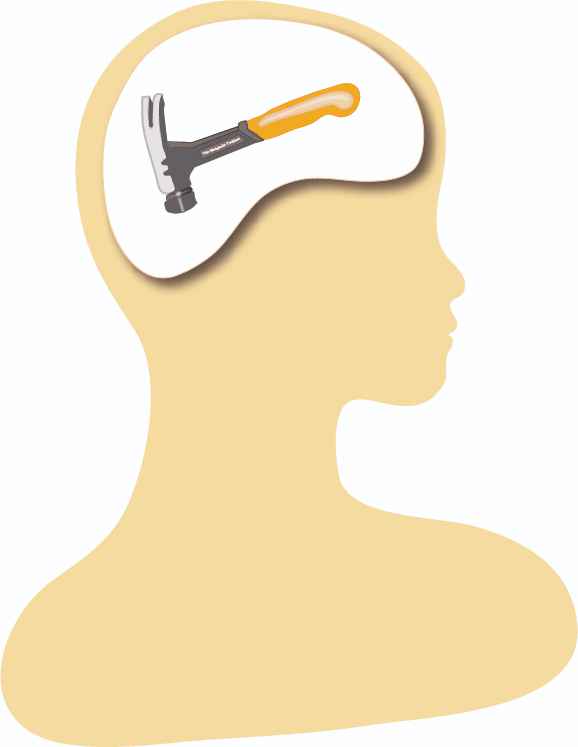
What types of disorders can influence the brain?
★ You have Long COVID or COVID fog
*Jerome Y caught COVID over Christmas from his out of state friends. He didn't need to go to the hospital but was very sick and had to miss several weeks of work. "It has been 3 months and my brain is not as sharp as it was before COVID. I forget meeting times with new clients, struggle to concentrate in meetings and have a hard time focusing at work. In addition, my spouse complains that I don't pay attention at home."
★ You have traumatic brain injury (TBI)
Marcella G received several untreated concessions while playing soccer in high school. "It has been three years and I still have difficulty focusing and trouble remembering events. It is making college difficult. I would have never played sports if I had known this would be my life."
★ You have post traumatic stress disorder (PTSD) or CPTSD
Lee R joined the army straight after high school. "I loved serving in the military but got a TMI during combat. The memory loss was bad but I was diagnosed with PTSD after getting out. It has made me super reactive; I jump at any noise and am always in a state of hyperawareness."
★ You have chronic inflammation
Luckily for you, this whole website is devoted to reducing inflammation.
★ You have chemo brain from undergoing chemotherapy
Pam Y had chemotherapy to treat breast cancer. "I have holes in my memory, I had an excellent memory before treatment. I've had a much harder time trying to focus during chemo. I am six months recovered and it is starting to get better."
Day dreams c1901 - Helen Hyde woodcut print.

★ You have any type of metabolic disorder
This includes obesity, T2D, insulin resistance (IR), hypertension, fatty liver, many cancers, asthma, depression, dementia, and more.
★ You are stressed, depressed, have problems making decisions, have anger issues or other mental health challenges
★ You (or your friends and loved ones) are concerned about abnormal behavior or thoughts.
Please see our page on suicide if you are thinking about taking your life. Call someone or a suicide hotline if you need help immediately!
Every life has intrinsic value, you are important and people care about you!
Not necessarily a problem but you can use these tools to optimize your brain. Personally I think there are many advantages to being neurodiverse.
Reasons your brain may have damage:
Do you have COVID fog or loss of cognitive functions due to Long COVID?
COVID fog, or brain fog, is when you have difficulty thinking, trouble concentrating, an inability to plan or problems making choices. Brain fog is characterized by a lack of mental clarity, forgetfulness and cognitive dysfunction. It can cause confusion, depression, and/or memory issues.
One multiracial study found that after COVID infection, 18% of women and men had deficiencies with brain processing speed, 16% with executive functioning (higher-level cognitive skills you use to control and coordinate your other cognitive abilities and behaviors), 15% with phonemic fluency (verbal and vocabulary skills), 20% with category fluency (giving correct examples of things that belong in a group or category), 24% with memory encoding (how memories are modified and stored in the brain), and 23% with memory recall (Becker et al. 2021).
In a large study of 236,379 people diagnosed with COVID-19, about one third of the people also experienced a psychiatric or neurological illness as of six months later (such as stroke, dementia or brain fog). One in 8 people were diagnosed for the first time with the illness (Taquet et al. 2121). Getting COVID-19 was significantly associated with an increased risk of neurological and psychiatric disorders in the 6 months after being diagnosed.
Children can also experience COVID brain. Children who recovered from COVID-19 had a higher risk of developing psychosis, dementia, brain fog, and seizures than children who recovered from other respiratory infections (Taquet et al. 2121).
PSA: I used to have periods of brain fog due to undiagnosed celiac disease, so brain fog can be due to multiple causes including but not limited to food allergies; exposure to cigarette and pot smoke; high blood sugar; and chronic inflammation.
Are you stressed out - say from experiencing a pandemic, job loss, zombie attack, death or any other stressful event?
Stress messes with your brain and impairs your ability to think! Stress of any kind causes the emotion center of the brain, the amygdala, to shut down the prefrontal cortex, where logical thinking and planning takes place (Arnsten et al. 2012). The brain cells (neurons) in the prefrontal cortex actually disconnect and stop firing after they are exposed to a large amount of neurotransmitters or stress hormones. This means that your brain shuts down in the face of anxiety, fear anger or other strong emotions and you start reacting without input from the reasoning part of your brain.
Chronic stress actually expands the network of connections between neurons in the amygdala and lower emotional centers. At the same time, stress causes connections in the prefrontal cortex to degrade. Dendrites, appendages on nerves that receive messages from other cells, in the primal amygdala enlarge, while dendrites in the prefrontal cortex shrink. Luckily, these dendrites can regrow if stress is eliminated (McEwan and Morrison 2013). If you want more stress, don't fear! Here are poor ways to handle stress.
Chronic stress, such as being in a pandemic or other hopeless feeling situation, is particularly bad. There is evidence that some people are more susceptible to chronic stress than others. In addition to shutting down your ability to think; stress hormones, norepinephrine and cortisol, cause your amygdala to alert the rest of the nervous system to prepare for danger and also to strengthen memories related to fear and other strong emotions.
Bed-ridden wounded soldiers, knitting. Walter Reed Hospital, Washington, D.C. Harris & Ewing., c1918-1919.

Do you have any sort of brain damage due to traumatic brain injury (TBI), head injury, concessions or stroke?
People who have head injuries can have problems concentrating, reduced problem solving ability, anxiety, dizziness, irritability, anger, trouble regulating emotions, and/or depression. They may be bothered by noise or light; have problems with balance and vision; experience sleep disorders; and/or have difficulty with short and long term memory. They may have post traumatic stress disorder (PTSD).
Worse of all, you may have difficulty realizing that you are having these symptoms since the ability to recognize problems lies in the same organ that is damaged, your brain! If you are unsure, you may want to be evaluated by a professional or ask a trusted friend or family member if they have noted any changes in your moods or behavior.
Do you have chemo brain?
Some people going to chemotherapy develop chemotherapy brain fog, nicknamed chemo brain. This is a decline in mental sharpness that includes problems learning new tasks, difficulty concentrating on things, problems finishing tasks or projects, or having a hard time remembering things like names, dates and events.
Chemotherapy impairs the brain’s white matter functions. White matter is present in areas with lots of nerve axons, or fibers, coated with white myelin. Myelin, the white fatty coating that covers the neurons, helps speed up the transmission of nerve signals. During chemotherapy, damage to myelin slows nerve's transmission rate. A similar reaction may occur with immune cells causing white matter damage in Long COVID and MetS. Other viral infections can also cause brain inflammation.
Chemotherapy brain fog may also be caused by hormone therapy, radiation therapy, medication interactions, nutritional deficiencies, diabetes, thyroid problems, depression, anxiety or other medical problems.
Do you have post traumatic stress disorder (PTSD) or complex post traumatic stress disorder (CPTSD)?
PTSD and cPTSD are psychiatric disorders that can develop in individuals who have experienced or witnessed a traumatic event. When you go through trauma the brain can change. The strong emotions invoked by the event can result in PTSD symptoms.
Interactions between several brain areas are affected in PTSD. The key brain areas affected are the prefrontal cortex, hippocampus, amygdala and anterior cingulate cortex (ACC) as well as white matter.
The prefrontal cortex has reduced activity in PTSD. Normally it partners with the amygdala to regulate emotional responses. Trauma from PTSD and cPTSD can disrupt this interaction causing it to be unable to calm fear responses.
The hippocampus helps store and organize memories. Trauma and abuse from cPTSD and PTSD can shrink hippocampus volume and disrupt its function. This means it has problems processing and using memories. Interestingly, the hippocampus shrinks in depressed people as well.
The amygdala alerts us to danger by detecting threats and initiating the appropriate reaction. People with PTSD or cPTSD develop a hyperactive amygdala that sees everything as a threat (discussion Hinojosa et al. 2024).
 {{PD-US-expired}}_1_11zon.jpg)
Do you have any form of metabolic disorder like type 2 diabetes (T2D), insulin resistance (IR), hypertension, cardiovascular disease, obesity, asthma, or other disorders?
Metabolic syndrome (MetS) is associated with impaired executive function (this includes working memory, planning, flexible thinking, and self-control), cognitive impairment, memory impairment, lower IQ, visuospatial dysfunction (the loss of the sense of where you are in relation to your surroundings), and poor cognitive processing speed (review of studies in Yates et al. 2012).
A study of 5854 men and women (average age 44) found that people with MetS had a 56% greater risk of cognitive impairment. In the same study, people with abdominal obesity and hypertension also had an elevated risk of cognitive impairment (Wang et al. 2021).This may be due to brain inflammation caused by overall body inflammation.
Overall body inflammation can lead to metabolic disorders as well.
By Susan Fluegel PHD Nutritional Biochemistry.
*Names and some minor identifying details in all stories in this website are changed to protect people's privacy.
This information in this website is for informational purposes only and does not constitute medical advice, diagnosis, or treatment.
References:
Arnsten A, Mazure CM, Sinha R. This is your brain in meltdown. Sci Am. 2012 Apr;306(4):48-53. doi: 10.1038/scientificamerican0412-48. Full article.
Baron-Cohen S, Ashwin E, Ashwin C, Tavassoli T, Chakrabarti B. Talent in autism: hyper-systemizing, hyper-attention to detail and sensory hypersensitivity. Philos Trans R Soc Lond B Biol Sci. 2009 May 27;364(1522):1377-83. doi: 10.1098/rstb.2008.0337. Full article.
Baron-Cohen S, Lombardo MV. Autism and talent: the cognitive and neural basis of systemizing. Dialogues Clin Neurosci. 2017 Dec;19(4):345-353. doi: 10.31887/DCNS.2017.19.4/sbaroncohen. Full article.
Becker JH, Lin JJ, Doernberg M, et al. Assessment of Cognitive Function in Patients After COVID-19 Infection. JAMA Netw Open.2021;4(10):e2130645. doi:10.1001/jamanetworkopen.2021.30645 Full article.
Befekadu R, Grenegård M, Larsson A, Christensen K, Ramström S. Levels of soluble tumor necrosis factor receptor 1 and 2 are associated with survival after ST segment elevation myocardial infarction. Sci Rep. 2022 Aug 30;12(1):14762. doi: 10.1038/s41598-022-18972-5. Full article.
Hinojosa CA, George GC & Ben-Zion Z. Neuroimaging of posttraumatic stress disorder in adults and youth: progress over the last decade on three leading questions of the field. Mol Psychiatry 29, 3223–3244 (2024). https://doi.org/10.1038/s41380-024-02558-w Full article.
McEwen BS, Morrison JH. The brain on stress: vulnerability and plasticity of the prefrontal cortex over the life course. Neuron. 2013 Jul 10;79(1):16-29. doi: 10.1016/j.neuron.2013.06.028. Full article.
Schneps MH, Brockmole JR, Sonnert G, Pomplun M. History of reading struggles linked to enhanced learning in low spatial frequency scenes. PLoS One. 2012;7(4):e35724. doi: 10.1371/journal.pone.0035724. Full article.
Sutin AR, Stephan Y, Luchetti M, Terracciano A. Purpose in life and markers of immunity and inflammation: Testing pathways of episodic memory. J Psychosom Res. 2023 Nov;174:111487. doi: 10.1016/j.jpsychores.2023.111487. Full article.
Taquet M, Geddes JR, Husain M, Luciano S, & Harrison PJ. (2021). 6-month neurological and psychiatric outcomes in 236 379 survivors of COVID-19: A retrospective cohort study using electronic health records. The Lancet Psychiatry, 8(5), 416–427. https://doi.org/10.1016/S2215-0366(21)00084-5 Full article.
Wang X, Ji L, Tang Z, Ding G, Chen X, Lv J, Chen Y, Li D. The association of metabolic syndrome and cognitive impairment in Jidong of China: a cross-sectional study. BMC Endocr Disord. 2021 Mar 4;21(1):40. doi: 10.1186/s12902-021-00705-w. Full article.
Yates KF, Sweat V, Yau PL, Turchiano MM, Convit A. Impact of metabolic syndrome on cognition and brain: a selected review of the literature. Arterioscler Thromb Vasc Biol. 2012 Sep;32(9):2060-7. doi: 10.1161/ATVBAHA.112.252759. Full article.