Plant Proteins
Plant proteins: good or bad?
Like many things in life, plant protein have positive and negative factors. Compared to animal-sourced proteins, plant-sourced proteins have lower amounts of essential amino acids. This means you need to eat more plant protein than animal protein to get the same benefits. Plant proteins also have lower digestibility due to their structure (discussion Berrazaga et al. 2019)
Plant-based proteins contain plant defence chemicals called phytochemicals. Paradoxically, phytochemicals promote good health on one hand and act as antinutrients on the other hand. See below for more on plant phytochemicals.
Your ability to thrive on purely plants may be in your genes
An interesting study identified 34 genes associated with vegetarians (5,324 strict vegetarians compared to 329,455 omnivores). Several of the genes associated with vegetarianism (TMEM241, NPC1, and RMC1) are involved in lipid metabolism and brain function. Differences in how lipids are metabolized and how this affects the brain may influence people's ability to be healthy on a vegetarian or vegan diet (Yaseen et al 2023).
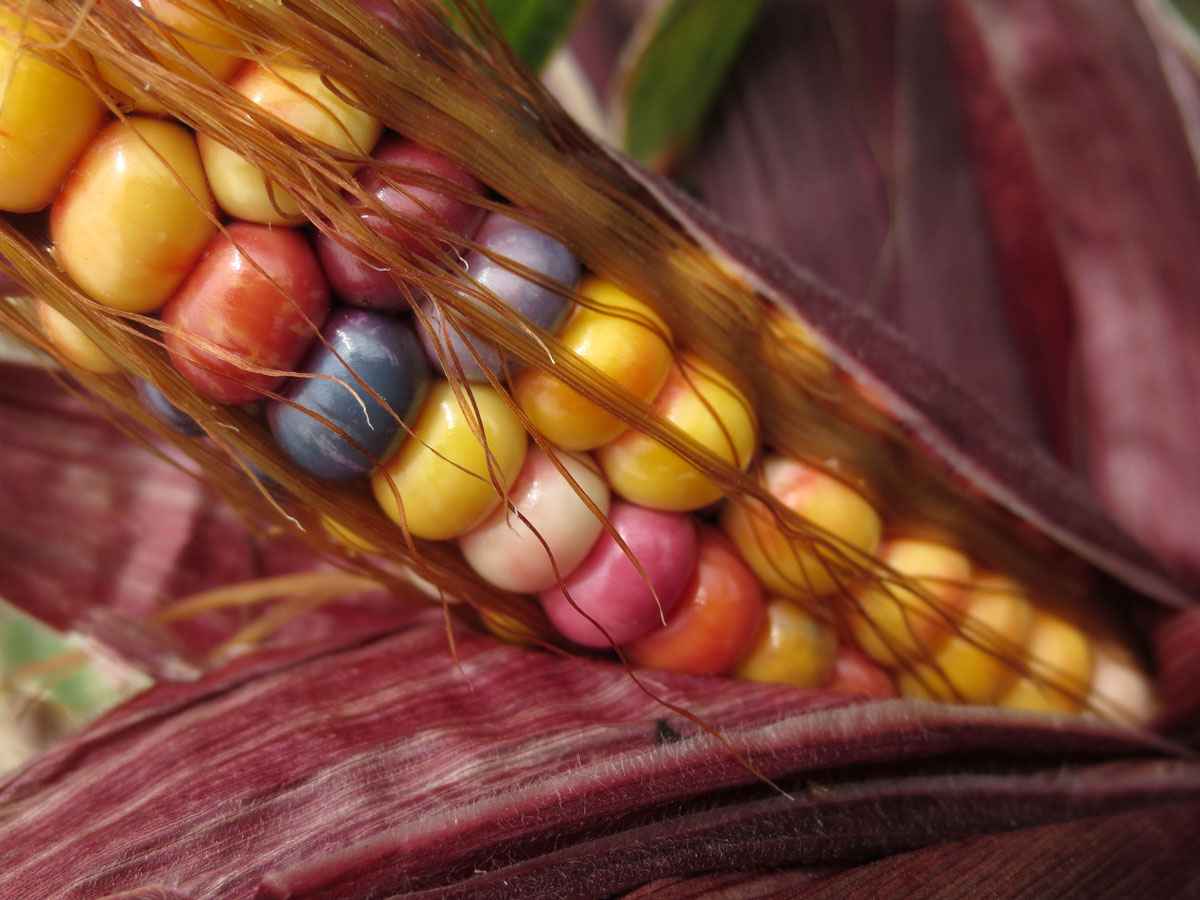
Glass Gem corn was developed by Carl Barnes. He crossed several varieties of heirloom Native American corn to obtain the beautiful colors. It is used for popcorn or flint corn.
Essential amino acids (EAAs) are lower in plant proteins
Plant proteins have lower essential amino acids profiles and often lack leucine, lysine, and/or methionine (Gorissen et al. 2018). This is important because your body cannot make essential amino acids.
Gorissen et al. (2018) measured the percentage of essential amino acids in different protein isolates. Protein isolates are made by filtering out most of the protein from either a plant-based source or an animal-based source. So this is a pure protein powder, not the whole food.
Essential amino acid contents of plant-based protein isolates were oat 21%, lupin 21%, wheat 22%, soy (27%), brown rice (28%), pea (30%), corn (32%), and potato (37%).
The essential amino acid contents of animal-based isolate proteins were egg 32%, casein 34%, milk protein 39%, muscle protein 38% and whey 43%.
Total consumption of essential amino acids, at least in older adults, may be what prompts stimulation of muscle protein synthesis after eating (Volpi et al. 2003, Jonker et al. 2017). See Why You Need Protein and Seniors Need More Protein for more.
Research studies have compared the impact of plant-based protein to animal-based protein using old, adult and young people, pigs and rats. The majority of the studies reported that quality animal proteins have a greater ability to increase muscle protein synthesis rate while supporting muscle mass than plant-based proteins (see discussion Berrazaga et al. 2019).
How to build muscle on plant protein
Eat more plant protein: Due to anti-nutrient factors and structural differences, most plant proteins will be less bioavailable. To combat this you will need to eat more total protein.
Increasing people's total protein intake resulted in a greater acute postprandial muscle protein synthesis response as well as a greater improvement in lean tissue mass over time (discussion Berrazaga et al. 2019). This was true whether the higher protein intake was animal- or plant-based.
Add resistance exercise and increase plant protein intake to 30 grams per meal: Studies reported that a combination of resistance (strength) training plus eating meals of at least 30 grams of plant-based protein can increase body lean and muscle mass (discussion Joy et al. 2013, Berrazaga et al. 2019).
Physical activity increases the sensitivity of skeletal muscle protein to protein intake (Burd et al. 2013). Active people will respond better to protein.
Use plant protein isolates that combine different plant proteins for a better amino acid balance: Healthy young men (24 men, 20-28 years old) consumed either 30 grams of a wheat, corn, and pea protein isolate blend or 30 grams of a milk protein blend. Muscle protein synthesis rates were similar for the plant blend protein and the milk protein. Milk protein did increase the circulating plasma essential amino acid concentrations more than the plant protein. The plant blend used in the study was 15 g of wheat protein hydrolysate, 7.5 g corn protein isolate, and 7.5 g pea protein concentrate (Pinckaers et al. 2023).
Blend plant and animal protein sources: Plant and animal proteins can be combined to activate muscle protein anabolism in a manner similar to high-quality proteins, such as whey (discussion Berrazaga et al. 2019).
Blend plant proteins for better essential amino acid (EAA) profiles: combine different plant protein sources with complementary essential amino acid compositions to optimize plant protein's EAAs.
Legumes (deficient in sulfur amino acids) and cereal grains (deficient in lysine) have complementary amino acid profiles. Here are some food pairings; note that many pairings are traditional meals:
- Legumes paired with grains
- Legumes paired with seeds
- Legumes paired with nuts
- Legumes: beans, peas, chickpeas, lentils, peanuts
Grains: wheat, barley, bulgur, corn, millet, oats, rice, rye, teff, triticale, bulgur
Seeds: quinoa, sesame, buckwheat, sunflower, flax, poppy, pumpkin, squash, sprouted seeds (alfalfa, lentils, peas)
Nuts: brazil, almonds, walnuts, cashews, macadamia, pecans, coconut, pistachio, hazelnuts
If you are a vegan get your B12: Other nutrients to watch include iron, calcium, vitamin D, iodine, zinc, and omega-3 fatty acids (Malhotra and Lakade 2025).
Blue Box of Science: plant proteins are harder to digest due to their structure
Proteins are folded into their active forms; see details here. Plant proteins are folded into more β-sheets and less α-helix conformations when compared to animal proteins. β-sheets form a hydrophobic (water-hating), pleated sheet-like structure that is harder for your body to digest than the coiling α-helix. β-sheets aversion to water also make them more likely to aggregate or clump together.
Plant proteins also contain non-starch polysaccharides (fibers) that inhibit the ability of enzymes to access proteins. This hinders digestion.
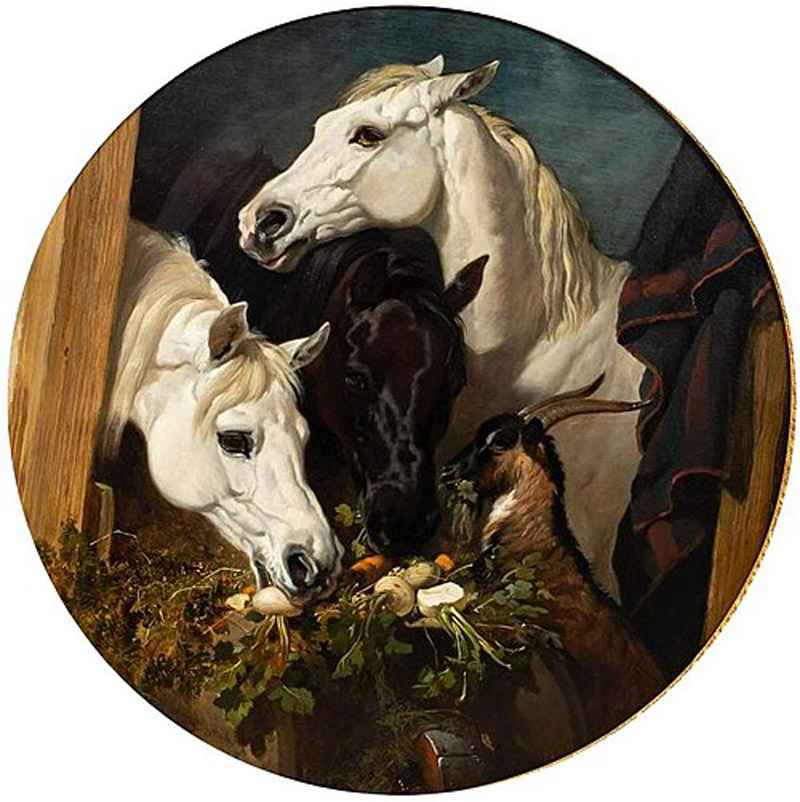
Horses and Goat Eating Turnips and Carrots John Frederick Herring, c1848, oil on canvas.
Can people thrive on plant based diets?
Some people thrive on plant based diets and others do not. Factors that can influence this include age, genetics, quality of diet, health, overall inflammation, metabolic disorders, stress and more. I have met vegans in robust good health and vegans who look like they are suffering from multiple nutritional deficiencies.
If you are a person who cannot thrive on pure plant protein or a vegan diet you may need to expand your diet to choose more vegetarian or omnivore options.
Some signs of failure to thrive (could also be due to physical ailments): digestive problems, poor skin, unhealthy appearance, hair falling out, cold all the time, excess weight gain or weight loss, muscle loss, poor mental health, depression, low levels of vitamins and or minerals (especially B12, iron, calcium, vitamin D, iodine, and zinc), craving foods excluded from diet, fatigue, just not feeling good, and disordered eating.
Some things to consider IF your plant-based diet is negatively influencing your health:
❋ If you are a vegan or vegetarian solely due to to health reasons: an vegetarian or omnivore diet is a healthy diet for people. Humans are designed to eat a varied diet.
❋ If you are a vegan due to ethical reasons over eating animals and animal welfare: some people raise spoiled and happy hens for fresh eggs and contented cows for dairy such as milk, yogurt and cheese. You can find local farms that respect the animals and provide retirements for older animals.
❋ Do you have disordered eating? Some people consume only plants or fruits to facilitate an eating disorder. It may be hard for you to recover from eating disorders if it is too easy for you to restrict your diet.
Flora T (23 years old): "I was only 83 pounds due to my eating disorder, anorexia nervosa. I could not completely recover from this until I stopped restricting not only my calories but also animal products. Otherwise, it was too easy to slip back."
❋ Are you allergic to soy, wheat, corn, nuts or other plant products? Do you have Celiac's disease (intolerant to wheat gluten)? Vegans and vegetarians often consume a lot of soy and wheat. Starting a plant-based diet may make a already susceptible person develop allergenic symptoms such as brain fog, intestinal distress and fatigue.
In addition, if you have a iron deficiency that does not improve with treatment you may have Celiac's disease. You can still be vegan or vegetarian, just ditch the plant foods you can't tolerate. See Elimination Diets 101 for more on sorting out food allergies and intolerances.
❋ Not everyone can absorb iron from supplements. If you are constantly iron deficient and do not have Celiac's disease or other treatable malabsorption issue, you may have to consume animal based products.
Amaya B: "I wanted to be a vegetarian but I can't due to chronic iron-deficiency anemia. I took iron supplements the size of horse pills every day but my iron levels never reached normal. I felt like I was just dragging myself around everyday. I was so freaking tired. My body can use the iron in meat though so I started eating it again and feel better."
❋ Are you intolerant to plant sugars? Some people do better on a diet low in difficult to digest carbohydrates (a low FODMAP diet). A diet low in fermentable oligosaccharides, disaccharides, monosaccharides, and polyols (sugars and sugar alcohols) reduced irritable bowel syndrome (IBS) symptoms such as leaky gut and inflammation (Gao et al. 2025).
❋ Are you intolerant to plant phytochemicals such as lectins, phytoestrogens, oxalates, phytates, goitrogens, or tannins? See below for more.
❋ As people age they need more protein. It may be harder to have a strict diet and stay healthy. Something as simple as adding a vegetable protein isolate shake, making an effort to consume high quality vegetable protein, eating a couple of eggs, or adding some Greek yogurt to your diet can make a difference.
Phytochemicals can be beneficial AND harmful
Plant proteins contain anti-nutrients which limit nutrient digestibility and/or bioavailability. Anti-nutrients are bioactive substances which include lectins, phytoestrogens, oxalates, phytates, goitrogens, saponins, protease inhibitors, gossypol, amylase inhibitors and tannins (Petroski and Minich 2020, Konzy and Osman 2024). Some substance are both anti-inflammatory and an anti-nutrient. It just depends on the dose.
Plant phytochemicals
Lectins
Lectins are proteins that bind to carbohydrates. Lectin content is highest in legumes (soybeans, kidney beans, fava beans, chickpeas, peanuts, cashews), whole grains (corn, wheat), nuts (almonds), quinoa and nightshade vegetables such as potatoes and tomatoes.
Almost all lectins in the diet come from legumes and grains. Plants primarily use lectins as a defence mechanism. Raw lectins can damage the digestive tract, hinder food absorption and contribute to autoimmune reactions (discussion Konzy and Osman 2024).
Lectin's bad traits:
- May cause inflammation by interacting with immune cells, stimulating inflammatory signaling pathways, and increasing production of reactive oxygen species (ROS) and nitric oxide (NO)
- Can interfere with absorption of minerals like calcium, zinc, iron and phosphate
- Can cause red blood cell clumping
- May aggravate the gut and cause leaky intestinal wall diseases
- May cause autoimmune disorders by binding to tissues in the body
- (discussion Konzy and Osman 2024).
Lectin's good traits:
- Acts as an antioxidant by modulating immune cells and inhibiting pro-inflammatory cytokines
- Slows down carbohydrate digestion which keep blood glucose stable
- Can be associated with weight loss
How to prepare food to reduce lectins:
Fermentation reduces lectins
- Soak food, throw out soaking water, and cook food thoroughly to denature lectins (denaturing makes them harmless). Fermentation also destroys lectins.
- For beans soak for 12 hours and boil for 1/2 hr to 1 hour
- For nightshade plants: boil 5-10 minutes
- For rice: boil 15 minutes
- For grains (barley and wheat): boil 15 minutes
Roasting or baking increases lectin content in food
Goitrogens
Goitrogens are substances that interfere with thyroid gland function. They can decrease thyroid stimulating hormone (TSH); interfere with the thyroid peroxidase (TPO) enzyme which makes thyroid hormones; and prevent iodine from entering the thyroid gland.
Disrupted thyroid glands can cause metabolic dysfunctions with nutrient regulation, heart rate, temperature control, calcium levels in blood, mental decline and protein production. Goitrogens or lack of iodine in the diet can cause the thyroid gland in the throat to enlarge as compensation. This enlargement is called a goiter.
There are three types of goitrogens: goitrins, thiocyanates and flavonoids.
The strongest goitrogens are found in soy, all soy products, and millet.
Moderate goitrogens (glucosinolates) are found in vegetables in the Brassica family such as broccoli, cauliflower, cabbage, kale, bok choy, Brussels sprouts, turnip greens, Chinese cabbage, radishes, turnips and rutabagas.
Mild goitrogens are found in spinach, cassava, flax, pine nuts, sweet potatoes, soy products, peaches, pears and strawberries.
Goitrogen's bad traits:
- Causes hypothyroidism and/or goiter formation
- Inhibits iodine uptake
Goitrogen's good traits:
- Flavonoids are antioxidants
How to reduce the side effects of goitrogens:
- Consume enough iodine and selenium. Studies show that goitrogens may be associated with thyroid dysfunction only in people with low iodine intake (discussion Petroski and Minich 2020).
- Steam or boil foods to reduce goitrogen levels
Fermentation may increase goitrogens.
Oxalates
Oxalate (oxalic acid) can create insoluble salts with minerals, such as calcium, sodium, potassium, iron, and magnesium. Plants use oxalate for protection, calcium regulation, and to detoxify heavy metals.
The highest oxalate content is found in spinach, swiss chard, sweet potatoes, taro, amaranth, beets, rhubarb, and sorrel.
Small amounts of oxalate are in whole grains, raw legumes, tea, baking cocoa, peanuts and nuts (almonds, cashews).
Oxalate's bad traits:
- May reduce or prevent calcium absorption
- Can increase calcium kidney stone formation
Food preparation that reduces oxalates:
- Soaking, boiling, or steaming.
- Try pairing with high calcium foods
Food preparation that increases oxalates: roasting, grilling, baking, low-calcium diet.
Phytates
Plant compounds found in cereal grains and brans, legumes like soybeans, potatoes, amaranth, quinoa, millet, nuts, and seeds. It is produced during seed formation and helps with energy storage in the plant. Phytate also goes by phytic acid to its friends or myo-inositol hexaphosphate (IP6) when it gets in trouble.
Food preparation that reduces phytates: soaking, boiling, germination, and fermentation
Phytate's bad traits:
- Can inhibit iron, zinc, calcium, copper, manganese and other mineral absorption by binding to them
Phytate's good traits:
- Acts as an antioxidant and can chelate excess iron
- Inhibits growth and spread of cancer
- May have other immunity, bone health and cardiovascular benefits
Food preparation that reduces phytates:
- Soaking, sprouting, fermentation, and cooking (boiling)
Gertrude Ellen Burrard (1860-1928) - A Hill Woman from Ladakh, Cooking Her Food c1893 oil on canvas.
 - A Hill Woman from Ladakh, Cooking Her Food c1893 oil on canvas_97_11zon.jpg)
Phytoestrogens
These are plant compounds that resemble estrogen (17-β-estradiol). There are four phytoestrogens compounds; namely isoflavones, lignans, stilbenes, and coumestrol.
Isoflavones are flavonoids. Isoflavones (genistein, daidzein, glycitein, and biochanin A) are found primarily in soybeans. Lignan phytoestrogens are found in flaxseeds and other cereals.
The gut microbiome (gut bacteria) hydrolyzes isoflavone glycosides into their active form, aglycones. Cooking can also transform isoflavone glycosides into aglycones.
Phytoestrogen bad traits:
- May be endocrine disrupters
- Can stimulate the growth of estrogen-sensitive cancers
Phytoestrogen's good traits:
- Anti-inflammatory and antioxidant
- May reduce menopausal symptoms, metabolic syndrome, risk of cardiovascular disease, obesity, type 2 diabetes, cognitive disorders, and various forms of cancer
No food preparation decreases phytoestrogens.
Food preparation that increases phytoestrogens: boiling, steaming, fermenting (increases aglycone content).
Tannins
Plant polyphenol compounds (proanthocyanidins or catechins). Found in tea, cocoa, berries, grapes, apples, stone fruits, nuts, beans, and whole grains. Darker foods contain more tannins.
Tannins are biologically active molecules
Tannin's bad traits:
- Inhibit iron absorption
- Reduce iron stores
- May inhibit absorption of minerals such copper and zinc
Tannin's good traits:
- Antioxidant
- Anticarcinogenic (prevents cancer)
- Immunomodulatory (modifies immune response)
- Detoxifying
- Protects cardiovascular system
Food preparation that reduces tannins:
- Cooking, peeling or removing skins of fruits and nuts
- Include 30 mg vitamin C with diet (Siegenberg et al. 1991)
Food Stand unknown artist 17th century.

Don't push your dietary ideals on others
I have talked to people who were getting bullied for their food habits. Especially vegans being bullied for not eating animal products; or people (especially ex-vegans or vegetarians) being bullied for consuming animal products. It is not cool in either direction. Please eat the diet that makes you feel healthy and energetic. Please eat the diet you can afford. Don't let others nag you into a lifestyle or diet that makes you sick and tired.
If you find yourself preaching at or harassing others about their diet just stop. If I, with my PHD in Nutritional Biochemistry, can refrain from chasing down random people and tearing their fast food bags out of their hands, I'm sure you can too.
It is OK to talk about diets, share your personal experience, or explore nutritional information if the other person is receptive. Please try to ensure you are sharing valid information (beware of Facebook, TikTok and AI which are hotbeds of misinformation). Remember, everyone has different nutritional needs so what works for you may not work for others.
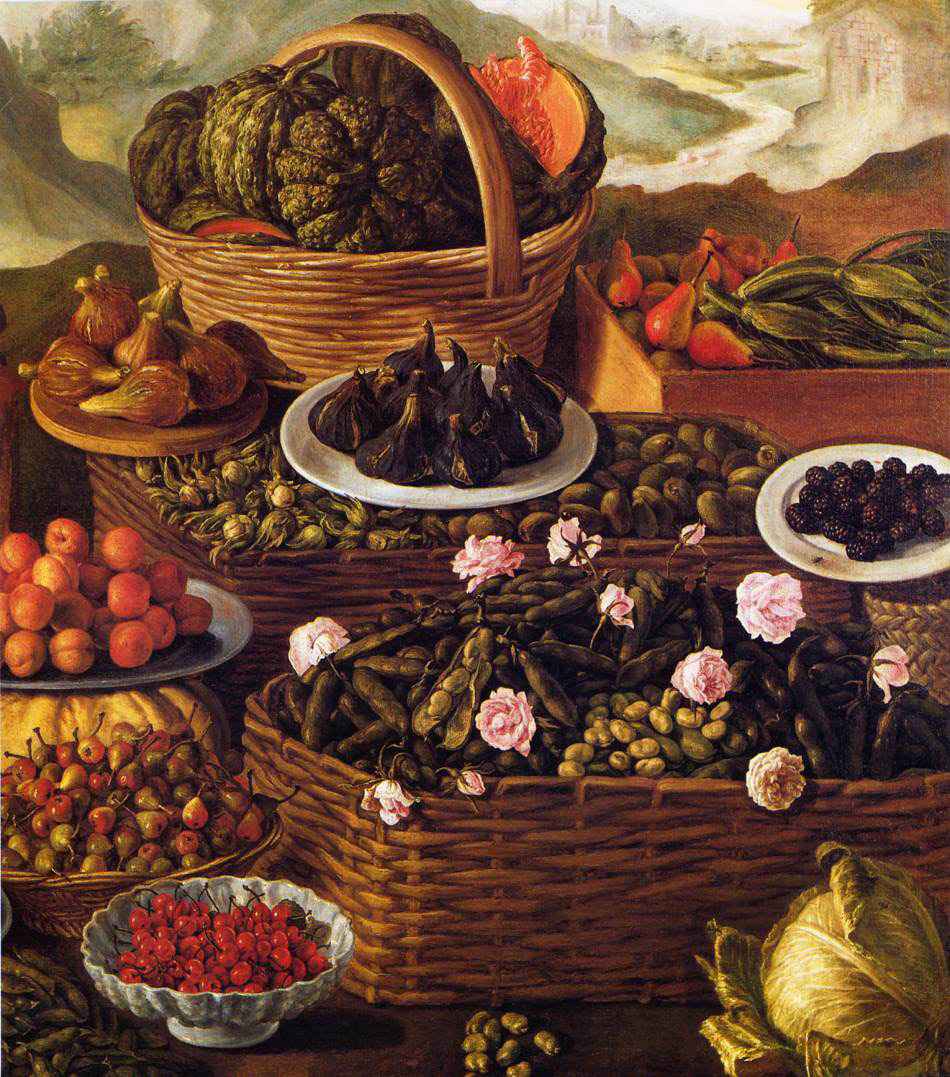
Vincenzo Campi - Fruit Seller c1580 oil on canvas.
By Susan Fluegel PHD Nutritional Biochemistry and Lori Wood MS Human Nutrition.
*Names and some minor identifying details in all stories in this website are changed to protect people's privacy.
This information in this website is for informational purposes only and does not constitute medical advice, diagnosis, or treatment.
References:
Berrazaga I, Micard V, Gueugneau M, Walrand S. The Role of the Anabolic Properties of Plant- versus Animal-Based Protein Sources in Supporting Muscle Mass Maintenance: A Critical Review. Nutrients. 2019 Aug 7;11(8):1825. doi: 10.3390/nu11081825. Full article.
Burd NA, Gorissen SH, van Loon LJ. Anabolic resistance of muscle protein synthesis with aging. Exerc Sport Sci Rev. 2013 Jul;41(3):169-73. doi: 10.1097/JES.0b013e318292f3d5. Abstract.
Gao J, Lee AA, Abtahi S, Turner JR, Grover M, Schmidt A, Schmidt TM, Nee JW, Iturrino J, Lembo A, Chey WD, Wiley JW, Singh P. Low Fermentable Oligosaccharides, Disaccharides, Monosaccharides, and Polyols Diet Improves Colonic Barrier Function and Mast Cell Activation in Patients With Diarrhea-Predominant Irritable Bowel Syndrome: A Mechanistic Trial. Gastroenterology. 2025 Jul 30:S0016-5085(25)05771-3. doi: 10.1053/j.gastro.2025.07.016. Full article.
Gorissen SHM, Crombag JJR, Senden JMG, Waterval WAH, Bierau J, Verdijk LB, van Loon LJC. Protein content and amino acid composition of commercially available plant-based protein isolates. Amino Acids. 2018 Dec;50(12):1685-1695. doi: 10.1007/s00726-018-2640-5. Full article.
Jonker R, Deutz NE, Erbland ML, Anderson PJ, Engelen MP. Effectiveness of essential amino acid supplementation in stimulating whole body net protein anabolism is comparable between COPD patients and healthy older adults. Metabolism. 2017 Apr;69:120-129. doi: 10.1016/j.metabol.2016.12.010. Full article.
Joy JM, Lowery RP, Wilson JM, Purpura M, De Souza EO, Wilson SM, Kalman DS, Dudeck JE, Jäger R. The effects of 8 weeks of whey or rice protein supplementation on body composition and exercise performance. Nutr J. 2013 Jun 20;12:86. doi: 10.1186/1475-2891-12-86. Full article.
Konozy EHE, Osman MEM. From inflammation to immune regulation: The dual nature of dietary lectins in health and disease. Heliyon. 2024 Oct 18;10(20):e39471. doi: 10.1016/j.heliyon.2024.e39471. Full article.
Malhotra A, Lakade A. Analytical Review on Nutritional Deficiencies in Vegan Diets: Risks, Prevention, and Optimal Strategies. J Am Nutr Assoc. 2025 Aug;44(6):545-555. doi: 10.1080/27697061.2025.2461218. Abstract.
Petroski W, Minich DM. Is There Such a Thing as "Anti-Nutrients"? A Narrative Review of Perceived Problematic Plant Compounds. Nutrients. 2020 Sep 24;12(10):2929. doi: 10.3390/nu12102929. Full article.
Pinckaers PJ, Domić J, Petrick HL, Holwerda AM, Trommelen J, Hendriks FK, Houben LH, Goessens JP, van Kranenburg JM, Senden JM, de Groot LC, Verdijk LB, Snijders T, van Loon LJ. Higher Muscle Protein Synthesis Rates Following Ingestion of an Omnivorous Meal Compared with an Isocaloric and Isonitrogenous Vegan Meal in Healthy, Older Adults. J Nutr. 2024 Jul;154(7):2120-2132. doi: 10.1016/j.tjnut.2023.11.004. Full article.
Pinckaers PJM, Kouw IWK, Gorissen SHM, Houben LHP, Senden JM, Wodzig WKHW, de Groot LCPGM, Verdijk LB, Snijders T, van Loon LJC. The Muscle Protein Synthetic Response to the Ingestion of a Plant-Derived Protein Blend Does Not Differ from an Equivalent Amount of Milk Protein in Healthy Young Males. J Nutr. 2023 Jan 14;152(12):2734-2743. doi: 10.1093/jn/nxac222. Full article.
Siegenberg D, Baynes RD, Bothwell TH, Macfarlane BJ, Lamparelli RD, Car NG, MacPhail P, Schmidt U, Tal A, Mayet F. Ascorbic acid prevents the dose-dependent inhibitory effects of polyphenols and phytates on nonheme-iron absorption. Am J Clin Nutr. 1991 Feb;53(2):537-41. doi: 10.1093/ajcn/53.2.537. Abstract.
Volpi E, Kobayashi H, Sheffield-Moore M, Mittendorfer B, Wolfe RR. Essential amino acids are primarily responsible for the amino acid stimulation of muscle protein anabolism in healthy elderly adults. Am J Clin Nutr. 2003 Aug;78(2):250-8. doi: 10.1093/ajcn/78.2.250. Full article.
Yaseen NR, Barnes CLK, Sun L, Takeda A, Rice JP. Genetics of vegetarianism: A genome-wide association study. PLoS One. 2023 Oct 4;18(10):e0291305. doi: 10.1371/journal.pone.0291305. Full article.