Olfactory Training for Smell Loss
Have you lost your sense of smell and/or taste due to Long COVID, TBI, aging, inflammation, nasal injuries or other disorders? Loss of smell is one of the symptoms of Long COVID.
Train your nose to help regain your sense of smell.
Losing your sense of smell stinks (just not literally). Loss of smell degrades people's quality of life. Food smell contributes to taste, hunger and the enjoyment of food. Smoke smells can help you avoid danger. Body odors of other people can tell you about their emotional state, health and psychological traits. This can affect personal relationships and interactions with other people. Odors are also closely related to cognition and emotions. Depressed people have less olfactory bulbs and a decreased sense of smell (discussion in Pieniak et al. 2022).
*Cho J. (27 year old woman) "I lost my sense of smell and taste entirely after my positive test for COVID. Just woke up one morning and totally gone, like hitting a light switch. Food tasted like chewy cardboard. Every meal being a bland ordeal was way harder to deal with than I'd ever have thought; it made eating miserable and a chore."
There is good news though! The olfactory (smelling) system can adapt and regenerate. Time has a lot to do with healing; however, being exposed to different odors can help the healing process.
Blue Box of Science: Chronic inflammation is linked to smell loss
Loss of smell may be an early warning sign of neurological disorders and other diseases. Smell loss along with inflammation was found in 139 different medical conditions.
Medical conditions with olfactory loss included anxiety, asthma, cognitive impairments, dementia, CHD, cystic fibrosis, depression, diabetes, fibromyalgia, inflammatory bowel disease, Long COVID, multiple sclerosis, obesity, PTSD, stroke, vitamin deficiencies and more. For the A-Z list of medical conditions with smell loss see tables 1-3 in Leon et al. 2024. These tables represent neurological, somatic, and congenital/hereditary conditions.
There is a strong connection between olfactory dysfunction and elevated inflammation. Although more research needs to be done, one hypothesis was the olfactory system is particularly vulnerable to damage and inflammation due to exposure to environmental pollutants. This damage (inflammation) could spread to the brain and/or body, which might trigger or aggregate symptoms of other disorders. In other words, smell loss might be the canary in the coal mine pointing out the first signs of trouble.
On a practical note, reducing inflammation may also help prevent or alleviate smell loss. One way to reduce inflammation is to spend more time in nature.

Smell Training
Smell training (olfactory training) has been proven to work in many animals including humans. One meta-review found that smell training strongly improved aroma identification skills of people who were suffering from different olfactory diseases (Sorokowska et al. 2017).
The researchers recommended olfactory training when people have lost the sense of smell due to cases of post-infectious olfactory dysfunction (this including those with Long COVID), post-traumatic olfactory dysfunction (occurs after brain or nasal injury), and idiopathic olfactory dysfunction (in this case nobody knows why they lost the sense of smell but it still stinks - just not literally) (Sorokowska et al. 2017). Smell training may slow down the loss of smell due to aging; and improve the ability to discriminate and identify odors in younger healthy people (Pieniak et al. 2022).
Two other common smell disorders are phantosmia, in which a person smells an odor that isn't there, and parosmia, in which a person experiences normal smells as strange, weird and/or unpleasant odors: for example, your food smells rotten. Some people with Long COVID experience these symptoms.
Bonus benefits to smell training: exciting new career opportunity monitoring airport luggage for fruit and drug contraband. Coworkers are cute and furry. Only catch, you have to compete with super smeller canines for the job and put up with stressed people at airports.
How smell and taste are linked
What we think of as taste is actually the result of the melding of multiple senses. We gauge smell, taste, temperature, fat content, and texture when we eat foods. Think about warm ice cream, cold tacos, low fat vs full fat foods, mushy apples or trying to eat near a person smoking.
As we chew small particles are vaporized and drift up into the nasal passages to be smelt. This is intensified for hot foods.
Blue Box of Science: Why smell training works
Smell training actually helps the three areas of the brain that process smell; the olfactory; the somatosensory; and the integrative network; reorganize and become more functional (Kollndorfer et al. 2015). The olfactory system recognizes and identifies smells or odors. The somatosensory system is a network of nerves transmitting information about touch, movement, vibration, position, pressure, pain and temperature to the brain. The integration network is how your brain connects multiple regions together to learn and work.
With smell training you are training the parts of your brain responsible for smell to work together again.
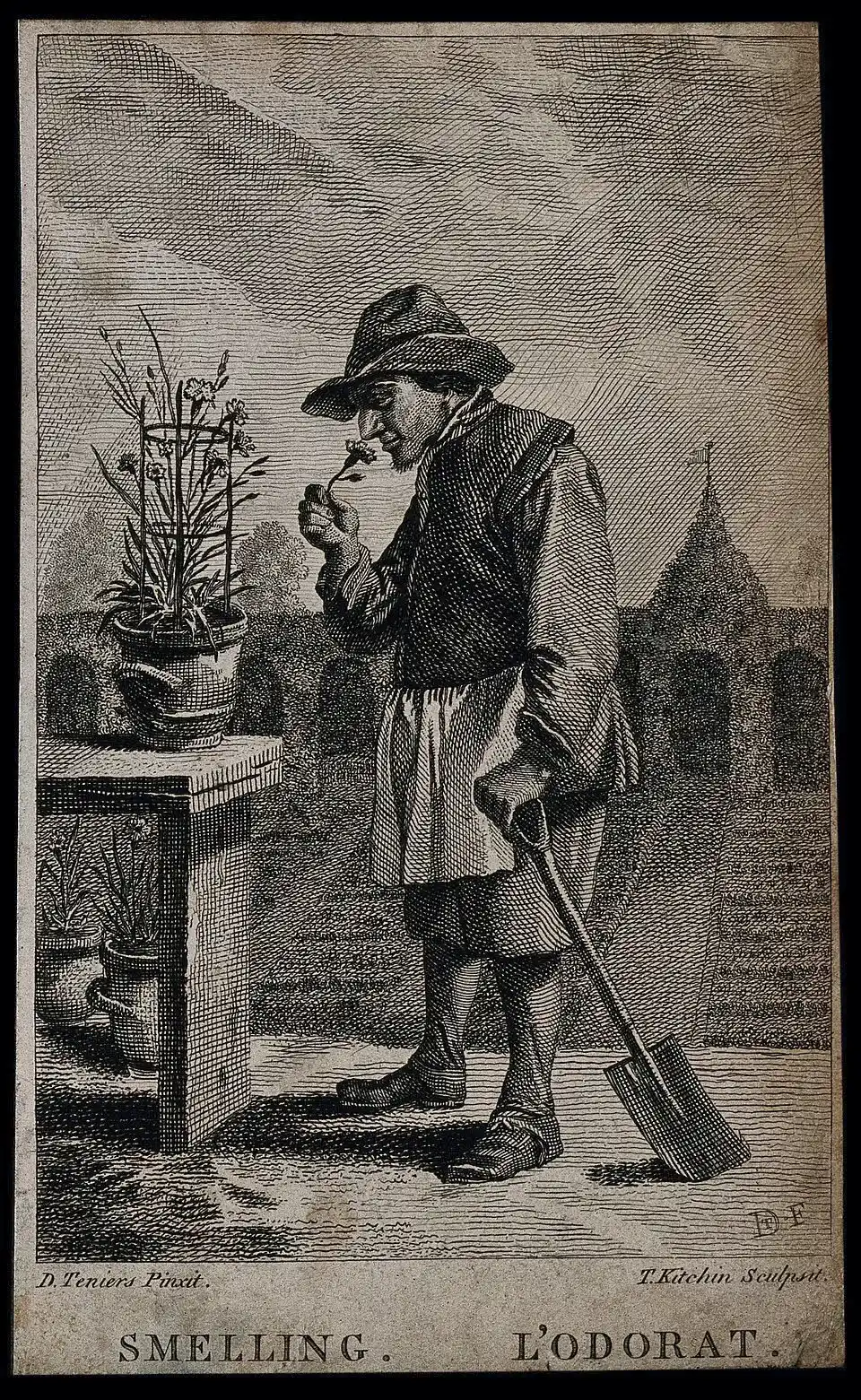
A gardener smelling a flower; this is meant to represent the sense of smell. Etching by T. Kitchin after D. Teniers.
Kollndorfer's study looked at people who had lost their sense of smell due to a upper respiratory tract infection. People who lose their sense of smell are called anosmic. Both anosmic people and people with a normal sense of smell were trained for 12 weeks using three substances: CO2, menthol and a cinnamon like scent.
In this experiment, scent training changed the brain and allowed the olfactory, the somatosensory; and the integrative network to connect together in a more functional way. In addition, the number of connections to the main region of the network increased, especially in the olfactory and the integrative network.
What genes control smell?
Do you know you have approximately 1000 different genes (this is 5% of your genome) controlling your smell receptors. These genes are located in at least ten different locations (called loci) in your genome.
The smell receptors line the olfactory epithelium. This is a tiny patch of cells located high in your nasal passage.
Genes controlling smell include:
Olfactory receptors (ORs), which are G protein-coupled receptors (GPCRs). GPCR sit on the cell's surface, detect signals coming from outside the cell, and set off a reaction based on those signals. ORs are the largest gene family in people (960 genes)!
Vomeronasal receptors are GPCRs that detect pheromones and other chemical signals.
Trace amine-associated receptors (TAARs) also contribute to smell.
Smell can be sex coded. Women have several smell genes located in loci that men do not have (Förster et al. 2025).
How to try smell training
Take deep sniffs of 4 or more different odors that you already know, twice a day, for around 10-30 seconds. While you sniff visualize the smell in your head and imagine what it smells like; this activates the areas of your brain responsible for smell.
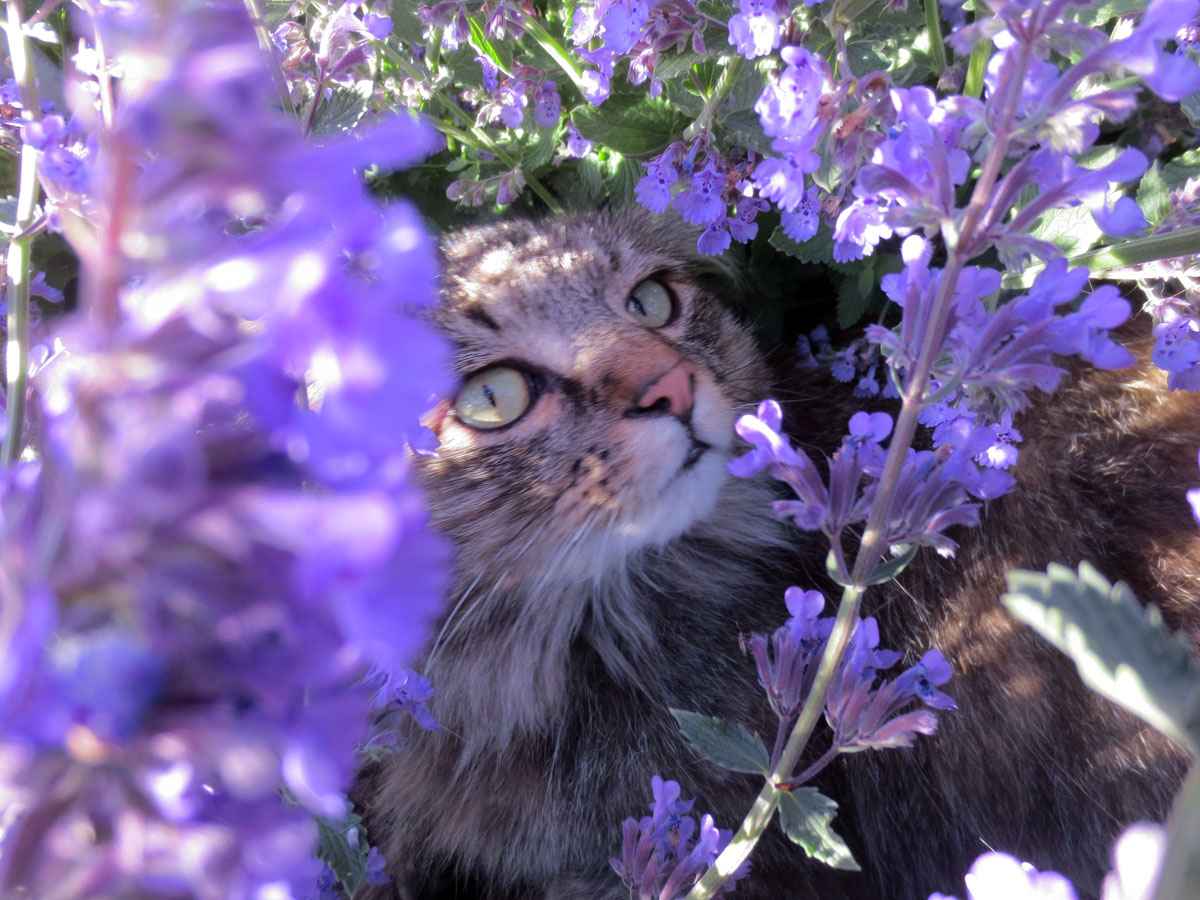
Odors used in smell experiments were:
❉rose, eucalyptus, lemon, and clove
❉menthol, thyme, tangerine, and jasmine
❉green tea, rosemary, bergamot, gardenia
I suggest picking 4 to 12 very different strong smells that are familiar to you. Do not pick smells you don't recognise (or anything you had not smelled when your nose was working).
Rotate the smells to prevent boredom. You can pick things from around your house like coffee, freshly ground pepper, pine, vanilla, chocolate, smashed garlic, mint, lavender, orange, cinnamon, strawberry, essential oils, hot chillies, fresh herbs, your favorite perfume or after shave etc. You can make your own smelling kit with essential oils too.
While smelling think about the meaning of the scent or where you typically smell it. This re-enforces the brain connections.
Keep up the training. Twenty four weeks of smell training worked better than twelve weeks (summary of research by Jim Boardman 2015). Switching scents around worked better than using only four scents.
Note: according to a patient online questionnaire (Murphy et al. 2024) smell training was most effective in people under 40 years old. This may be due to the resilience of younger people or due to the fact that many chronic diseases common in older people are characterized by inflammation along with smell loss.
Reducing chronic inflammation may improve your ability to stop and smell the roses.
How many smells can people detect?
According to research people with the best nose can detect up to a trillion smells. Those with a subpar sniffer can only detect 80 million distinct scents.
The researchers estimated this by using 128 unique scents. They used three samples, two were the same and one was different. On average, the third sample had to be 50% different for people to detect the difference. Using this data, researchers extrapolated how many different combinations of the original 128 odors an average person could tell apart. they came up with one trillion (Bushdid et al. 2014).
How doctors test your sense of smell
Smell is actually pretty complicated. Odors can vary depending on how volatile they are, room temperature and air currents. Volatile substances become gases at a lower temperature and are easier to smell.
Doctors can test their patients sense of smell. It is important to use a test that has smells the person has previously encountered so the test doesn't turn into a guessing game.
Basically, people are asked to smell different odor stimuli, some things used are felt-tip pens, scratch ‘n’ sniff strips, glass vials or jars, or paper scent strips (like those in perfume shops or paper magazines). They answer questions about what they smell.
✿ Smell tests assess the ability of people to detect, discriminate between, and/or identify different odors.
✿ Olfactory threshold tests measure the lowest concentration of an odor stimulus that a person can perceive,
✿ Discrimination tests assess the ability of subjects to distinguish two different smells.
✿ Odor identification tests evaluate whether a patient can detect and match odors to standard words that describe the smell
Michaelina Wautier, Smell oil on canvas c1650.

Things to take into consideration during a smell test:
Nasal congestion or blockage due to colds or allergies can temporarily block sense of smell.
Some medications can affect your ability to smell.
Participate in Scent Work with your pup
You and your dog can do this activity together. In dogs it is called Scent Work, AKA Scent Work or K9 Nosework - all much more catchy names than olfactory training.
Scent Work is a sport somewhat based on the work done by professional detection dogs (such as drug dogs or search and rescue dogs), that people use to detect a wide variety of scents and substances. The only difference is that your dog won't be playing for as high of stakes (they likely would love playing for actual steaks though).
In AKC Scent Work, dogs search for cotton swabs that are saturated with Birch, Anise, Clove, and Cypress essential oils. The Martha Steward approved cotton swabs are hidden in a search area, and the dog has to find the smelly swabs.
When the dog finds the scent, he or she has to let their handler know. The dogs can communicate the find by pawing, barking, pointing, interpretive dance, or whatever else works. The handler get the easy task of calling out the find to the judge. All humans and their mixed or purebred dogs (over 6 months), can participate. Click here for more on AKA Scent Work.
K9 Nosework was founded by the The National Association of Canine Scent Work (NACSW). You can find instructors or trials on the K9 Nosework website.
One of the best part about being in nutrition and food science is all the food!
I feel a lot of sympathy for those unable to taste their food properly due to smell issues. If you are unable to appreciate food due to nose blindness try to make up for it with other aspect of taste. Strong flavors, spicy foods, hot food, bold colors and interesting textures can help make up for lack of smell.
While researching this topic I kept coming across the connection between elevated inflammation, loss of smell and development of other brain and body disorders. They seem to be interconnected. One way to reduce inflammation is to include super foods high in antioxidants in your diet. Another good way to reduce inflammation is to reduce the stress in your life by taking control of your life.
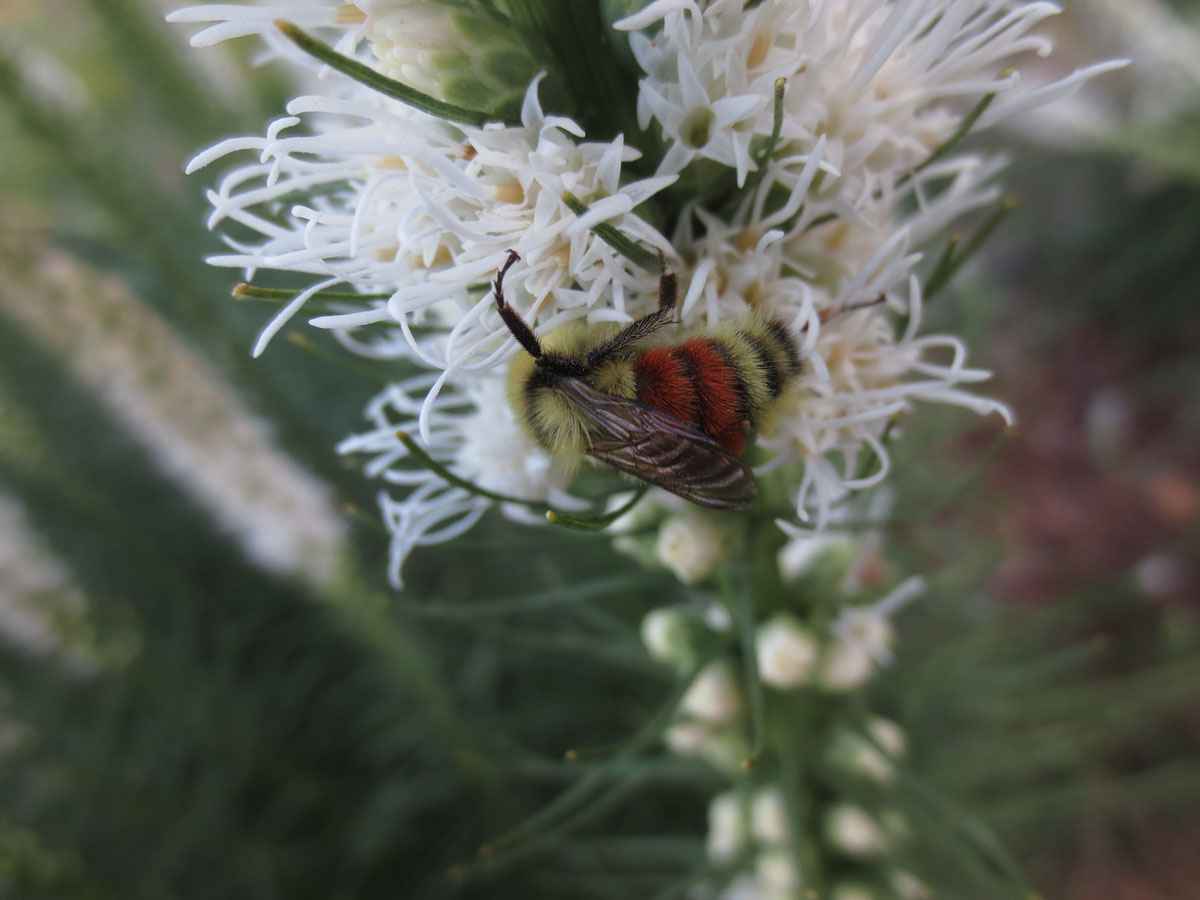
Even bees stop to smell the flowers.
Bees use smell to navigate to flowers and floral food sources (nectar and pollen). They have an incredible sense of smell.
Unlike humans, bees use their antenna to detect scent. Sensory hairs called sensilla inside the antenna capture chemicals from the air. They use this information to build a smell map of their environment.
(Discussion Carcaud et al. 2016 and Gomez Ramirez et al. 2023).
The face of a man about to be bested by his dog. Bartolomeo Passerotti - Portrait of a Man with a Dog (detail)oil on canvas between 1585 and 1587.
Do you want a dog to look at you like this? Consider a service dog to help you navigate physical or emotional problems.
 oil on canvas between 1585 and 1587_56_11zon.webp)
Dogs have great noses:
WARNING: if you make this into a competition with your dog they will kick your butt. Dogs sense of smell is somewhere between 10,000 to 100,000 times better than ours. Their super snouts contain 200 million to one billion olfactory receptors while our noses have a paultry 6 million. They can detect some scents when they are present in parts per trillion! In addition, their olfactory bulb is around 30 times larger than ours.
Unlike humans, the sense of vision and the sense of smell are connected in dogs' brains (Barry et al. 2022). This means that dogs can 'see' or experience scent in a way we can not. Dogs' brains have a thick neurological connection from the olfactory bulb (smell) to the occipital lobe (sight). They strongly integrate smell into their interpretation of an environment and what or who is in that environment.
This may explain why completely blind dogs can still navigate their environment easily. They are so good at it that sometimes owners are surprised that their dog is totally blind.
By Susan Fluegel PHD Nutritional Biochemistry
*Names and some minor identifying details in all stories in this website are changed to protect people's privacy.
This information is for informational purposes only and does not constitute medical advice, diagnosis, or treatment.
References:
Barry E, Pascalau R, Horowitz A, Lawrence G, Johnson P. Extensive Connections of the Canine Olfactory Pathway Revealed by Tractography and Dissection. The Journal of Neuroscience. 2022. 42. JN-RM. 10.1523/JNEUROSCI.2355-21.2022. Full article.
Bushdid C, Magnasco MO, Vosshall LB, Keller A. (2014) Humans Can Discriminate More than 1 Trillion Olfactory Stimuli. Science 343(6177):1370–137. PDF.
Carcaud J, Giurfa M, Sandoz JC. Parallel Olfactory Processing in the Honey Bee Brain: Odor Learning and Generalization under Selective Lesion of a Projection Neuron Tract. Front Integr Neurosci. 2016 Jan 19;9:75. doi: 10.3389/fnint.2015.00075. Full article.
Förster F, Emmert D, Horn K. et al. Genome-wide association meta-analysis of human olfactory identification discovers sex-specific and sex-differential genetic variants. Nat Commun 16, 5434 (2025). https://doi.org/10.1038/s41467-025-61330-y Full article.
Gomez Ramirez WC, Nyasha KT Thomas, Iman J Muktar, Olena Riabinina, The neuroecology of olfaction in bees, Current Opinion in Insect Science, Volume 56, 2023, 101018, ISSN 2214-5745, https://doi.org/10.1016/j.cois.2023.101018. Full article.
Kollndorfer K, Fischmeister FP, Kowalczyk K, Hoche E, Mueller CA, Trattnig S, Schöpf V. Olfactory training induces changes in regional functional connectivity in patients with long-term smell loss. Neuroimage Clin. 2015 Sep 15;9:401-10. doi: 10.1016/j.nicl.2015.09.004. Full article.
Leon M, Troscianko ET and Woo CC (2024) Inflammation and olfactory loss are associated with at least 139 medical conditions. Front. Mol. Neurosci. 17:1455418. doi: 10.3389/fnmol.2024.1455418 Full article.
Pieniak M, Oleszkiewicz A, Avaro V, Calegari F, Hummel T. Olfactory training - Thirteen years of research reviewed. Neurosci Biobehav Rev. 2022 Oct;141:104853. doi: 10.1016/j.neubiorev.2022.104853. Full article.
Sorokowska A, Drechsler E, Karwowski M, Hummel T. Effects of olfactory training: a meta-analysis. Rhinology. 2017 Mar 1;55(1):17-26. doi: 10.4193/Rhino16.195. Link for free download above paper title.