Smoking and Vaping Boost Inflammation
Smoking and vaping anything, including cigarettes and cannabis, causes whole body inflammation
Learn more about:
Smoking causes inflammation
Smoking prompts production of chemicals that increase inflammation. Smoking increases reactive oxygen species (ROS) production, sends inflammatory and immune cells into hyperdrive, ramps up inflammatory cytokine secretion, and impairs immune cell function. All of this increases inflammation throughout the body (Saaoud et al. 2023). Inflammation can cause disease.
E-cigarettes also increase inflammation. When exposed to tobacco flavored e-cigs, both epithelium and fibroblast lung cells had increased inflammation; while fibroblasts had reduced wound healing ability (Wang et al. 2024).
Smoke is full of toxic waste
Cigarette smoke contain over 5,000 chemicals which are mutagenic (causes mutations), cytotoxic (toxic to cells), carcinogenic (causes cancer), and/or antigenic (causes a immune response) (Talhout et al. 2011, Lee et al. 2012).
Curious about what toxins you are inhaling with all that smoke? Talhout et al. 2011 (table 1) has a list of 98 hazardous compounds in tobacco smoke and their cancer risk value; 60 are cancerous and 48 cause other disorders. The chemicals on the list include acetone and hexane (neurotoxins); acrylonitrile (respiratory effects); chloroform (liver changes); mercury (nervous system); and toluene (impairs color vision and contrast in vision).
E-cigarettes contain toxic chemicals such as heavy metals (arsenic, cadmium, nickle, lead, chromium), carbonyls (formaldehyde, acetaldehyde, acrolein), flavoring chemicals (diacetyl and acetylpropionyl), and reactive oxygen species (ROS) (Ebersole et al. 2020).
Cannabis smoke contains 110 known compounds which can cause harm through carcinogenic, teratogenic, mutagenic, or other toxic mechanisms. (Graves et al. 2020). It causes inflammation in human lung cells (fibroblasts) (Alouf et al. 2022).
Smoking doesn't look as cool as you think. Francis W Edmonds Courtship in New Amsterdam c1850.

Smoking messes up your immune system due to increased inflammation and exposure to toxic chemicals
Cigarette smoke can modulate innate and adaptive immunity. It makes pathogenic immunological responses worse while it hinders defense immunity (Saaoud et al. 2023). In other words, your immune system attacks you more and viruses less!
Women who smoke show a shift in the immune cell-subsets that produce pro-inflammatory or immunosuppressive molecular markers when compared to women who have never smoked (Piaggeschi et al. 2021).
Due to this, smoking increases your risk and/or severity of rheumatoid arthritis, cardiovascular diseases, respiratory diseases, multiple sclerosis, chronic kidney disease, systemic lupus erythematosus, oral inflammatory diseases, and inflammatory bowel disease (Saaoud et al. 2023). Cigarette smoke may impair your vision; it can cause cataracts and age-related macular degeneration (Kulkarni and Banait 2023).
Smoking increases your risk of cancer
Smoking is associated with cervix, colon, endometrium, liver, lung, pancreas and ovary cancers. Smoking changes your DNA methylation across the whole epigenome that can lead to cancer.
Methylation is a process where methyl groups (CH3 molecules) are attached to DNA. Methylation changes how genes behave and produce (express) proteins. This process is called epigenetics and it is how the environment and behavior influences your genetics. Changes in methylation can increase or decrease your risk for cancer and disease.
DNA methylation at CpG sites could potentially act as a crucial part of carcinogenesis, developing cancer (Zhou et al. 2023). CpG sites are areas in the DNA where cytosine is followed by guanine. These areas are often methylated; it is called CpG methylation.
There needs to be more data on the potential long term cancer risks of vaping. Initial evidence points to e-cigs increasing cancer risk. E-cigs also contain recognized carcinogens such as formaldehyde and acrolein (discussion in Sahu et al. 2023).
Painting of a Jammu State royal smoking hookah and watching dancing girls, ca.1790.
![[1], Public domain, via Wikimedia Commons](images/Compressed webP images/Painting-of-a-Jammu-State-royal-smoking-hookah-and-watching-dancing-girls,-ca.1790.jpg)
Blue Box of Science:
Why cannabis causes the munchies
Smoking a joint or chowing down on an edible modulates appetitive and metabolic hormones. Cannabis use strokes appetite and increases food intake.
1) Using cannabis significantly spikes insulin level in the blood. Endocannabinoids modulate the cells that produce insulin (pancreatic β-cells function, proliferation, and survival) and insulin's production, secretion, and resistance. A hyperactive endocannabinoid system may initiate insulin resistance and obesity.
High insulin levels will make you hungry and can lead to metabolic disorders.
2) Cannabis use significantly lowers glucagon-like peptide-1 (GLP-1). GLP-1 regulates blood sugar, reduces appetite, and slows gastric emptying of the stomach. All those new fancy weight loss drugs use a GLP-1 analogue to help people lose weight by feeling full and eating less.
Lower GLP-1 levels will make you eat more.
3) Cannabis use significantly raises ghrelin concentrations. This hunger hormone regulates glucose metabolism, meal initiation, appetite, and food intake.
Discussion in Farokhnia et al. 2020.
Cannabis harms pets and teenagers
Pot can poison your pet: Pets can be poisoned by exposure to the active ingredient in cannabis (marijuana), cannabinoid δ-9-tetrahydrocannabinol (THC). Smoke or edibles can cause inactivity; clumsiness; slow heart rate; dilated pupils; sensitivity to motion, sound, and/or touch; drooling; and urinary incontinence.
Cannabis poisoning symptoms are similar to those of antifreeze poisoning so get to a vet as fast as possible. Be honest if pet has been exposed to marijuana so they can treated properly - antifreeze victims need an antidote, it can be fatal.
Pot can disable your teenager's brain: Do not expose teens to cannabis if you want to raise functioning adults; their developing brains are susceptible to permanent change. Teenagers exposed to cannabis can have long-term cognitive impairments.
Compared to matched adolescent controls who do not use cannabis, teenagers who use marijuana have deficits in attention, memory, executive function (this includes working memory and inhibition), processing speed, visual processing, as well as a lower full-scale IQ and verbal IQ (good balanced discussion in Hammond et al. 2020). Some of these cognitive impairments appear to be permanent.
Why teens and young adults should avoid cannabis
Cannabis and synthetic cannabinoids may make the brain organize itself less efficiently and increase your risk of mental disorders. The stronger the weed, the higher the risks for schizophrenia, psychosis, and cannabis use disorder (Rittiphairoj et al. 2025).
I'm not talking about "reefer madness" here, but using cannabis as a teen can do some serious disruption to your adult brain. Teens and young adults who use pot show altered brain functional connectivity. Functional connectivity looks at communication patterns between different brain regions. This disturbance in functional connectivity seems to indicate that brain areas are not being used efficiently. In other words, it takes more time, energy and brain connections to do a task while using pot.
Brain changes caused by cannabis use may contribute to mental health conditions (Burggren et al. 2019, Blest-Hopley et al. 2020). One of the scariest of these is that cannabis use disorder increases the chance of developing schizophrenia; especially in young men (Hjorthøj et al 2023). Young adults who are already at risk for psychosis are the most affected by cannabis use. Unfortunately, these are the people most likely to use it to self medicate.
Adolescence and young adulthood (up to age 25) is a critical time for brain remodeling. Think of it like remodeling a house. Parts of the brain are totally torn down and rebuilt in a new modern way. This is the real cause of teenage moodiness and spaciness. Their brains are literally being torn down. The endocannabinoid system, which cannabis targets, plays a vital role in brain remodeling.
Using pot while your brain is being remodeled is actively impeding and changing your brain's rewiring. The more you use the more damage occurs.
Imagine remodeling a bathroom and instead of a qualified plumber you get someone who takes a sledgehammer to the toilet, installs a dishwasher, and paints the room puce.
Cannabis disrupts the brain in several ways:
1) It disrupts the important task of refining and pruning synapses.
2) It decreases synaptic density. Synapses are the connections between neurons that enable the brain to communicate. Lower synaptic density is associated with social withdrawal and lack of motivation (Blasco et al. 2024).
3) It disrupts the *endocannabinoid system causing desensitization or down regulation of receptors and poor brain performance.
4) It deregulates the dopamine and glutamate neurotransmitter systems. Dopamine is involved with movement, mood, motivation, pleasure and the reward system. Glutamate is an alternate energy source for brain cells; regulates mood, learning and memory; and promotes a healthy sleep and wake cycle.
Cannabis can influence the glutamate receptor expression as well as the glutamate downstream signaling that influences learning and memory.
Acute exposure to cannabis usually inhibits the release of glutamate by inhibiting all three calcium channels that indirectly cause neurotransmitter release.
Chronic cannabis use, on the other hand, usually increases glutamate release (discussion Chowdhury et al. 2024). Too much or too little glutamate contributes to mental and physical disorders.
Émile Bernard Smoking Hashish c1900 oil on canvas.

We all know that smoking is bad for you; but are you aware of the damage you may be doing to others?
Please keep cigarette, cigar, and cannabis smoke away from pets, babies, children, and teenagers
Smoke and babies should not mix
According to the Nationwide Children's Hospital, babies exposed to second hand or third hand smoke in utero (pregnant women who either smoke or are exposed to smoke) or after they are born are 4 times more likely to die of SIDS (sudden infant death syndrome or crib death). The US Center for Disease Control (CDC) recorded The US Center for Disease Control (CDC) recorded 1,529 deaths from SIDS in 2022. For more information on how to reduce the chance of SIDS see The US NIH Safe to Sleep website.
Being exposed to cannabis while in the womb can affect neuronal maturation and cognitive function (Huizink 2013).
Babies exposed to smoke and its residues have 4 times the risk of pneumonia and bronchiolitis; an increase in all respiratory infections and ear infections; and an increase in asthma. Exposure to smoke in the womb can cause fetal growth restriction (baby does not develop properly), smaller heads, tubal ectopic pregnancy, still births and miscarriages, premature birth, and a lower birth weight.
Exposure to second hand smoke after the baby is born can result in SIDS; behavioral problems; neurodevelopmental problems such as learning disabilities or attention deficit disorders; an increased chance of metabolic disorders such as obesity, hypertension, and type 2 diabetes; an increased chance of asthma; visual difficulties; and impaired lung function (Hyland et al. 2015, Banderali et al. 2015).
SIDS has declined in recent years. This is likely due to bans on smoking in public spaces, less people smoking overall, and the Safe to Sleep guidelines.
Some people think that cigarette smoke is worse than cannabis smoke; this is not necessarily true. Smoking anything; tobacco, cannabis, or herbs; releases fine particles or particulates. These are small particles and droplets that are 2.5 micrometers in diameter or less (abbreviated as PM2.5).
Indoor PM2.5 particulates from marijuana secondhand smoke were 4.4 times higher than emissions from secondhand tobacco smoke (Ott et al. 2022). These little tiny particles go deep into the airways and deposit in alveolar regions of the lungs which seriously harms the respiratory system. Cannabis is not harmless, it is at least as dangerous as cigarette smoke, maybe more so (Glantz et al. 2022).
Smoking boy with Chicken Portrait of Henri Groulx, ca. 1920.

Nicotine poisons everyone
All pets (and babies) can get nicotine poisoning and there is no antidote. A fatal dose of nicotine in dogs and cats can be between 20 to 100 milligrams. One cigarette thrown in your fish tank can kill most or all of your fish.
A regular cigarette contains 9-30 mg nicotine, a cigar can contain 15-40 mg and a cigarette butt contains 5-7 mg.
Signs of poisoning include: vomiting, unsteadiness or wobbling, drooling, tiredness, fast heart rate, shaking, weakness, seizures and death. Get your pet to the vet as fast as possible and let the vet know it may be nicotine poisoning!
If you smoke don't throw your poisonous butts on the ground where they can kill innocent pets and wildlife. Also, no one wants to pick up your butts!
Recommended by some ex-smokers as a way to change your mindset and quit smoking: Allen Carr's Easy Way To Stop Smoking. Most people loved this book but a few people hated it.

I have never smoked, but here is some good advice on quitting I got from an ex-smoker.
*Arden N: "I smoked 15-25 cigs a day for 12 years. I tried quitting a number of times, on one occasion for six months, but kept going back. I finally quit 5 years ago, cold turkey.
There are lots of methods you can use to quit, but here are basic concepts will help if you want to be successful:
Change your mindset from smoker trying to quit to non-smoker who just happened to smoke for a while. This will make quitting less challenging since you will be reverting back to type (non-smoker).
Try to wire your brain to think about smoking more negatively. When you pass smokers think about how smoking causes bad breath, foul kisses, stinky clothes, coughing, being out in the cold to smoke, unfit to run due to lungs, having to spend a lot of money on cigs and so on.
Think about the time wasted on your smoking habit. Smoking before work, smoking on breaks, smoking before going out to eat, stopping to buy cigarettes, standing around dumpsters smoking.
Don't act like quitting is an endurance test. If you are tempted and have one cigarette it doesn't mean you failed. You didn't fall off the wagon or revert back; just move on and consider it like any other non-smoker who happens to have a cigarette
Help yourself succeed by getting a substitute habit to do with hands and/or mouth when you would normally crave a cigarette.
Distract yourself for 20 minutes if you really crave a smoke and often it goes away.
Exercise helps.
Try to avoid smokers when first quitting."
If you smoke, minimize exposure
If you do smoke, smoke outside so you are not constantly exposed to it. Secondhand smoke is dangerous to you, your family and your pets.
Thirdhand smoke residue, the sticky yellow residue left by tobacco smoke, is also dangerous. Wash your hands before you pet your cuddly companions or touch your kids. Thirdhand smoke, can be just as harmful as second hand smoke.
Sadly, thirdhand smoke residue is almost impossible to remove. It stays in the house years after the last cigarette has been puffed and the house cleaned for sale (Matt et al. 2011).
If you smoke, eat better and take vitamin C
Smoking causes you to have higher overall inflammation. To help combat smoking, eat an antiinflammatory diet, especially concentrating on foods high in vitamin C.
Smokers need more vitamin C since vitamin C takes one for the team and sacrifices itself to protect you from the toxic effects of smoke.
If you are pregnant and smoke please stop. Smoking puts your baby at risk for premature birth, intrauterine growth restriction (IUGR), and perinatal death. If you cannot stop smoking take 500 mg vitamin C daily; this may help your infant's lungs develop better. It also helps prevent epigenetic changes associated with wheezing and poor lung function in children exposed to smoke in utero (Shorey-Kendrick et al. 2024).
Second and third hand smoke harms your pets
Dogs exposed to smoke have more eye infections, chronic coughing, allergies, respiratory issues, and lung and nose cancer. Dogs with long noses tend to get more nose cancer since the smoke stays in their snout, while those with short snouts, like pugs, get more lung cancer.
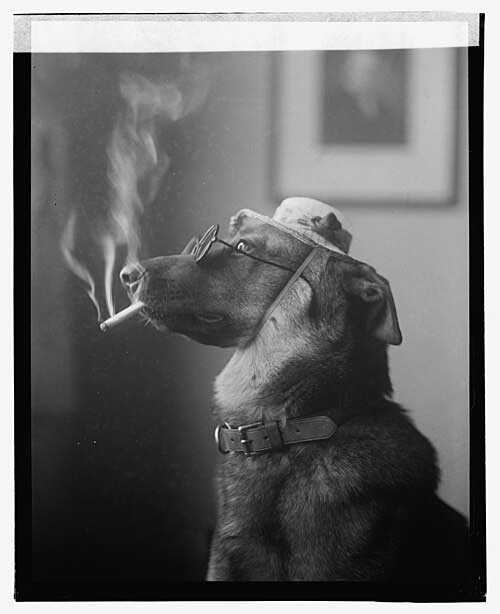
Cats that live in a smoke filled house have a greater risk of developing asthma, lymphoma, and lung cancer. Cats in a smoking household have 2-4 times the risk of an aggressive mouth tumors (oral squamous cell carcinoma) from licking off thirdhand smoke residue. Even with treatment, this cancer is fatal in 90% of cats in less than a year. Thirdhand smoke is the dust, sticky residues and particulates created by secondhand smoke that land on surfaces and turn it that lovely stinky brown color.
Birds stuck with smokers can develop allergies, irritated sinuses, pneumonia, lung cancer, feather plucking, eye problems, skin abnormalities, heart disease and fertility problems.
Guinea pigs exposed to a cigarette smoke environment developed emphysema, a disease of the small lung air sacs, the alveoli; and pulmonary hypertension, hypertension in the blood vessels that run from from the heart to the lungs. They also had a hard time gaining weight. Other small mammals exposed to smoke likely have a similar reaction. Rabbits get more heart disease.
Rats exposed to only ONE MINUTE of secondhand cannabis smoke or cigarette smoke had impaired vascular endothelial function (Wang et al. 2016). It took almost four times longer for the endothelial cells to recover from the cannabis smoke compared to the cigarette smoke. Endothelial cells line all of your blood vessels.
Fish are not immune since nicotine dissolves in water. Fish exposed to nicotine develop muscle spasms, rigid fins, and loss of color.
Snakes and iguanas exposed to chronic second-hand cigarette and cannabis smoke develop respiratory damage. Snakes and other reptiles can absorb cannabinoid chemicals through their skin. Cannabis makes snakes and iguanas hyper-alert. It may cause digestive problems and breathing difficulties and suppresses the immune system. Nicotine is very toxic to reptiles.
Snake Charmer, India, Patna School, 19th century, Honolulu Museum of Art unknown artist.

To help make smoke soaked houses safer and less smelly you can follow these steps:
1) Use gloves, mask and other protective gear to avoid being exposed to thirdhand smoke residue.
2) Use dry cleaning soot sponges to remove soot and residue. Do not rinse these sponges; you cut off the edge to expose a fresh surface when it becomes dirty. If you don't like these sponges skip to step 3.
3) Wash walls, ceiling, windows and floors well with warm soapy water. You can use a solution of 4-6 tablespoons of trisodium phosphate (TSP) per gallon of warm water or a strong liquid soap or detergent. Rinse area well with water.
4) Apply a good stain and smell blocking paint primer such as Zinsser B-I-N shellac based primer or Kilz oil based original primer. Both of these products have numerous fans and people who advocate for one or the other. These paints will stink as they dry for a few days. Remember to open windows and ventilate area thoroughly with a fan and use a mask while painting. Be safe.
5) Paint with a odor reducing paint like Harmony by Sherwin Williams. Don't be cheap here.
6) Sorry, but you likely will need to tear out and replace carpet, carpet pads, fabric furniture and any other fabric in room. You may be able to wash and repaint wood furniture. Don't forget to wash or clean vents.
Peder Mønsted - The Smoking Moor 1898 oil on canvas.

Definitions:
The endocannabinoid system is a very complicated cell-signaling network system. It helps maintain homeostasis in the body by acting as a master regulator. This system includes endocannabinoid signaling molecules, G-protein-coupled cannabinoid receptors, and enzymes that are involved in ligand biosynthesis and inactivation. A few of its many duties include regulating the central and peripheral mechanisms of food intake; lipid synthesis and turnover in the liver and adipose tissue; and glucose metabolism in muscle cells.
By Susan Fluegel PHD Nutritional Biochemistry and Lori Wood MS Human Nutrition.
* Names and some other small details have been changed to protect people's privacy.
This information is for informational purposes only and does not constitute medical advice, diagnosis, or treatment.
References:
Aloufi N, Namkung Y, Traboulsi H, Wilson ET, Laporte SA, Kaplan BLF, Ross MK, Nair P, Eidelman DH, Baglole CJ. Standardized Cannabis Smoke Extract Induces Inflammation in Human Lung Fibroblasts. Front Pharmacol. 2022 Mar 28;13:852029. doi: 10.3389/fphar.2022.852029. Full article.
Anita WM, Ueda K, Uttajug A, Seposo XT, Takano H. Association between Long-Term Ambient PM2.5 Exposure and under-5 Mortality: A Scoping Review. Int J Environ Res Public Health. 2023 Feb 13;20(4):3270. doi: 10.3390/ijerph20043270. Full article.
Banderali G, Martelli A, Landi M, Moretti F, Betti F, Radaelli G, Lassandro C, Verduci E. Short and long term health effects of parental tobacco smoking during pregnancy and lactation: a descriptive review. J Transl Med. 2015 Oct 15;13:327. doi: 10.1186/s12967-015-0690-y. Full article.
Blasco MB, Nisha Aji K, Ramos-Jiménez C, Leppert IR, Tardif CL, Cohen J, Rusjan PM, Mizrahi R. Synaptic Density in Early Stages of Psychosis and Clinical High Risk. JAMA Psychiatry. 2025 Feb 1;82(2):171-180. doi: 10.1001/jamapsychiatry.2024.3608. Full article.
Blest-Hopley G, Colizzi M, Giampietro V, Bhattacharyya S. Is the Adolescent Brain at Greater Vulnerability to the Effects of Cannabis? A Narrative Review of the Evidence. Front Psychiatry. 2020 Aug 26;11:859. doi: 10.3389/fpsyt.2020.00859. Full article.
Burggren AC, Shirazi A, Ginder N, London ED. Cannabis effects on brain structure, function, and cognition: considerations for medical uses of cannabis and its derivatives. Am J Drug Alcohol Abuse. 2019;45(6):563-579. doi: 10.1080/00952990.2019.1634086. Full article.
Chowdhury KU, Holden ME, Wiley MT, Suppiramaniam V, Reed MN. Effects of Cannabis on Glutamatergic Neurotransmission: The Interplay between Cannabinoids and Glutamate. Cells. 2024 Jun 29;13(13):1130. doi: 10.3390/cells13131130. Full article.
Ebersole J, Samburova V, Son Y, Cappelli D, Demopoulos C, Capurro A, Pinto A, Chrzan B, Kingsley K, Howard K, Clark N, Khlystov A. Harmful chemicals emitted from electronic cigarettes and potential deleterious effects in the oral cavity. Tob Induc Dis. 2020 May 8;18:41. doi: 10.18332/tid/116988. Full article.
Farokhnia M, McDiarmid GR, Newmeyer MN, Munjal V, Abulseoud OA, Huestis MA, Leggio L. Effects of oral, smoked, and vaporized cannabis on endocrine pathways related to appetite and metabolism: a randomized, double-blind, placebo-controlled, human laboratory study. Transl Psychiatry. 2020 Feb 19;10(1):71. doi: 10.1038/s41398-020-0756-3. Full article.
Graves BM, Johnson TJ, Nishida RT. et al. Comprehensive characterization of mainstream marijuana and tobacco smoke. Sci Rep 10, 7160 (2020). https://doi.org/10.1038/s41598-020-63120-6 Full article.
Hyland A, Piazza KM, Hovey KM, Ockene JK, Andrews CA, Rivard C, Wactawski-Wende J. Associations of lifetime active and passive smoking with spontaneous abortion, stillbirth and tubal ectopic pregnancy: a cross-sectional analysis of historical data from the Women's Health Initiative. Tob Control. 2015 Jul;24(4):328-35. doi: 10.1136/tobaccocontrol-2013-051458. Summary.
Hjorthøj C, Compton W, Starzer M, Nordholm D, Einstein E, Erlangsen A, Nordentoft M, Volkow ND, Han B. Association between cannabis use disorder and schizophrenia stronger in young males than in females. Psychol Med. 2023 Nov;53(15):7322-7328. doi: 10.1017/S0033291723000880. Full article.
Huizink AC. Prenatal cannabis exposure and infant outcomes: overview of studies. Prog Neuropsychopharmacol Biol Psychiatry. 2014 Jul 3;52:45-52. doi: 10.1016/j.pnpbp.2013.09.014. Summary.
Kulkarni A, Banait S. Through the Smoke: An In-Depth Review on Cigarette Smoking and Its Impact on Ocular Health. Cureus. 2023 Oct 27;15(10):e47779. doi: 10.7759/cureus.47779. Full article.
Lee J, Taneja V, Vassallo R. Cigarette smoking and inflammation: cellular and molecular mechanisms. J Dent Res. 2012 Feb;91(2):142-9. doi: 10.1177/0022034511421200. Epub 2011 Aug 29. Full article.
Nguyen PK, Hammond SK. Fine Particulate Matter Exposure From Secondhand Cannabis Bong Smoking. JAMA Netw Open. 2022;5(3):e224744. doi:10.1001/jamanetworkopen.2022.4744 Full article.
Piaggeschi G, Rolla S, Rossi N, Brusa D, Naccarati A, Couvreur S, Spector TD, Roederer M, Mangino M, Cordero F, Falchi M, Visconti A. Immune Trait Shifts in Association With Tobacco Smoking: A Study in Healthy Women. Front Immunol. 2021 Mar 9;12:637974. doi: 10.3389/fimmu.2021.637974. Full article.
Rittiphairoj T, Leslie L, Oberste JP, Yim TW, Tung G, Bero L, Riggs P, Hutchison K, Samet J, Li T. High-Concentration Delta-9-Tetrahydrocannabinol Cannabis Products and Mental Health Outcomes : A Systematic Review. Ann Intern Med. 2025 Oct;178(10):1429-1440. doi: 10.7326/ANNALS-24-03819. Summary.
Saaoud F, Shao Y, Cornwell W, Wang H, Rogers TJ, Yang X. Cigarette Smoke Modulates Inflammation and Immunity via Reactive Oxygen Species-Regulated Trained Immunity and Trained Tolerance Mechanisms. Antioxid Redox Signal. 2023 May;38(13-15):1041-1069. doi: 10.1089/ars.2022.0087. Full article.
Sahu R, Shah K, Malviya R, Paliwal D, Sagar S, Singh S, Prajapati BG, Bhattacharya S. E-Cigarettes and Associated Health Risks: An Update on Cancer Potential. Adv Respir Med. 2023 Nov 14;91(6):516-531. doi: 10.3390/arm91060038. Full article.
Shorey-Kendrick LE, McEvoy CT, Milner K, Harris J, Brownsberger J, Tepper RS, Park B, Gao L, Vu A, Morris CD, Spindel ER. Improvements in lung function following vitamin C supplementation to pregnant smokers are associated with buccal DNA methylation at 5 years of age. Clin Epigenetics. 2024 Feb 27;16(1):35. doi: 10.1186/s13148-024-01644-8. Erratum in: Clin Epigenetics. 2024 Apr 25;16(1):59. doi: 10.1186/s13148-024-01664-4. Full article.
Talhout R, Schulz T, Florek E, van Benthem J, Wester P, Opperhuizen A. Hazardous compounds in tobacco smoke. Int J Environ Res Public Health. 2011 Feb;8(2):613-28. doi: 10.3390/ijerph8020613. Full article.
Wang X, Derakhshandeh R, Liu J, Narayan S, Nabavizadeh P, Le S, Danforth OM, Pinnamaneni K, Rodriguez HJ, Luu E, Sievers RE, Schick SF, Glantz SA, Springer ML. One Minute of Marijuana Secondhand Smoke Exposure Substantially Impairs Vascular Endothelial Function. J Am Heart Assoc. 2016 Jul 27;5(8):e003858. doi: 10.1161/JAHA.116.003858. Full article.
Zhou Y, Zhou X, Sun J, Wang L, Zhao J, Chen J, Yuan S, He Y, Timofeeva M, Spiliopoulou A, Mesa-Eguiagaray I, Farrington SM, Ding K, Dunlop MG, Qian X, Theodoratou E, Li X. Exploring the cross-cancer effect of smoking and its fingerprints in blood DNA methylation on multiple cancers: A Mendelian randomization study. Int J Cancer. 2023 Oct 15;153(8):1477-1486. doi: 10.1002/ijc.34656. Full article.