The Neuroscience of Creativity
What is creativity?
Creativity is the ability to generate, form, make, build or bring into existence something new and original. Creativity includes:
- Artistic endeavors
- Intellectual ideas and concepts
- Physical and conceptional inventions
- Methods and devices
- Connections to other things
- Solutions to problems
- Scientific discoveries
Creativity straddles the balance between deliberate and disciplined thoughts and spontaneous imagination and play
Creativity stems from communication and interplay between multiple areas of the brain (whole-brain functional connectivity). It is the result of coordination between at least three brain networks.
What is whole-brain functional connectivity?
- The communication patterns between brain regions (areas) when your brain performs different tasks
- Connected brain areas are attached to each other by multiple dense/thick nerve pathways
- These connected areas are known as brain networks
- Brain networks keep in touch through their nerves (both at rest and during certain tasks)
Creativity can be predicted by your brain network map
Brain network maps show what areas of the brain are are likely to connect to one another. You can look at brain network maps and predict who has more creativity.
Creative ability =
-
salience network (SN) which determines interest
-
+ default mode network (DMN) which encourages day dreaming
-
+ central executive network (CEN) which prompts action and work
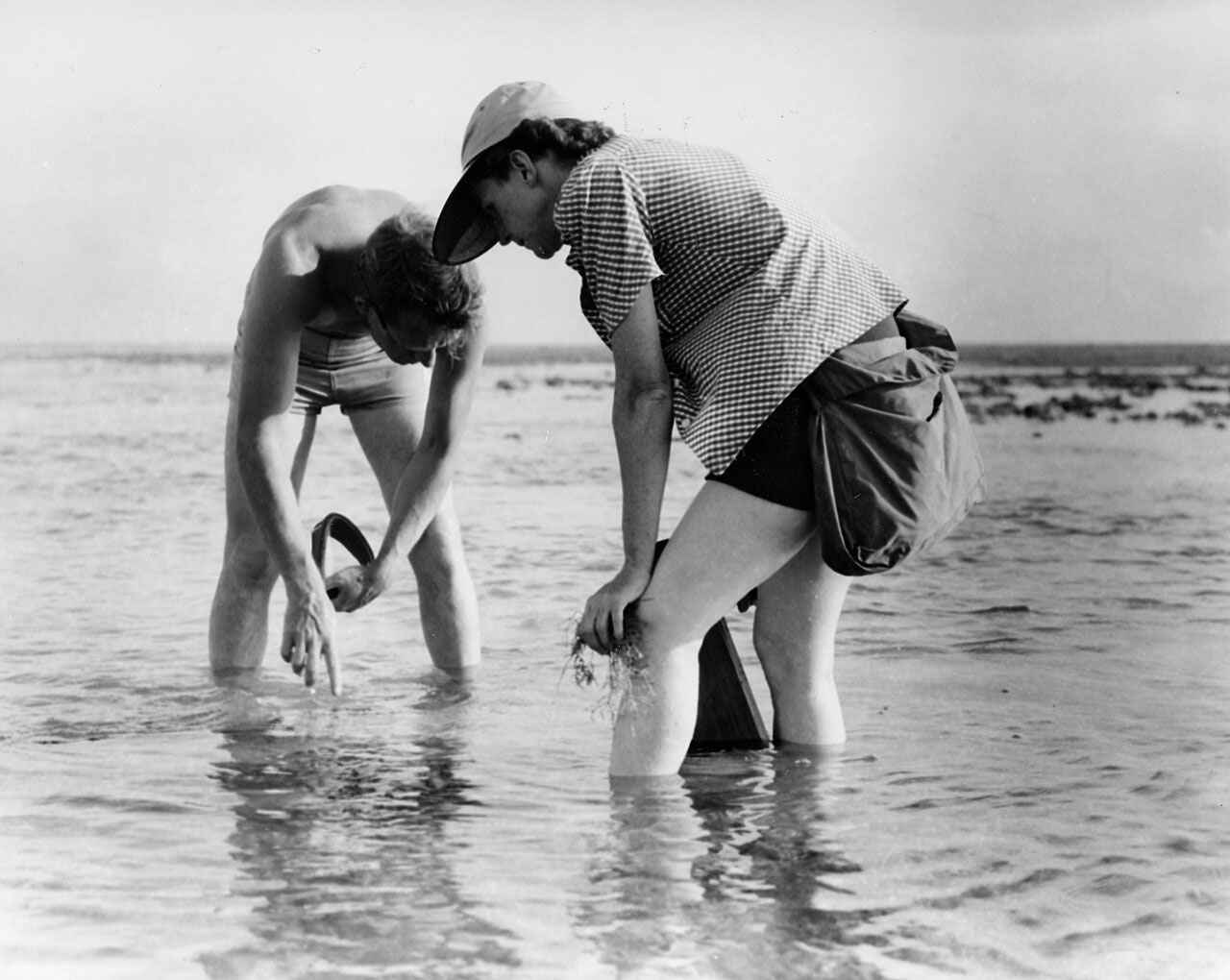
Rachel Carson Conducts Marine Biology Research with Bob Hines in 1952. Carson was an American biologist and conservationist who wrote Silent Spring. Her work and books helped inspire the marine conservation and the global environmental movement.
How does creativity work?
Creativity springs from switching rapidly between the DMN and CEN (discussion Chen et al. 2025). The faster people can switch from one mode to the other the more creative thoughts they generate.
Switching between brain networks is initiated and moderated by the salience network (SN). The SN inhibits one network while activating another network. You cannot use more than one brain network at the exact same time.
Thus, creativity is due to an interplay between deliberate thinking (CEN) and spontaneous thinking (DMN) (Xie et al. 2021).
"...a person's capacity to generate original ideas can be reliably predicted from the strength of functional connectivity within this network..." quote by Beaty et al. 2018
The salience network (SN) directs creativity
Your SN is what prompts you to become interested in something. It drives your special interests and search history. It makes you stop and really look at something or ponder a statement.
Cover of Imagination, October 1956.
The SN decides what is important:
- Turns on brain networks to handle important tasks
- Turns off brain networks that would get in the way of important tasks
- Winner takes all approach with only one brain network activated at a time
SN = focus, decision-making, and adaptive behavior
- Helps with emotional regulation
- Involved in sensory processing
- May be involved in addiction (caused by an overactive SN)
The SN focuses on relevant stimuli or information while filtering out irrelevant or unimportant information
- Moderates between the DMN and CEN
- Blocks out irrelevant information
- Powers your drive to engage and/or act
Self-portrait as the Allegory of Painting (La Pittura) - Artemisia Gentileschi c1638-39 oil on canvas.
 Artemisia Gentileschi_27_11zon.jpg)
Default mode network (DMN) is the brain's intrinsic activity or resting state
The DMN is called the imagination network
DMN roles: self reflection, memories, daydreaming, mind wandering, inner monologue, divergent thinking, and theory of mind (assigning mental states to others and ourselves).
Researchers used electrodes to inhibit the DMN during a creative task. In this task, people were asked to list novel uses for everyday items. Inhibiting the DMN resulted in less creativity and originality (Bartoli et al. 2024).
The DMN constructs your internal narrative (story). It modulates the amygdala which influences people's interpretation and response to fearful stimulus.
Dreaming by Jozef Israëls c1860 oil on canvas.

The DMN is hyperactive during some forms of sadness, anxiety and depression. This hyperconnectivity is related to negative self-reflection and rumination.
Conversely, the DMN is hypoactive during anger and chronic stress.
People with attention-deficit/hyperactivity disorder (ADHD) may have altered functional connectivity in the default mode, dorsal and ventral attention networks when compared to people without ADHD. They show abnormal brain network connectivity including some areas of decreased connectivity and other areas of increased connectivity (Liu et al. 2024).
The DMN connects your past experiences to your future dreams (discussion Azarias et al. 2025).

The central executive network
Your brain's planner, problem solver, and fixer. It is involved with working memory, focused attention, and emotional control.
The CEN is recruited by cognitively demanding tasks to identify viable solutions.
The CEN can be inhibited by distractions and stress.
The CEN is stimulated by exposure to physical and cognitive challenges as well as long term physical activity (exercise). Exercise increases CEN and decreases DMN (Bigliassi et al. 2025).
George Washington Carver by Frances Benjamin Johnston c1906 restored by Adam Cuerden.
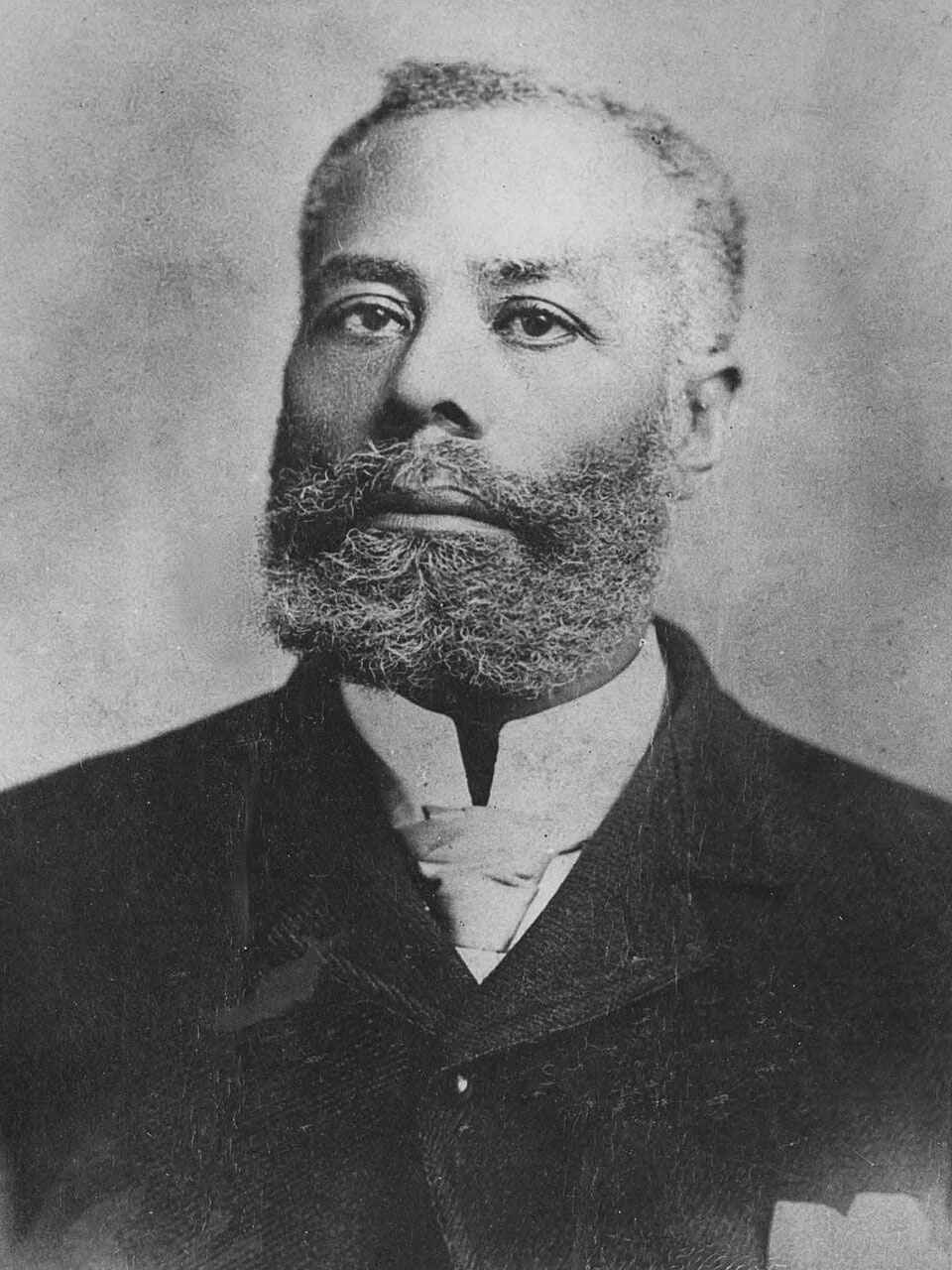
Elijah McCoy (1844-1929) was a Canadian-American inventor and engineer. Unable to work in his field due to racial barriers, he invented an automatic lubricating cup that allowed oil to be distributed evenly over a train engine's moving parts. He patented around 60 inventions including a lawn sprinkler, a folding ironing table and rubber heels for shoes.
Creativity without sight
During creative thinking your eyesight is reduced. The brain's visual cortex (occipital lobe) is deactivated to suppress external stimuli (Ritter et al. 2018). The suppressed occipital lobe is involved with visual image processing, spatial relationships, motion detecting, and color perception.
Creative people at rest ALSO had reduced connectivity to the visual cortex and a tendency to vividly imagine the future (Orwig et al. 2023). When not involved in a task, highly creative people are more likely to tune out environmental noise and engage in internally directed cognition.
How to enhance creativity
Creativity is maximized when your brain networks work together.
Enhance creativity by stimulating the salience network (SN)
Turning up your SN is the key to initiating the creative process.
- Be curious
- Change up your environment
- Expose yourself to novel and/or emotional charged experiences
- Pay attention
- Do activities that engage your attention
- Smell increases SN functional connectivity
Close your eyes to stimulate creativity
- Enhances divergent creativity (generating many ideas)
- Enhances convergent creativity (narrowing down ideas to find a solution)
Supercharge creativity by optimizing your default mode network (DMN)
- Focus on losing yourself in healthy flow
- Go out in nature to heal
- Seek out experiences that cause the 'awe' response
- Give your brain space to reflect with physical activities, reflection or meditation, and inspiration from learning or art
You don't want your DMN to overpower your other brain networks
An overactive DMN (and SN) is associated with depression and anxiety (it causes rumination, intrusive and critical thoughts). To calm down an overstimulated DMN try cognitive behavior therapy (CBT).
How to inhibit the DMN
If the DMN is running too much or being too self-critical or negative
- Label or name what is happening
- Shift the focus of your thoughts by using your CEN (your brain will shift from one mode to the other)
- Your CEN is activated when you problem solve, think of solutions, or do puzzles
- Boost your logical brain by avoiding these stressful habits
- Meditation and mindfulness weakens DMN and strengthens CEN
- Discussion Azarias et al. 2025

Spark creativity by optimizing the central executive network (CEN)
Improve your brain health. The ideal amount of mental and physical stress supports adaptation of CEN. Too much stress causes burnout. Too little stress limits growth. Often the difference is IF you feel you have control over the stress (Bigliassi et al. 2025).
Enhance the CEN
- Reduce brain and body inflammation
- Give yourself an enriched environment
- Walk in nature, exercise, and eat good whole foods
- Actively improve your brain health with the right diet
- Avoid mental clutter like mindless social media and obsessing over minor issues
- Try cognitive behavior therapy (CBT) which promotes adaptive neuroplasticity
- Use both hands at once or alternate sides of your body to foster brain connections between hemispheres
Beware the paradox of choice (use constraints and artificial boundaries).
The paradox of choice is when having too many options leads to inertia, anxiety, dissatisfaction and decision fatigue.
when you have too many choices it is difficult to know what ones to pick and you can get overwhelmed.
There is likely a sweet spot between having not enough options and too many options.
If you get overwhelmed easily give yourself fewer choices by placing some sort of limit on your creativity.
- Clarify your goal
- Limit your scope at first
- Choose your subject matter in a random fashion
- Create using only one color or one type of material
- Toss a die to pick
- Chunk similar tasks together
- Give yourself a deadline
There are many ways to artificially impose structure on creativity.
By Susan Fluegel PHD Nutritional Biochemistry
*Names and some minor identifying details in all stories in this website are changed to protect people's privacy.
I'm not your doctor so this is not medical information. I'm just a person who would like to see you happy and healthy. If you have any questions or concerns about starting an exercise regiment, diet program, or supplements please consult a professional.
References:
Aryutova K, Stoyanov D. Pharmaco-Magnetic Resonance as a Tool for Monitoring the Medication-Related Effects in the Brain May Provide Potential Biomarkers for Psychotic Disorders. Int J Mol Sci. 2021 Aug 27;22(17):9309. doi: 10.3390/ijms22179309 Full article.
Azarias FR, Almeida GHDR, de Melo LF, Rici REG, Maria DA. The Journey of the Default Mode Network: Development, Function, and Impact on Mental Health. Biology (Basel). 2025 Apr 10;14(4):395. doi: 10.3390/biology14040395. Full article.
Bartoli E, Devara E, Dang HQ, Rabinovich R, Mathura RK, Anand A, Pascuzzi BR, Adkinson J, Kenett YN, Bijanki KR, Sheth SA, Shofty B. Default mode network electrophysiological dynamics and causal role in creative thinking. Brain. 2024 Oct 3;147(10):3409-3425. doi: 10.1093/brain/awae199. Full article.
Beaty RE, Benedek M, Kaufman SB, Silvia PJ. Default and Executive Network Coupling Supports Creative Idea Production. Sci Rep. 2015 Jun 17;5:10964. doi: 10.1038/srep10964. Full article.
Beaty RE, Kenett YN, Christensen AP, Rosenberg MD, Benedek M, Chen Q, Fink A, Qiu J, Kwapil TR, Kane MJ, Silvia PJ. Robust prediction of individual creative ability from brain functional connectivity. Proc Natl Acad Sci U S A. 2018 Jan 30;115(5):1087-1092. doi: 10.1073/pnas.1713532115. Full article.
Bigliassi M, Cabral DF, Evans AC. Improving brain health via the central executive network. J Physiol. 2025 Jan 24. doi: 10.1113/JP287099. Full aricle.
Chen Q, Kenett YN, Cui Z, Takeuchi H, Fink A, Benedek M, Zeitlen DC, Zhuang K, Lloyd-Cox J, Kawashima R, Qiu J, Beaty RE. Dynamic switching between brain networks predicts creative ability. Commun Biol. 2025 Jan 15;8(1):54. doi: 10.1038/s42003-025-07470-9. Full article.
Harrison BJ, Davey CG, Savage HS, Jamieson AJ, Leonards CA, Moffat BA, Glarin RK, Steward T. Dynamic subcortical modulators of human default mode network function. Cereb Cortex. 2022 Sep 19;32(19):4345-4355. doi: 10.1093/cercor/bhab487. Full article.
Heller C, Geisler M, Mayer NL, Thierfelder A, Walter M, Hummel T, Croy I. Modulating salience network connectivity through olfactory nerve stimulation. Transl Psychiatry. 2025 Aug 21;15(1):303. doi: 10.1038/s41398-025-03500-6. Full article.
Hosseini S, Thakur P, Cedeno DL, Fereidoni M, Elahdadi Salmani M. Editorial: Glial cells in health and disease: impacts on neural circuits and plasticity. Front Cell Neurosci. 2025 Feb 20;19:1569725. doi: 10.3389/fncel.2025.1569725. Full article.
Lesage, Elise & Stein, Elliot. (2016). Networks Associated with Reward. 10.1007/978-1-4939-3474-4_134. PDF.
Liu L, Chen D, Huang F, et al. Interference of default mode on attention networks in adults with attention-deficit/hyperactivity disorder and its association with genetic variants and treatment outcomes. CNS Neurosci Ther. 2024;30:e14900. doi:10.1111/cns.14900 Full article.
Müller L, Di Benedetto S, Müller V. From Homeostasis to Neuroinflammation: Insights into Cellular and Molecular Interactions and Network Dynamics. Cells. 2025 Jan 5;14(1):54. doi: 10.3390/cells14010054. Full article.
Orwig W, Setton R, Diez I, Bueichekú E, Meyer ML, Tamir DI, Sepulcre J, Schacter DL. Creativity at rest: Exploring functional network connectivity of creative experts. Netw Neurosci. 2023 Oct 1;7(3):1022-1033. doi: 10.1162/netn_a_00317. Full article.
Schimmelpfennig J, Topczewski J, Zajkowski W, Jankowiak-Siuda K. The role of the salience network in cognitive and affective deficits. Front Hum Neurosci. 2023 Mar 20;17:1133367. doi: 10.3389/fnhum.2023.1133367. Full article.
Ritter SM, Abbing J, van Schie HT. Eye-Closure Enhances Creative Performance on Divergent and Convergent Creativity Tasks. Front Psychol. 2018 Jul 31;9:1315. doi: 10.3389/fpsyg.2018.01315. Full article.
Xie H, Beaty RE, Jahanikia S, Geniesse C, Sonalkar NS, Saggar M. Spontaneous and deliberate modes of creativity: Multitask eigen-connectivity analysis captures latent cognitive modes during creative thinking. Neuroimage. 2021 Nov;243:118531. doi: 10.1016/j.neuroimage.2021.118531. Full article.