Heal Long COVID Brain with Physical Activity
Moving helps your brain and body heal from Long COVID
Even mild COVID-19 cases can cause functional, structural, and cognitive brain abnormalities (discussion Teo and Goodwill 2022). Long COVID (LC) can screw up your ability to think and to act.
If your thinking has been hindered due to COVID, physical activity and/or functional movements may help. If you can't move without getting weaker you may have exercise intolerance.
*Cho L. (39 year old man): "I lost my engineering job to COVID. I came down with COVID in late-2022 - I had the shot, but I got sick anyway - and after 6 weeks of recovery, I went back to my job, and my focus and attention to detail was totally gone. I went from managing giant multimillion dollar projects with near-instant recall of everything, to staring at bluesheets without understanding what the symbols meant or how to read them. I was let go eight months after coming back because my performance had gone into the toilet. I have still not recovered, over two and a half years later. I still do not have a job."
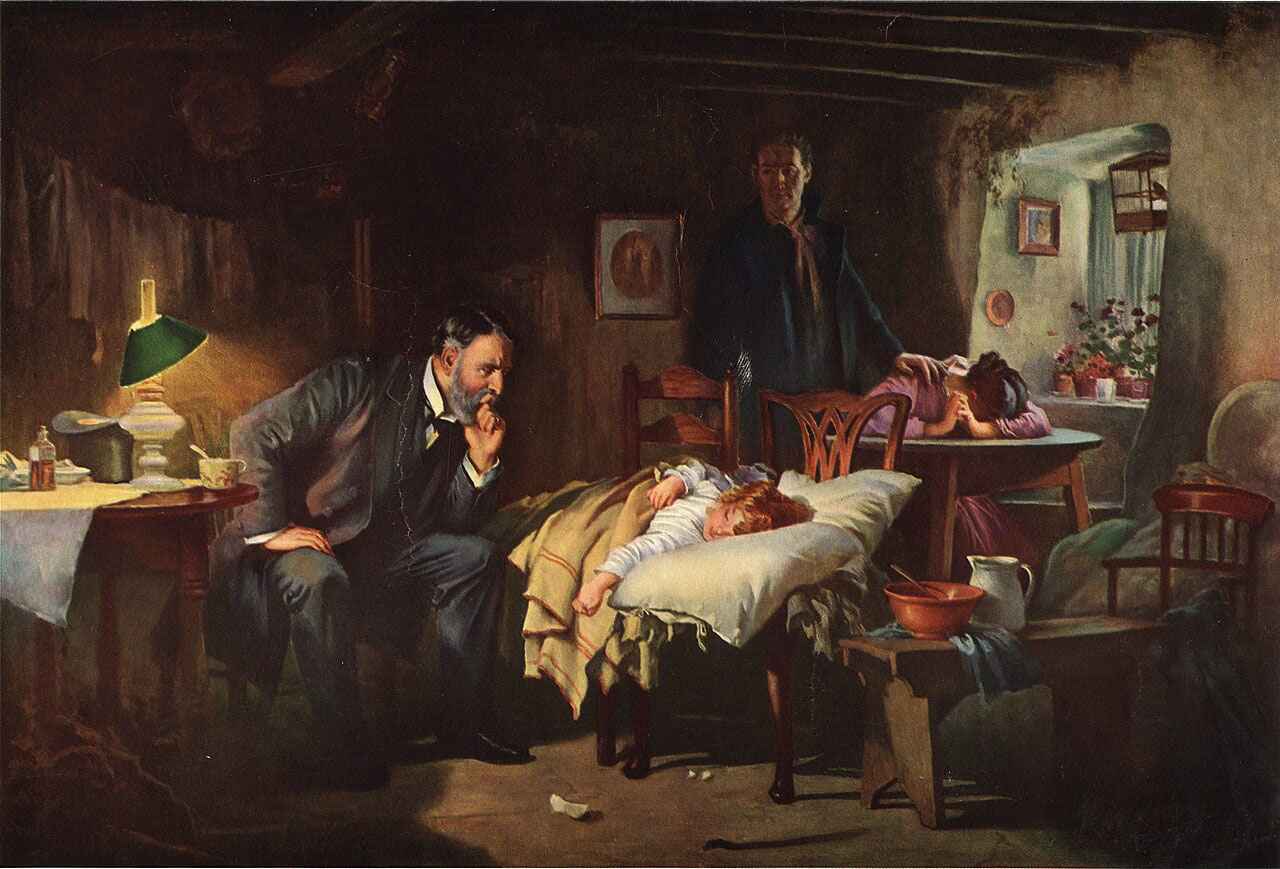
The Doctor c1933 Joseph Tomanek, reproduction of original by Luke Fildes.
A note about healing: LC presents as very different symptoms in different people. It may manifest as a autonomic dysfunction called dysautonomia (a nervous system disorder that disrupts autonomic body processes like blood pressure, digestion, breathing, and heart rate), as a mitochondrial disorder, as an autoimmune disease, as a blood clotting problem and more. People will need very different protocols to heal depending on what is the underlying cause of their LC.
Can't exercise or do daily tasks? Have exercise intolerance? Click here for help!
Exercise helps prevent death and hospitalization if you get COVID-19.
Being active protects you in the case of severe illness including COVID. In a totally non surprising study, people who more active were less likely to become hospitalized or die due to COVID-19.
People were placed in five categories based on how much exercise they got each week (median measured). The descriptive names for each category are mine, the researchers were more professional:
1) Total couch potato; less than 10 min/week (inactive)
2) Occasionally walks from the far parking lot; 0-60 min/week (mostly inactive)
3) Weekend warrior; 60-150 min/week (some activity)
4) Always shows up at Zumba; 150 min/week (consistently active)
5) Fitness fan; greater than 150 minutes exercise/week (always active)
The more active patients were before they got sick, the lower the risk of hospitalization or death within 90 days of the COVID-19 diagnosis. Those Couch potatoes who were inactive before they got sick with COVID had a 91% higher odds of hospitalization and 291% higher odds of death than Fitness fans who were always active. People's risk of experiencing worse COVID outcomes increased as they moved down the activity scale. This was true regardless of race, ethnicity, sex, or age (Cho et al. 2021).

Take home message: Physical activity helps heal your brain and body after COVID-19. It is important to motivate yourself to be active.
How COVID-19 affects the brain and central nervous system:
1) COVID-19 stunts your brain neurons.
It decreases expression of brain-derived neurotrophic factor (BDNF); especially in more severe cases of COVID (Minuzzi et al. 2021). BDNF helps maintain nerve cells and enhances their ability to grow and thrive. Moving is key to increasing BDNF and other myokines.
2) COVID increases inflammation throughout the body and brain (Schwabenland et al. 2021, Teo and Goodwill 2022).
Inflammation damages the brain by activating microglia and macrophages. The triggered immune cells emit superoxide, a reactive oxygen species which damages axons and dendrites. This disconnects nerves from each other and makes the brain more dysfunctional.
Science Bite:
How inflammation destroys nerve connections (neurites) and isolates your nerves
Inflammation can reduce your nerves' ability to communicate with each other by tearing down their connections to each other.
Pro-inflammatory chemicals released during inflammation activate microglia and macrophages in the brain, causing them to release cytokines, proteases, chemokines, and reactive oxygen species; including superoxide.
Superoxide pulls cofilin and actin out of neurites (axons and dendrites); these are the connections that wire neurons together. Cofilin and actin are proteins best known for working together to move your muscle fibers. The stress of removing them from the neurites causes rod-like bundles of cofilin-saturated F-actin, called cofilactin rods (CARs), to form.
CARs accumulate in cells under stress and are found in the brains of people with neurodegenerative disorders. CARs cause a local disruption of cytoskeletal dynamics; the 3D dynamic network of filamentous proteins that links all the regions and components of the cell together. Think of cytoskeletal dynamics as the wood and steel structure supporting a building combined with the electrical lines and fibers keeping communication running smoothly.
CARs formation can destroy neurites. When neurites die, the brain nerves become disconnected from each other and malfunction (discussion in Uruk et al. 2024). The poor nerve cells are left alone and isolated; unable to communicate with each other.
3) COVID messes up your ability to pay attention and focus by disrupting glutaminergic pathways (Yesilkaya et al. 2021).
These excitatory pathways in the brain are involved with working memory, attention and other cognitive functions (Barbey et al. 2013). Glutaminergic pathways use an amino acid and neurotransmitter, glutamate. For more about this complex system see Overview of the Glutamatergic System.
4) COVID totally screws up your brain and life by causing encephalopathy and encephalitis (brain swelling).
Encephalopathy is a cluster of conditions that cause your brain to dysfunction. Neurological symptoms include headaches, confusion, memory loss, dizziness, attention and executive function deficits, loss of smell (anosmia), loss of taste (ageusia), myalgia/fatigue, personality changes, and/or coma (discussion Vengalil et al. 2023).
Encephalopathy could be caused by: overall brain inflammation, lack of oxygen in brain due to respiratory issues, and cytokine release syndrome (CRS). In CRS release of cytokines IL-6, C-reactive protein, ferritin, and lactate dehydrogenase correlated with severe neurological symptoms like confusion, agitation, impaired consciousness, and cerebellar ataxia (loss of muscle control and coordination) in COVID patients (Vengalil et al. 2023).
David Z. (28 year old man): "I had covid in September, and for about three months I was severely lethargic. No energy to do anything - I just laid on the couch. Most of the tiredness is gone but I'm now dealing with a lack of mental sharpness. I feel like I think slower and dare I say, stupider. I feel I lost IQ points. I don't feel alert at work anymore and keep messing up a lot of things. I don't know how to fix my brain. I don't want to chug Red Bull or get prescribed adderall"
5) COVID impairs the mitochondria that power your brain.
Long COVID may be due to impaired mitochondria energy production. Several studies found that mitochondria from peripheral blood mononuclear cells (PBMCs) in Long COVID have dysfunctional respiration, bioenergetics (transformation, storage and use of energy) and gene expression. This could cause symptoms of fatigue and muscle weakness (discussion Molnar et al. 2024).
People who are physically active before contacting COVID-19 have less severe outcomes
Being active before you catch COVID-19 is associated with better recovery results. People who reported being always active (more than 150 minutes of activity per week or about 21 minutes every day) were significantly less likely to become hospitalized, have a deterioration event, or die than those who reported being less active (194,191 adults with COVID-19). There was a pretty strong dose response - with more activity being more protective across all age, sex, race and ethnicity, and BMI categories (Young et al. 2022).
Blue Box of Science:
Exercise influences the kynurenine pathway
The kynurenine pathway is an inflammatory pathway in CNS glutamatergic systems. Kynurenines are bioactive metabolites of the amino acid tryptophan (TRP) that can influence glutamate. They can be produced in the gut and transmitted to the brain or secreted by microglia in the brain. There is evidence kynurenines are involved in depression.
Kynurenine breakdown (catabolism) can go down two pathways:
1) It can produce pro-inflammatory neurotoxic metabolites including quinolinic acid (QA). QA is a glutamate N-methyl-D-aspartate (NMDA) receptor agonist. An agonist chemical activates a receptor to produce some sort of biological response. In other words, agonists provoke a reaction.
2) It can produce brain protecting (neuroprotective) metabolites including kynurenic acid, KynA, an N-methyl-d-aspartate receptors (NMDAr) antagonist. An antagonist chemical binds to and blocks a receptor to prevent it from reacting. In other words, it blocks reactions.
You want more KynA, which protects brain nerves, and less QA, which causes inflammation (discussion in Baskerville et al. 2023)
Physical activity protects your brain. It influences the kynurenine pathway by switching it to produce more KynA and less QA. This enhances peroxisome proliferator-activated receptor gamma coactivator 1-alpha (PGC1a) mediated mitochondrial biogenesis. PGC-1a regulates mitochondrial health by promoting biogenesis (making more mitochondria), regulating mitochondrial network dynamics, and prompting autophagic removal of damaged mitochondria (Halling and Pilegaard 2020, Baskerville et al. 2023).
Willem van Mieris, The Cheese Shop, c1705 oil.

You can get glutamate in your food. It is an amino acid that naturally binds to proteins and is found in fermented foods as a free form. It is found in hard cheeses, tomatoes, nuts, meats, seafood, mushrooms, peas, fermented foods, and soy, fish and oyster sauces. Glutamate is the main ingredient in monosodium glutamate (MSG). Studies have shown that glutamate is a safe nutrient (discussion in Loï and Cynober 2022).
Studies show MSM is safe
People in the 1960's became concerned about a syndrome called MSG symptom complex (formerly Chinese Restaurant Syndrome) which included headaches, flushing, numbness/tingling, muscle tightness, and overall weakness. Current research indicates MSG symptom complex is not caused by adding MSG to food. Even extremely high amounts of MSM did not alter or harm human brains or cause hypertension (discussion in Loï and Cynober 2022). Interestingly, consuming proteins with higher concentrations of glutamic acid was associated with a decreased risk of stroke mortality in Japanese women (15,724 women, age 35-101) (Nagata et al. 2015).
Like any other nutrient or food, if you have a reaction to MSM, or if it makes you feel worse in any way, you should avoid it.
Physical activity can help restore brain health in Long COVID
You need to determine the optimal exercise intensity for YOU. In some of these studies, moderate activities reduced inflammation better than high intensity exercise; especially for people who are not already active. You don't have to force yourself through pain to feel better.
Warning: please ease into exercise after being sick to avoid long term problems. Don't stress out your healing body or risk permanent damage by getting active too soon; you may have a relapse. Rest is very important to recovery.
1) Exercise increases brain-derived neurotrophic factor (BDNF).
Exercise increases the production of BDNF, which is critical for learning and memory! As you may have guessed from the name, BDNF is vital for brain health. This molecule promotes the survival and growth of brain neurons, helps modulate neurotransmitters, and is vital for brain plasticity. It has been called Miracle Grow for the brain.
People with more severe Long COVID symptoms had lower levels of BDNF than those with milder symptoms. Even more important, when people recovered from Long COVID their BDNF levels returned to normal (Azoulay et al. 2020). Exercise may help replenish BDNF quicker and speed recovery.

2) Exercise increases cerebral blood flow (CBF) (Teo and Goodwill 2022).
Blood flow to the brain is important since your brain uses around 1/5 of the blood pumped by your heart (cardiac output). When CBF is low your brain receives less nutrients and less oxygen. As you can likely guess, maintaining blood flow is critical to optimal brain functioning and thinking.
Young adults (93 women and men around 25 years old) who completed a 12 week moderate-intensity continuous training (MICT) for 40 minutes 3 times a week significantly improved their CBF and executive function when compared to a control group that did not exercise (Liu et al. 2023). Interestingly, exercising at a moderate level (MICT) improved CBF and executive function more effectively than exercising at a high-intensity interval training(HIIT).
The moderate-intensity continuous training (MICT) was running for 20 min at a speed equivalent to 70-75% of each person's individual VO2 max. VO2 max is the maximal amount of oxygen a person uses when exercising. The higher your VO2 max the better aerobic shape you are in currently. Exercising at your 75% VO2 max would be exercising at a moderate level for you personally.
Executive function was measured by the trail-making test (TMT). In this brain teaser, people have to connect a series of points in a specific order as quickly as they can while switching between numbers and letters. Want to check out your score on the TMT? Try the TMT online here or print out a TMT here to try it old school with pencil and paper.
3) Exercise decreases inflammation (Teo and Goodwill 2022).
Moderate exercise decreases depression and reduces inflammation. Moderate continuous training (MCT) decreased depression and the pro-inflammatory cytokine, TNF-a, in 61 college students when compared to a control no training group. In the same study, high intensity training (HIT) decreased depressive symptoms in students. However, HIT also increased perceived stress as well as inflammatory cytokines (TNF-a and IL-6) when compared to MCT (Paolucci et al. 2018).
Take home message: Both moderate and high intensity activity decrease depression compared to doing nothing.
4) Physical activity improves brain function to combat encephalopathy.
Moving makes you feel good. Physical activity improves people's sense of well being; reduces depression; relieves physical and emotional pain; and improves thinking skills (Di Liegro et al. 2018).
Exercise significantly improves brain function:
1) Enhances cognitive function and memory
2) Improves nerve survival
3) Enhances resilience to brain injuries
4) Increases neuroplasticity
5) Expands brain vascularization
6) Improves neurogenesis and neuroinflammatory stability
7) Delays brain aging and degenerative disorders
(discussion in Di Liegro et al. 2018 and Baskerville et al. 2023).
5) Physical activity enhances glutamate neurotransmission.
Your body can use glutamate to make gamma-aminobutyric acid (GABA). GABA helps people calm down and is associated with relaxation, sleep, anxiety regulation and muscle function.
Glutamate is the main brain excitatory neurotransmitter. Neurotransmitters are chemical messengers who help brain neurons communicate with each other. Excitatory neurotransmitters make nerve cells excited which makes it more likely that the nerve cell will transmit a chemical message. Glutamate is made by brain glial cells.
Too much or too little glutamate can cause neurological and psychiatric brain disorders. Metabolites from the kynurenine pathway can influence glutamatergic activity (discussion in Schwarczet 2018). Metabolites are small molecules formed due to the chemical reactions of metabolism.

By Susan Fluegel PHD Nutritional Biochemistry
*Names and some minor identifying details in all stories in this website are changed to protect people's privacy.
This information is for informational purposes only and does not constitute medical advice, diagnosis, or treatment.
References:
Azoulay D, Shehadeh M, Chepa S, Shaoul E, Baroum M, Horowitz NA, Kaykov E. Recovery from SARS-CoV-2 infection is associated with serum BDNF restoration. J Infect. 2020 Sep;81(3):e79-e81. doi: 10.1016/j.jinf.2020.06.038. Epub 2020 Jun 20. Full article.
Barbey AK, Koenigs M, Grafman J. Dorsolateral prefrontal contributions to human working memory. Cortex. 2013 May;49(5):1195-205. doi: 10.1016/j.cortex.2012.05.022. Full article.
Baskerville R, McGrath T, Castell L. The effects of physical activity on glutamate neurotransmission in neuropsychiatric disorders. Front Sports Act Living. 2023 Mar 6;5:1147384. doi: 10.3389/fspor.2023.1147384. Full article.
Cho DH, Lee SJ, Jae SY, Kim WJ, Ha SJ, Gwon JG, Choi J, Kim DW, Kim JY. Physical Activity and the Risk of COVID-19 Infection and Mortality: A Nationwide Population-Based Case-Control Study. J Clin Med. 2021 Apr 6;10(7):1539. doi: 10.3390/jcm10071539. Full article.
Di Liegro CM, Schiera G, Proia P, Di Liegro I. Physical Activity and Brain Health. Genes (Basel). 2019 Sep 17;10(9):720. doi: 10.3390/genes10090720. Full article.
Halling JF, Pilegaard H. PGC-1a-mediated regulation of mitochondrial function and physiological implications. Appl Physiol Nutr Metab. 2020 Sep;45(9):927-936. doi: 10.1139/apnm-2020-0005. Full article.
Liu J, Min L, Liu R, Zhang X, Wu M, Di Q, Ma X. The effect of exercise on cerebral blood flow and executive function among young adults: a double-blinded randomized controlled trial. Sci Rep. 2023 May 22;13(1):8269. doi: 10.1038/s41598-023-33063-9. Full article.
Loï C, Cynober L. Glutamate: A Safe Nutrient, Not Just a Simple Additive. Ann Nutr Metab. 2022;78(3):133-146. doi: 10.1159/000522482. Full article.
Minuzzi LG, Seelaender M, Silva BSA, Cunha EDBB, Deus MC, Vasconcellos FTF, Marqueze LFB, Gadotti AC, Baena CP, Pereira T, Krüger K, Amaral ANM, Pinho RA, Lira FS. COVID-19 Outcome Relates With Circulating BDNF, According to Patient Adiposity and Age. Front Nutr. 2021 Dec 10;8:784429. doi: 10.3389/fnut.2021.784429. Full article.
Molnar T, Lehoczki A, Fekete M, Varnai R, Zavori L, Erdo-Bonyar S, Simon D, Berki T, Csecsei P, Ezer E. Mitochondrial dysfunction in long COVID: mechanisms, consequences, and potential therapeutic approaches. Geroscience. 2024 Oct;46(5):5267-5286. doi: 10.1007/s11357-024-01165-5. Full article.
Nagata C, Wada K, Tamura T, Kawachi T, Konishi K, Tsuji M, Nakamura K. Dietary intakes of glutamic acid and glycine are associated with stroke mortality in Japanese adults. J Nutr. 2015 Apr;145(4):720-8. doi: 10.3945/jn.114.201293. Full article.
Paolucci EM, Loukov D, Bowdish DME, Heisz JJ. Exercise reduces depression and inflammation but intensity matters. Biol Psychol. 2018 Mar;133:79-84. doi: 10.1016/j.biopsycho.2018.01.015. Partial article.
Schwabenland M, Salié H, Tanevski J, Killmer S, Lago MS, Schlaak AE, Mayer L, Matschke J, Püschel K, Fitzek A, Ondruschka B, Mei HE, Boettler T, Neumann-Haefelin C, Hofmann M, Breithaupt A, Genc N, Stadelmann C, Saez-Rodriguez J, Bronsert P, Knobeloch KP, Blank T, Thimme R, Glatzel M, Prinz M, Bengsch B. Deep spatial profiling of human COVID-19 brains reveals neuroinflammation with distinct microanatomical microglia-T-cell interactions. Immunity. 2021 Jul 13;54(7):1594-1610.e11. doi: 10.1016/j.immuni.2021.06.002. Full article.
Schwarcz R. Kynurenines and Glutamate: Multiple Links and Therapeutic Implications. Adv Pharmacol. 2016;76:13-37. doi: 10.1016/bs.apha.2016.01.005. Full article.
Teo WP, Goodwill AM. Can exercise attenuate the negative effects of long COVID syndrome on brain health? Front Immunol. 2022 Sep 16;13:986950. doi: 10.3389/fimmu.2022.986950. Full article.
Uruk G, Mocanu E, Shaw AE, Bamburg JR, Swanson RA. Cofilactin rod formation mediates inflammation-induced neurite degeneration. Cell Rep. 2024 Mar 26;43(3):113914. doi: 10.1016/j.celrep.2024.113914. Full article.
Vengalil A, Nizamutdinov D, Su M, Huang JH. Mechanisms of SARS-CoV-2-induced Encephalopathy and Encephalitis in COVID-19 Cases. Neurosci Insights. 2023 May 27;18:26331055231172522. doi: 10.1177/26331055231172522. Full article.
Wood GK, Sargent BF, Ahmad ZU, Tharmaratnam K, Dunai C, Egbe FN, Martin NH, Facer B, Pendered SL, Rogers HC, Hübel C, van Wamelen DJ, Bethlehem RAI, Giunchiglia V, Hellyer PJ, Trender W, Kalsi G, Needham E, Easton A, Jackson TA, Cunningham C, Upthegrove R, Pollak TA, Hotopf M, Solomon T, Pett SL, Shaw PJ, Wood N, Harrison NA, Miller KL, Jezzard P, Williams G, Duff EP, Williams S, Zelaya F, Smith SM, Keller S, Broome M, Kingston N, Husain M, Vincent A, Bradley J, Chinnery P, Menon DK, Aggleton JP, Nicholson TR, Taylor JP, David AS, Carson A, Bullmore E, Breen G, Hampshire A; COVID-CNS Consortium; Michael BD, Paddick SM, Leek EC. Posthospitalization COVID-19 cognitive deficits at 1 year are global and associated with elevated brain injury markers and gray matter volume reduction. Nat Med. 2024 Sep 23. doi: 10.1038/s41591-024-03309-8. Epub ahead of print. PMID: 39312956. Full article.
Yesilkaya UH, Sen M, Balcioglu YH. COVID-19-related cognitive dysfunction may be associated with transient disruption in the DLPFC glutamatergic pathway. J Clin Neurosci. 2021 May;87:153-155. doi: 10.1016/j.jocn.2021.03.007. Full article.
Young DR, Sallis JF, Baecker A, Cohen DA, Nau CL, Smith GN, Sallis RE. Associations of Physical Inactivity and COVID-19 Outcomes Among Subgroups. Am J Prev Med. 2023 Apr;64(4):492-502. doi: 10.1016/j.amepre.2022.10.007. Full article.